Heart rhythm disorders, damaged heart valves, and structural heart defects often cannot be managed with medications alone. Conditions such as slow or irregular heartbeats, heart failure, congenital heart defects, and severe valve disease may require advanced cardiac device implantation or minimally invasive structural heart procedures to restore normal heart function, relieve symptoms, and improve long-term quality of life.
At Healing Hospital in Chandigarh, our Department of Cardiology is led by experienced interventional cardiologists with 15+ years of expertise and a track record of 10,000+ successful interventional cardiology procedures. Our specialists combine extensive clinical experience with evidence-based practices and advanced technology to deliver safe, precise, and minimally invasive cardiac care. We perform these procedures in our advanced GE Cardiac Catheterization (Cath) Lab, which provides high-resolution imaging and real-time guidance for accurate device placement and complex structural heart interventions while enhancing procedural safety and clinical outcomes.
We provide complete care for patients requiring pacemaker implantation, ICD (Implantable Cardioverter Defibrillator) implantation, Cardiac Resynchronization Therapy (CRT), balloon valvuloplasty, Transcatheter Aortic Valve Replacement (TAVR), Transcatheter Mitral Valve Repair (TMVR), and structural heart procedures such as ASD, VSD, and PDA device closure. From detailed cardiac evaluation and treatment planning to advanced interventions, post-procedure monitoring, device follow-up, and long-term cardiac care, we provide every stage of treatment under one roof through a coordinated multidisciplinary approach.
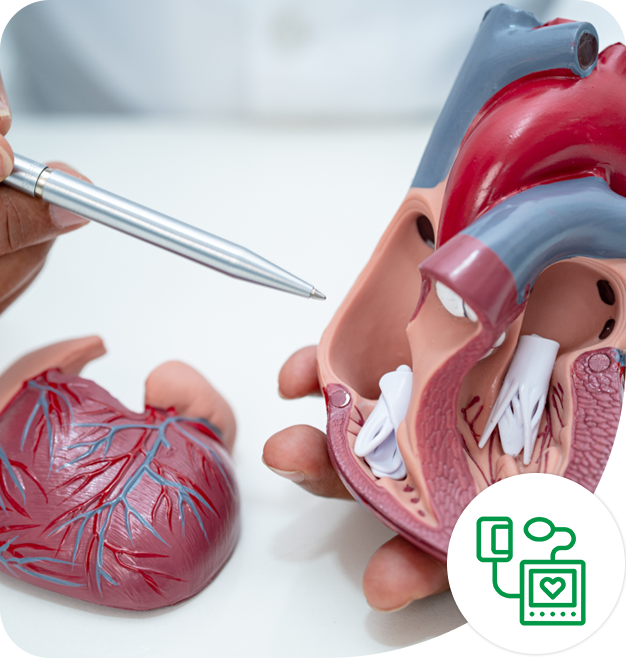
What are Cardiac Devices Implantation & Valve Procedures?
Cardiac device implantation and heart valve procedures are advanced interventional cardiology treatments used to manage heart rhythm disorders, heart failure, valve disease, and certain structural heart defects without the need for conventional open-heart surgery in many cases.
- Cardiac device implantation involves placing a small electronic device, such as a pacemaker, Implantable Cardioverter Defibrillator (ICD), or Cardiac Resynchronization Therapy (CRT) device, beneath the skin of the chest. Thin insulated wires (leads) connect the device to the heart, where it monitors and regulates abnormal heart rhythms. These devices help maintain a steady heartbeat, improve heart function in selected heart failure patients, and reduce the risk of sudden cardiac death.
- Heart valve and structural heart procedures are minimally invasive, catheter-based interventions performed through a small puncture in the groin or wrist. These include Transcatheter Aortic Valve Replacement (TAVR), Transcatheter Mitral Valve Repair or Replacement (TMVR), balloon valvuloplasty, and device closure of congenital heart defects such as Atrial Septal Defect (ASD), Ventricular Septal Defect (VSD), and Patent Ductus Arteriosus (PDA). These procedures restore normal blood flow, improve heart function, relieve symptoms, and often result in shorter hospital stays and faster recovery as compared to traditional open-heart surgery.
Schedule Your Appointment with
Our Expert Doctors
We are dedicated to driving lasting, positive transformation in healthcare management through innovation and patient-centered solutions.
Types of Cardiac Devices Implantation & Valve Procedures
At Healing Hospital in Chandigarh, we offer a comprehensive range of cardiac device implantation and minimally invasive structural heart procedures tailored to each patient's heart condition.
A. Cardiac Devices
Permanent Pacemakers
Permanent pacemakers are implanted to treat slow heart rhythms (bradycardia) caused by conditions such as heart block and sick sinus syndrome. These small electronic devices continuously monitor the heart's rhythm and deliver gentle electrical impulses whenever the heartbeat slows below a safe level. Depending on the patient's condition, pacemakers may be single-chamber, dual-chamber, or rate-responsive.
Implantable Cardioverter-Defibrillators (ICDs)
An Implantable Cardioverter-Defibrillator (ICD) is designed for high-risk patients. It continuously monitors the heart rhythm and instantly delivers life-saving electrical pacing whenever a dangerous rhythm is detected, helping restore a normal heartbeat and significantly reducing the risk of sudden cardiac death.
Cardiac Resynchronization Therapy (CRT) Devices
Treats heart failure patients with ventricular dyssynchrony by pacing both ventricles simultaneously (biventricular pacing) improving cardiac efficiency, pumping function, and symptoms. Depending on individual needs, patients may receive a CRT-P (pacing only) or CRT-D (combined pacing and defibrillator) device.
B. Structural Heart & Valve Procedures
1. Non-Invasive Procedures:-
State-of-the-art 2D/3D echocardiography, stress echo testing/TMT, and 24×7 Holter monitoring provide detailed insights into your heart's health through non-invasive methods.
2. Interventional/Cardiac/Aortic/Peripheral Procedures:-
Coronary Angiography
It is a minimally invasive diagnostic procedure that uses a thin catheter and contrast dye to visualise the coronary arteries. It accurately identifies the location and severity of arterial blockages.
Primary Angioplasty (Primary PCI - Percutaneous Coronary Intervention)
Primary angioplasty is the gold-standard emergency treatment for an acute heart attack (STEMI). During the procedure, the blocked coronary artery is immediately reopened using a balloon catheter followed by stent placement, restoring blood flow to the heart muscle and significantly reducing permanent heart damage.
Complex Coronary Angioplasty including CTOs
Our interventional cardiologists perform advanced coronary interventions for complex coronary artery disease, including Chronic Total Occlusions (CTOs), bifurcation lesions, heavily calcified arteries, and multivessel disease. These highly specialised catheter-based procedures restore blood flow while avoiding open-heart surgery whenever clinically appropriate.
Paediatric & Adult Structural Heart Procedures
Healing Hospital offers these paediatric advanced minimally invasive structural heart interventions:
- TAVR (Transcatheter Aortic Valve Replacement): A catheter-based alternative to open-heart surgery for replacing severely narrowed aortic valves.
- TMVR (Transcatheter Mitral Valve Repair/Replacement): Minimally invasive treatment for selected mitral valve disorders.
- TEER (Transcatheter Edge-to-Edge Repair):A catheter-based procedure that reduces severe mitral valve leakage without open-heart surgery.
- Congenital Defect Closures: Device closure of Atrial Septal Defect (ASD), Ventricular Septal Defect (VSD), and Patent Ductus Arteriosus (PDA) to correct structural heart defects through catheter-based techniques.
Aortic and carotid angiographies and angioplasties
We perform advanced aortic and carotid angiography to accurately evaluate blood flow through the body's major arteries. When narrowing or blockage is identified, minimally invasive angioplasty and stenting help restore circulation and reduce the risk of stroke, aneurysm-related complications, and other serious vascular conditions.
Peripheral Arterial & Venous Interventions (including coil embolisation, Balloon/Stent angioplasties, IVC filter explanations and others)
Our vascular specialists provide a wide range of minimally invasive peripheral interventions for arterial and venous diseases. These include coil embolisation, balloon angioplasty, stent placement, IVC filter implantation, and other image-guided vascular procedures to improve circulation, control abnormal bleeding, treat blocked blood vessels, and prevent complications such as pulmonary embolism.
Renal Denervation Therapy - Newly Launched Interventional Procedure For Uncontrolled Hypertension
Renal Denervation Therapy is an advanced catheter-based procedure for patients with resistant or uncontrolled hypertension despite optimal medications. The procedure targets overactive sympathetic nerves surrounding the renal arteries, helping achieve sustained blood pressure control while reducing long-term cardiovascular risk in carefully selected patients.
Who is advised to Undergo Cardiac Devices Implantation or Valve Procedures?
Your cardiologistmay recommend a cardiac device implantation or minimally invasive heart valve procedure, if medications alone are not enough to manage your condition or if there is a significant risk of serious heart-related complications.
1. Pacemaker Implantation
A permanent pacemaker may be recommended if you have:
- Symptomatic bradycardia (slow heart rate) causing dizziness, fatigue, or fainting
- Complete or advanced heart block
- Sick sinus syndrome with prolonged pauses in the heartbeat
- Atrial fibrillation, associated with a slow ventricular response
- Persistent heart block following cardiac surgery
2. Implantable Cardioverter-Defibrillator (ICD) Implantation
An ICD may be advised for patients who are at high risk of sudden cardiac death due to dangerous heart rhythm disorders, including:
- Previous sudden cardiac arrest
- History of life-threatening ventricular tachycardia or ventricular fibrillation
- Severe heart failure with significantly reduced heart function
- Inherited arrhythmia disorders such as Long QT Syndrome, Brugada Syndrome, or Hypertrophic Cardiomyopathy
- Previous heart attack with poor left ventricular function
3. Cardiac Resynchronization Therapy (CRT)
A CRT device may be recommended for patients with:
- Heart failure with a reduced ejection fraction
- A wide QRS complex indicating delayed electrical conduction between the heart's ventricles
- Persistent NYHA Class II, III, or IV heart failure symptoms despite optimal medical therapy
- Heart failure patients who may benefit from both improved heart function and protection against sudden cardiac death through CRT-D
4. Heart Valve & Structural Heart Procedures
Minimally invasive valve or structural heart interventions may be recommended for patients with:
- Severe aortic stenosis causing chest pain, breathlessness, or fainting, particularly in elderly or high-surgical-risk patients requiring Transcatheter Aortic Valve Replacement (TAVR)
- Severe mitral regurgitation causing heart failure symptoms in patients who are not suitable candidates for open-heart surgery, treated with Transcatheter Edge-to-Edge Repair (TEER/MitraClip) or other transcatheter techniques
- Rheumatic mitral stenosis requiring balloon mitral valvuloplasty
- Congenital heart defects such as Atrial Septal Defect (ASD), Ventricular Septal Defect (VSD), or Patent Ductus Arteriosus (PDA) causing significant blood flow abnormalities or enlargement of the heart
- Other structural heart diseases that can be safely treated using minimally invasive catheter-based procedures
The decision to perform any cardiac device implantation or structural heart intervention is based on a comprehensive evaluation that includes your symptoms, heart rhythm, imaging findings, overall heart function, and general health. Our experienced interventional cardiologists carefully assess every patient to recommend the most appropriate and evidence-based treatment plan.
What Happens Before, During, and After Implantation or Valve Procedures?
At Healing Hospital, our interventional cardiology team follows a structured approach to ensure every procedure is performed safely and comfortably.
Before the Procedure
Pre-Procedure Evaluation
This typically includes comprehensive assessment including detailed history and physical examination, ECG and 24-hour Holter monitoring documenting rhythm abnormalities, echocardiogram assessing heart structure and function, chest X-ray, complete blood tests, and advanced imagings (CT/MRI) for valve procedures.
Preparation
Before the procedure, you will usually be asked to fast for 6–8 hours. Your cardiologist will review your current medications and may advise temporarily stopping certain medicines, such as blood thinners (anticoagulants), if required. The medical team will also explain the procedure in detail, including its benefits, potential risks, and available alternatives, before obtaining your informed consent. Depending on the type and complexity of the procedure, you may be admitted to the hospital either on the day of the procedure or the previous evening for pre-procedure preparation and evaluation.
During the Procedure
Pacemaker/ICD/CRT Implantation:-
Cardiac device implantation is usually performed under local anaesthesia with mild sedation, allowing you to remain comfortable while staying awake throughout the procedure. A small incision is made below the collarbone to access the subclavian or cephalic vein, through which thin insulated leads are carefully guided into the appropriate chambers of the heart using continuous fluoroscopic (X-ray) imaging. Once the leads are securely positioned, the pacemaker, Implantable Cardioverter-Defibrillator (ICD), or Cardiac Resynchronization Therapy (CRT) device is placed in a small pocket created beneath the skin below the collarbone. The device is connected to the leads, programmed according to your individual heart rhythm requirements, and the incision is closed with sutures.
Heart Valve & Structural Heart Procedures:-
Most minimally invasive valve and structural heart procedures are performed under conscious sedation or general anaesthesia, depending on the complexity of the intervention. A small puncture is made in the femoral artery or vein in the groin, allowing specialised catheters to be advanced to the heart under fluoroscopic and echocardiographic guidance. Depending on the condition being treated, your cardiologist may perform Transcatheter Aortic Valve Replacement (TAVR) to replace a diseased aortic valve, Transcatheter Edge-to-Edge Repair (TEER/MitraClip) to reduce severe mitral valve leakage, Balloon Valvuloplasty to widen a narrowed heart valve, or device closure of congenital heart defects such as ASD, VSD, or PDA.
After the Procedure
Recovery & Hospital Stay
Following pacemaker, ICD, or CRT implantation, you will be monitored in the recovery area for approximately 6-8 hours with most patients staying overnight in the hospital. Before discharge, the implanted device is checked and programmed, and a chest X-ray is performed to confirm proper lead placement. You will receive a device identification card along with instructions to avoid heavy lifting and excessive movement of the affected arm for 4–6 weeks. Regular follow-up visits are scheduled to monitor device function and ensure optimal long-term performance.
Patients undergoing heart valve or structural heart procedures are typically monitored in the Intensive Care Unit (ICU) for 24–48 hours, depending on the complexity of the procedure. An echocardiogram is performed to confirm successful valve function, and gradual mobilisation begins under medical supervision. The usual hospital stay ranges from 3–5 days. Your cardiologist may prescribe antiplatelet or blood-thinning medications when indicated, and periodic follow-up visits with echocardiograms are recommended to assess long-term valve performance and overall heart health.
What are the Recovery & Success Factors?
Immediate Symptom Relief & Improved Quality of Life
Patients undergoing pacemaker implantation often notice immediate relief from dizziness, fainting episodes, and fatigue caused by slow heart rhythms.
Those receiving Cardiac Resynchronization Therapy (CRT) typically experience gradual improvements in breathlessness, exercise tolerance, and heart failure symptoms over the following 3–6 months as the heart pumps more efficiently.
Patients undergoing TAVR, MitraClip, or other structural heart procedures frequently report better energy levels, reduced chest pain, improved breathing, and an overall improvement in their quality of life.
Minimally Invasive Techniques For Faster Recovery
Most heart valve and structural heart procedures are performed using minimally invasive catheter-based techniques that require only a small puncture in the groin or wrist. These procedures generally avoid large chest incisions, cardiopulmonary bypass, and prolonged hospitalization. The patients usually experience less postoperative discomfort and tend to return to their normal routine very soon.
Life-Saving Protection & Long-Term Device Reliability
Cardiac devices provide continuous protection against life-threatening heart rhythm disorders by detecting dangerous arrhythmias and delivering immediate therapy when needed. Modern pacemakers, ICDs, CRT devices, and transcatheter heart valve procedures have demonstrated excellent long-term safety, durability, and clinical outcomes when combined with regular follow-up, device monitoring, and adherence to your cardiologist's recommendations.
Why Choose Healing Hospital for Cardiac Devices & Valve Procedures?

Advanced Expertise in Complex Interventional Cardiology : Healing Hospital is home to an experienced team of interventional cardiologists with over 15 years of expertise in managing complex heart conditions using minimally invasive techniques. With 10,000+ successful interventional cardiac procedures including pacemaker implantation, ICD and CRT device therapy, structural heart interventions and complex coronary angioplasties, our team follows evidence-based treatment protocols to deliver safe & personalized cardiac care.

State-of-the-Art Cardiac Catheterization Laboratory : Our state-of-the-art cardiac catheterization laboratory is equipped with advanced imaging and interventional technology that enables precise diagnosis and treatment of complex cardiac conditions. The facility supports high-definition fluoroscopic imaging, intravascular imaging techniques, comprehensive haemodynamic monitoring, and access to the latest-generation cardiac devices, including pacemakers, ICDs, CRT systems, transcatheter heart valves, and structural heart closure devices. A dedicated Cardiac ICU and on-site multidisciplinary support ensure continuous monitoring and comprehensive care before, during, and after every procedure.

24/7 Emergency Cardiac Care with Door-to-Balloon <90 Minutes : Heart emergencies require immediate intervention. Healing Hospital provides 24×7 emergency cardiac services, including emergency angiography, primary angioplasty (Primary PCI), temporary pacemaker insertion, urgent cardiac device management, and other time-sensitive interventional procedures. Our emergency response protocols are designed to minimise treatment delays and deliver rapid care when every minute matters. From emergency intervention to long-term follow-up and device monitoring, patients receive comprehensive cardiac care under one roof with seamless coordination between cardiologists, intensivists, cardiac nurses, and rehabilitation specialists.
What are the Advantages?
The following are the advantages of cardiac devices’ implantation & structural valve procedures:
- Life-saving protection against sudden cardiac death in high-risk patients
- Immediate relief from symptoms such as dizziness, fainting, fatigue, and slow heart rate
- Improved heart failure management with Cardiac Resynchronization Therapy (CRT)
- Restores normal heart rhythm and improves overall heart function
- Minimally invasive procedures are performed through small puncture sites with no large incisions
- Avoids open-heart surgery for many valve and structural heart conditions
- Lower procedural risk for elderly and high-surgical-risk patients
- Less pain and minimal scarring compared to conventional surgery
- Shorter hospital stay and faster recovery
- Proven long-term safety and durability of modern cardiac devices and transcatheter valves
- Improved quality of life with better exercise tolerance and reduced symptoms
- Reduced risk of recurrent hospitalizations, particularly in heart failure patients
What are the Potential Risks & Complications?
Like any interventional cardiac procedure, cardiac device implantation and valve procedures carry some risks. However, these complications are generally uncommon, and every procedure is carefully planned to minimize them.
Device Implantation (Pacemaker, ICD & CRT):
- Pneumothorax (lung collapse): Rarely occurs during vein access below the collarbone.
- Lead displacement: The device lead may shift from its intended position and occasionally require repositioning.
- Device pocket infection: Infection around the implanted device may require antibiotics or device replacement in rare cases.
- Bleeding or haematoma: Blood may collect around the implantation site, usually resolving with treatment.
- Venous thrombosis: A blood clot can rarely develop in the vein used for lead placement.
- Inappropriate ICD shocks: Modern programming significantly reduces unnecessary shocks caused by non-life-threatening heart rhythms.
Valve Procedure Complications:
- Access site complications: Bleeding, bruising, or injury to the blood vessel at the catheter insertion site.
- Stroke: A rare but recognised complication caused by small clots or debris during the procedure.
- Valve malposition: The implanted valve or device may require repositioning if not optimally placed.
- Paravalvular leak: A small amount of blood may leak around the implanted valve in some patients.
- Heart rhythm disturbances: Certain procedures, particularly TAVR, may require permanent pacemaker implantation afterwards.
- Bleeding complications: Blood-thinning medications used during or after the procedure may occasionally lead to bleeding, which is usually manageable with prompt medical care.
Our cardiac team takes every precaution through detailed pre-procedure evaluation, advanced imaging guidance, experienced operators, and continuous monitoring to minimise these risks and ensure the safest possible outcomes.
Blog
World Heart Day: Protecting Your Heart and Understanding Heart Disease
ECG vs Echo Test: What’s the Difference and Which One Do You Need?

Period Pain Relief: Causes of Period Cramps & How to Manage Them
How High Cholesterol Level Affects Your Heart: Risks, Symptoms & Prevention

How to Choose the Best Cardiologist in Chandigarh: 5 Critical Factors for Heart Care in 2026
Guide to the Best Hospital for Angioplasty in Chandigarh

How to Reduce Cholesterol Naturally: Diet, Lifestyle & Medical Treatment
Cardiac Arrest vs Heart Attack: What Every Indian Must Know to Save a Life
Affordable Heart Attack Treatment in Chandigarh: Costs and Facilities
Frequently Asked Questions (FAQs)
What is the difference between a pacemaker and an ICD?
A pacemaker treats slow heart rhythms (bradycardia) by sending small electrical impulses that help the heart beat at a normal rate. An Implantable Cardioverter-Defibrillator (ICD) monitors for dangerously fast heart rhythms and delivers life-saving therapy, including electrical shocks when needed, to prevent sudden cardiac death. Your cardiologist will recommend the most suitable device based on your heart condition.
How long do cardiac devices last?
The battery life depends on the type of device and how often it is used. Most pacemakers last 7–15 years, while ICDs and CRT devices typically last 5–10 years. When the battery reaches the end of its life, the device generator can usually be replaced through a relatively simple procedure, while the existing leads are often left in place if they are functioning normally.
Will I be able to feel the cardiac device under my skin?
Yes, you may notice a small bump beneath the skin below your collarbone where the device is implanted. Most patients become accustomed to it within a few weeks, and it generally does not interfere with normal daily activities.
Can I undergo an MRI scan after pacemaker or ICD implantation?
Many modern pacemakers and ICDs are MRI-conditional, meaning MRI scans can be performed safely under specific protocols. However, you should always inform your doctor and the MRI centre about your implanted device before undergoing any scan.
What is TAVR, and who is eligible for it?
Transcatheter Aortic Valve Replacement (TAVR) is a minimally invasive procedure used to replace a severely narrowed aortic valve without open-heart surgery. It is commonly recommended for patients with severe symptomatic aortic stenosis, particularly older adults or those who are at high surgical risk. Your cardiologist will evaluate whether TAVR is the right treatment option for you.
How much do cardiac device implantation and valve procedures cost near me in Chandigarh?
The cost varies depending on the procedure performed, the type of cardiac device used, your medical condition, hospital stay, and insurance coverage. For an accurate estimate, it is best to consult your cardiologist after a detailed evaluation. Our team can also assist with insurance approvals and cashless treatment options. Contact +91-8975343434 for detailed pricing discussion and insurance coordination assistance.
Where can I find the best cardiologist near me for pacemaker implantation?
If you are searching for a heart specialist near you, pacemaker implantation near you, ICD implantation in Chandigarh, or TAVR near you, Healing Hospital in Chandigarh offers comprehensive cardiac device implantation and structural heart procedures performed by experienced interventional cardiologists using advanced catheter-based technology. To schedule a consultation, call +91 89753 43434or walk-in directly at our reception desk.