At Healing Hospital, we understand that knee pain, limited mobility, and concerns about knee replacement surgery may create anxiety about treatment options—requiring advanced, minimally invasive solutions with faster recovery and superior outcomes. That is why our advanced Orthopaedics & Joint Replacement Department, led by expert team of surgeons and anaesthesiologists—founders, pioneers, and trendsetters of Fast Track Knee Resurfacing Technique in the region with 45,000+ successful surgeries—offers revolutionary CUVIS Robotic FT-3D Knee Resurfacing using cutting-edge US FDA-approved Korean robotic technology with 3D mapping, Machine Learning algorithms, and Artificial Intelligence analysis.
The key difference: We don’t replace your knee—we preserve it. Unlike traditional knee replacement where the entire knee joint is removed, our advanced robotic technique treats only the damaged arthritic portion whilst preserving your natural, healthy knee cartilage, bone, and ligaments intact. This ensures optimal implant placement, preserved healthy anatomy, faster recovery, and superior long-term outcomes for patients with localized knee arthritis.
We serve patients across 25+ states of India along with having a plethora of internationally satisfied patients with our comprehensive FT-3D knee resurfacing services, ERAS (Enhanced Recovery After Surgery) protocols enabling same-day mobilization, comprehensive rehabilitation programmes, and long-term follow-up. With international Fellowship training and extensive experience at leading hospitals, our surgeons provide proven excellence ensuring optimal results with patient safety, minimal tissue disruption, and rapid return to active life as highest priorities.
If you are searching for “TKR”, “Knee replacement in India”, “best robotic knee surgery in Chandigarh,” “knee resurfacing specialist,” “partial knee replacement,” “knee pain doctor,” “knee surgery”, “knee pain treatment”, or “knee arthritis treatment,” you have found a centre where pioneering surgical innovation meets international expertise and cutting-edge technology.
What is Robotic FT-3D Knee Resurfacing?
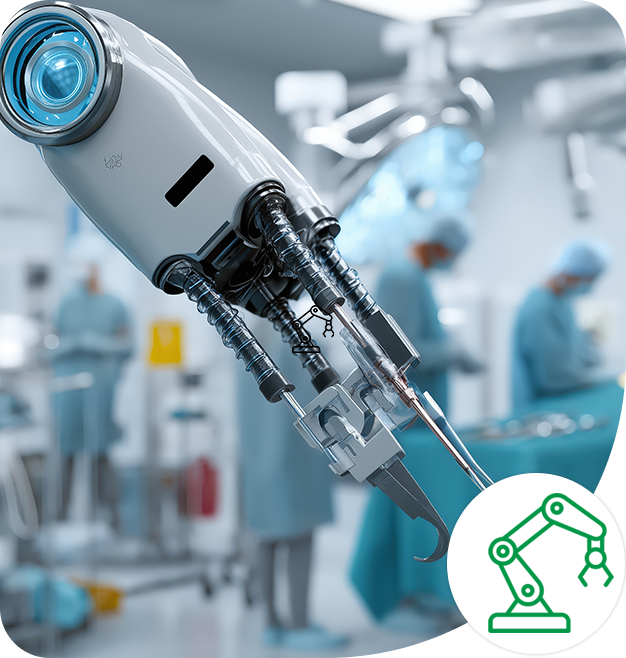
CUVIS Robotic FT-3D Knee Resurfacing is an advanced surgical technique combining US FDA-approved Korean CUVIS Joint Robot—the most sophisticated robotic system available globally—with state-of-the-art 3D mapping technology, Machine Learning algorithms, and Artificial Intelligence to perform precise, minimally invasive partial knee treatment.
Unlike robotic total knee replacement where the entire knee joint is removed and replaced with artificial components, CUVIS Robotic Knee Resurfacing preserves your natural knee. We selectively treat only the damaged arthritic portion whilst keeping your original, healthy knee cartilage, bone, and ligaments completely intact.
Think of it like repairing a single damaged tooth rather than extracting all your teeth—we preserve what's healthy and treat only what's damaged.
Schedule Your Appointment with
Our Expert Doctors
We are dedicated to driving lasting, positive transformation in healthcare management through innovation and patient-centered solutions.
What Makes CUVIS Robotic FT-3D Technology Revolutionary?
PRESERVATION OF YOUR NATURAL KNEE
The fundamental principle: Your knee is preserved, not replaced.
- Your original, healthy knee cartilage remains intact
- Natural bone structure preserved
- Both cruciate ligaments (ACL and PCL) completely preserved
- Natural knee biomechanics maintained
- More natural knee feeling post-operatively
ADVANCED CUVIS ROBOTIC PRECISION
The US FDA-approved CUVIS Robot provides:
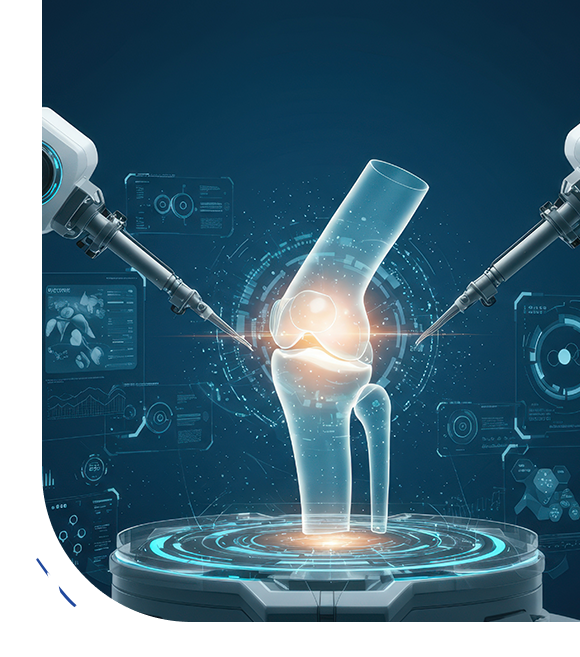
- Pre-surgical 3D mapping, creating detailed digital model of your unique knee anatomy
- Machine Learning algorithms, analysing exact cartilage damage distribution
- Artificial Intelligence, determining optimal treatment area with sub-millimeter precision
- Real-time surgical guidance, ensuring exact depth, angle, and positioning
- 10-12 minute robotic procedure time for the precision bone preparation
- Surgeon-robot collaboration, combining human expertise with robotic accuracy
FAST TRACK RECOVERY PROTOCOL
Same-day mobilization—most patients walk within hours after surgery, dramatically faster than traditional knee replacement where patients often remain bed-bound for 4-5 days.
How is Robotic FT-3D Knee Resurfacing Different from Robotic Knee Replacement?
| Aspect | CUVIS Robotic FT-3D Resurfacing | Robotic Total Knee Replacement |
| Fundamental Approach | Preserves natural knee—treats only damaged portion | Removes and replaces entire knee joint |
| Your Cartilage | Healthy cartilage preserved intact | All cartilages removed completely |
| Bone Preservation | Minimal bone removal—preserves natural anatomy | Significant bone removal from femur and tibia |
| Ligaments | Both ACL and PCL preserved | Often one or both cruciate ligaments sacrificed |
| Technology | US FDA-approved CUVIS Robot with AI | Robotic systems (various indigenous or local platforms) |
| Robotic Procedure Time | 10-12 minutes for precision work | Longer robotic-assisted procedure |
| Incision Size | Smaller (8-10cm minimally invasive) | Larger incision (12-15cm) |
| Recovery Speed | Walk same day, home in 2 days | Slower mobilization, longer hospital stay (3-5 days) |
| Natural Feeling | More natural—preserved anatomy and biomechanics | Less natural feeling—entire joint is artificial |
| Return to Activities | 2-3 weeks for daily activities | 6-8 weeks or longer |
| Activity Level Permitted | Higher activity levels—preserved biomechanics | More activity restrictions long-term |
| Sitting Cross-Legged | Yes—natural flexibility preserved | Often difficult or uncomfortable |
| Revision Options | Conversion to TKR straightforward if needed later | Revision more complex—bone stock already compromised |
| Ideal Candidate | Unicompartmental (single compartment) arthritis | Tri-compartmental (severe widespread) arthritis |
| Patient Satisfaction | 97-99% satisfaction rates | 80-85% satisfaction rates |
Who is a Suitable Candidate for Robotic FT-3D Knee Resurfacing?
Robotic FT-3D Knee resurfacing is suitable for patients with:
- Unicompartmental Knee Arthritis: Arthritis limited to one compartment (medial, lateral, or patellofemoral) confirmed with diagnostic imaging such as X-rays and MRI showing isolated compartment damage whilst other compartments remain healthy.
- Good Range of Motion: The knee bends at least 90 degrees—indicating preserved ligaments and joint mechanics.
- Intact Cruciate Ligaments: Both ACL (anterior cruciate ligament) and PCL (posterior cruciate ligament) intact and functional.
- Failed Conservative Treatment: Persistent pain despite adequate trial of medications (NSAIDs, supplements), physiotherapy and strengthening exercises, weight management, intra-articular injections (corticosteroids, hyaluronic acid), and activity modifications.
- Appropriate Age & Activity Level: Typically 45–75 years, though exceptions based on individual assessment. Active patients wanting to return to recreational activities—resurfacing allows more activity than robotic total replacement.
What Happens Before, During, and After CUVIS Robotic Knee Resurfacing?
Before Surgery
Pre-Operative Assessment
A detailed history of knee pain duration, location, severity, previous treatments attempted, functional limitations, activity goals, and medical conditions is taken from the patient.. Comprehensive knee examination assessing range of motion, ligament stability, alignment, gait pattern, and pain distribution is done.
CUVIS 3D Mapping & Artificial Intelligence Analysis
Pre-surgical planning completed digitally before entering operation theatre—eliminating surgical ambiguity. Advanced imaging creates a detailed 3-D digital model of a patient's unique knee anatomy. Machine Learning algorithms analyse precise cartilage damage distribution and depth. Artificial Intelligence determines optimal resurfacing area, exact implant size, and ideal positioning with sub-millimeter precision.
During Surgery
Anaesthesia & Positioning
No general anaesthesia or epidural required. Only local anaesthesia is administered on the targeted knee area. The patient is positioned supine (on back), thigh tourniquet applied to provide bloodless surgical field, leg prepared with antiseptic solution and draped sterile.
CUVIS Robot-Guided Precision Bone Preparation
Robotic arm guides surgeons with millimeter-level precision for bone preparation. Just 10-12 minutes for precision cutting and shaping. Femoral and tibial bones are prepared to exact depth, angle, and positioning determined by AI analysis. Both cruciate ligaments (ACL and PCL) completely preserved maintaining natural knee stability.
Implant Insertion & Fixation; Total Surgical Time
Final cobalt-chrome femoral component cemented onto prepared femoral surface covering only the damaged area. Ultra-high molecular weight polyethylene tibial component cemented onto tibial plateau. Excess cement meticulously removed. Knee reduced and full range of motion tested.CUVIS robotic precision work takes around 10-12 minutes.
After Surgery
Fast Track Mobilization (Same Day)
Stand and walk with physiotherapist assistance & walker support the same evening (if morning surgery) or next morning.
Hospital Stay (Typically 1 Day)
Typically discharged if stable, pain is well-controlled, walking independently with a walker without any complications.
What are the Recovery & Success Factors?
Preservation of Your Natural Knee
Your original, healthy knee cartilage remains intact throughout the procedure. Unlike robotic total knee replacement where all cartilage is removed, robotic FT-3D resurfacing treats only the damaged portion.
No General Anaesthesia Required
Only the targeted knee area is administered with local anaesthesia, eliminating the need for general or spinal anaesthesia.
Minimal Blood Loss & No ICU Stay
Since this is a minimally invasive procedure, there is very low to minimal blood loss of the patient. Hence, no ICU stay is required.
Fast Track Recovery Protocol
Patients walk the same day after surgery—standing and walking with assistance within hours, not days. Go home within 1-2 days, not 3-5 days like total knee replacement.
More Natural Knee Function
By preserving healthy bone, cartilage, and most importantly both cruciate ligaments (ACL and PCL), FT-3D knee resurfacing maintains natural knee function. Patients report their resurfaced knee feels more "natural" compared to total knee replacement, with better stair climbing, squatting ability, and sitting cross-legged comfort.
High Success Rates & Longevity
Patient satisfaction rates range around 97-99%—significantly higher than total knee replacement (80-85%). CUVIS robotic precision enhances these outcomes through optimal alignment.
Why Choose Healing Hospital in Chandigarh for Robotic: FT-3D Knee Resurfacing?

US FDA-Approved CUVIS Robot Technology : Healing Hospital has invested in the latest-generation CUVIS Joint Robot—US FDA approved Korean technology representing the most advanced robotic knee surgery system available globally. This cutting-edge surgeon-assisted system completes precision bone preparation in just 10-12 minutes using AI-powered surgical planning, Machine Learning algorithms, and sub-millimeter accuracy while ensuring consistently superior outcomes whilst preserving maximum healthy knee tissue.

Founder, Pioneer, & Trendsetter of FT-3D Knee Resurfacing : The evolution dates back to 2021 when FT-3D (Fast Track Three-Dimensional) knee resurfacing using AI (Artificial Intelligence) replacing traditional Total Knee Replacement was introduced exclusively by us in the tricity. In 2023, we advanced to RoboLens combining AI with AR (Augmented Reality) using Microsoft-powered HoloLens for enhanced 3D visualization and calculated accuracy. In 2026, latest evolution to US FDA-approved CUVIS Robot providing sub-millimeter precision, eliminating human error through surgeon-assisted robotic execution with zero margin for error.

45,000+ Successful Surgeries & Multidisciplinary Team Excellence : Our orthopaedic surgeons and anaesthesia team work as a single collaborative unit, coordinating seamlessly throughout the entire perioperative period to minimize any risks or complications. Healing Hospital has successfully performed 45,000+ surgeries until now since its inception in 2016.
What are the Advantages of Robotic FT-3D Knee Resurfacing?
Following are the key advantages of getting robotic FT-3D knee resurfacing:
- Preserves Your Original Knee
- Sub-Millimeter Precision
- Walk the same day with assistance
- Minimally Invasive Approach
- 10-12 Minutes Procedure Time
- Minimal blood loss
- No ICU Stay Required
- No Epidural or Anaesthesia Required
- Excellent Long-Term Results
- Superior Functional Outcomes
What are the Risks & Complications Involved in Robotic FT-3D Knee Resurfacing?
- Need for Revision or Conversion to TKR (10-15% over 10-15 years)
- Infection (1-2%)
- Blood Clots - DVT/PE (1-2%)
- Stiffness (Rare with Fast Track Protocol)
- Bearing Wear & Loosening (Long-Term)
- Fracture (Rare)
Reviewed By

Blog

White Discharge During Pregnancy: Understanding Normal, Clear, Brown, and Yellow Discharge
PCOS Symptoms Every Woman Should Know

Reasons for Delayed Periods: Pros, Cons, & Medical Recommendations

Best Gynaecologist in Chandigarh Offering Advanced & Compassionate Care

Complete Women’s Health Care with Dr. Ramandeep Kaur, Gynae Doctor in Chandigarh

Best Gynae Doctor in Chandigarh for Advanced Gynecology Treatments

Female Gynaecologist in Chandigarh for Pregnancy and Fertility Care

Top Gynaecologist in Chandigarh: Complete Guide for First-Time Visitors

Why You Should Choose the Top Gynaecologist in Chandigarh for Your Health

Best Gynae Doctor in Chandigarh: Your Complete Guide to Women’s Health Specialists
Frequently Asked Questions (FAQs)
What makes CUVIS Robotic FT-3D different from robotic total knee replacement?
CUVIS Robotic FT-3D is not a knee replacement—it’s a knee preservation procedure. Unlike robotic total knee replacement that removes your entire knee joint, CUVIS technology treats only the damaged arthritic portion whilst preserving your original, healthy knee cartilage, bone, and ligaments intact.
How is CUVIS Robot superior to even RoboLens?
CUVIS represents the next generation of robotic knee surgery technology—more advanced than RoboLens. Key advantages: US FDA approved (highest international safety standards), Korean advanced technology with superior precision, 10-12 minute robotic procedure time (ultra-fast precision work), surgeon-assisted collaboration system, and more sophisticated AI analysis. While RoboLens is excellent technology, CUVIS is the latest evolution with enhanced capabilities.
Will my natural knee cartilage be preserved?
Yes—absolutely! This is the fundamental principle of robotic FT-3D resurfacing. Your original, healthy knee cartilage in the unaffected compartments remains completely intact and untouched throughout the procedure. We treat only the damaged arthritic portion whilst preserving healthy cartilage, bone, and both cruciate ligaments.
What if the CUVIS Robot malfunctions or fails during surgery since it's a machine?
The CUVIS Robot is designed with multiple safety redundancies and fail-safe mechanisms, but most importantly, the surgeon maintains complete control throughout the entire procedure. The robot is a surgeon-assisted system, meaning it executes precision movements only under direct surgeon command and supervision—it cannot operate autonomously.
What is the CUVIS robotic procedure time?
The CUVIS Robot completes its precision bone preparation work in just 10-12 minutes—ultra-fast compared to conventional techniques and faster than robotic total knee replacement procedures. Total surgical time (including local anaesthesia, surgical approach, robotic precision work, implant fixation, and closure) is typically 30-40 minutes compared to 90-120 minutes for robotic total knee replacement.
Can I have both knees resurfaced at the same time?
It depends on individual assessment. Our surgeons perform comprehensive knee examination of both knees, review imaging studies, assess overall medical fitness, and discuss CUVIS technology benefits and considerations. A few patients undergo staged procedures (one knee followed by the other after 3-6 months), whilst others are suitable for simultaneous bilateral resurfacing.
How much does Robotic FT-3D knee resurfacing cost in Chandigarh?
Contact us at +91-7087373434, 7589343434 for detailed transparent pricing including consultation, Robotic 3D mapping, surgery, advanced implants, anaesthesia, hospital stay, physiotherapy, and follow-up care.
How do I schedule Robotic FT-3D knee resurfacing consultation?
Contact our orthopaedics department at +91-7589343434 to schedule consultation with our experts. Bring knee X-rays (standing if possible), MRI reports if available, previous treatment records, current medications list, and questions. Consultation includes comprehensive knee examination, review of imaging, discussion of RoboLens technology and benefit.