At Healing Hospital, we understand that severe back pain, leg pain, numbness, and concerns about spine surgery may create anxiety about treatment options—requiring the most advanced, minimally invasive solutions with fastest recovery and superior outcomes. That is why our advanced Neurosurgery & Spine Department, led by gold medallist neurosurgeons with Fellowship training in Endoscopic Spine Surgery and extensive experience in ultra-minimally invasive techniques—offers state-of-the-art endoscopic spine surgery using advanced HD endoscopic technology, tubular retractor systems, and comprehensive rehabilitation protocols. This ensures optimal nerve decompression through keyhole incisions, rapid pain relief, same-day or next-day discharge, and superior long-term outcomes for patients with lumbar disc herniation.
We have served patients across 25 states of India—a few of them are Chandigarh, Punjab, Haryana, Himachal Pradesh, J&K, Madhya Pradesh, Bihar, Jharkhand, West Bengal, Gujarat, and many others, with our comprehensive spine surgery services including endoscopic discectomy, percutaneous endoscopic lumbar discectomy (PELD), advanced endoscopic techniques, ultra-fast recovery protocols enabling same-day mobilization and discharge, comprehensive rehabilitation programmes, and long-term follow-up. Healing Hospital’s track record reflects proven excellence ensuring optimal results with patient safety, minimal tissue disruption, and rapid return to active life as highest priorities.
If you are searching for “best endoscopic spine surgeon in Chandigarh,” “keyhole spine surgery,” “slip disc treatment without open surgery,” “sciatica surgery,” or “minimally invasive spine surgery,” you have found a centre where surgical excellence meets Fellowship-level international training and cutting-edge neurosurgical expertise.
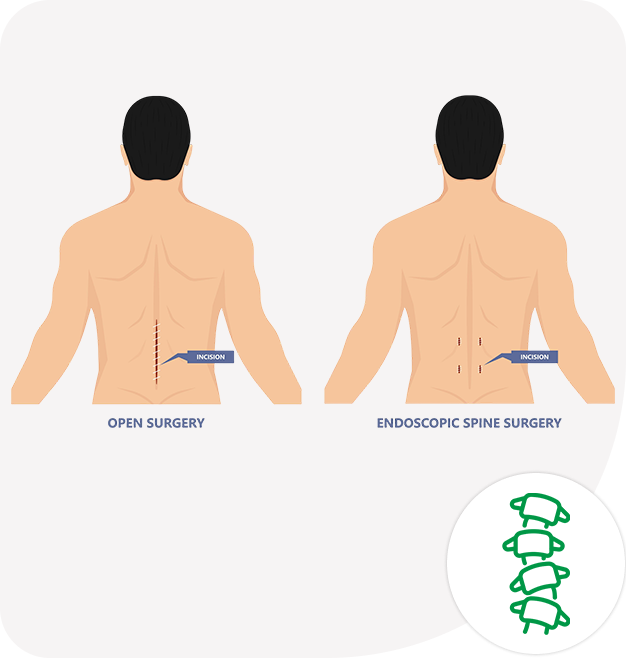
What is Endoscopic Spine Surgery?
Endoscopic spine surgery is the most advanced, ultra-minimally invasive spine surgery technique that removes herniated (slipped) disc material pressing on spinal nerves, relieving severe leg pain, numbness, and weakness caused by lumbar disc herniation—all through a tiny keyhole incision using high-definition endoscopic visualization.
Unlike traditional open surgery, endoscopic spine surgery uses a tiny incision (smaller than your fingernail), performed using a specialized HD endoscope with camera and working channel inserted through tubular retractors. This ultra-minimally invasive approach dramatically reduces tissue trauma, enables next-day discharge in most cases (walking within hours, home the same day or next morning), and provides excellent pain relief (90-95% success rate) whilst maintaining complete spinal stability.
Key Analogy: Endoscopic spine surgery preserves all spinal anatomy, accessing the herniated disc through a tiny keyhole like a skilled locksmith—preserving the door whilst fixing the lock. Traditional surgery requires "opening the entire door," whilst microdiscectomy is a middle ground with a smaller opening but still some disruption.
Schedule Your Appointment with
Our Expert Doctors
We are dedicated to driving lasting, positive transformation in healthcare management through innovation and patient-centered solutions.
Who is a Suitable Candidate for Endoscopic Spine Surgery?
Endoscopic spine surgery is suitable for patients with:
- Cauda Equina Syndrome (Emergency). Symptoms include bowel/bladder dysfunction, progressive bilateral leg weakness, requiring urgent surgical decompression
- Diagnosed Lumbar Disc Herniation & Foramenal Stenosis
- Severe Sciatica (Leg Pain Radiating Down the Leg)
- Numbness, Tingling, or Weakness in Leg or Foot
- Failed Conservative Treatment
- Functional Impairment, such as difficulty walking, standing, or performing daily activities; Work disability from symptoms; Sleep disturbance from pain; Declining quality of life.
What Happens Before, During, and After Endoscopic Spine Surgery?
Before Surgery
Clinical Evaluation & Optimization
A thorough Pre-Operative Assessment is conducted, combining a detailed neurological history and physical examination with advanced imaging (MRI/X-rays) to map the herniation and nerve compression. Simultaneously, Patient Optimization ensures surgical fitness through medical clearance, smoking cessation (to promote disc healing), glycemic control, and the strategic management of blood thinners to minimize procedural risk and enhance recovery.
During Surgery
Anaesthesia & Endoscopic Procedure
Under Local Anaesthesia with Conscious Sedation, the patient remains comfortable and able to provide real-time neurological feedback. Using Fluoroscopic guidance for pinpoint accuracy, a high-definition endoscope is inserted through a tiny 7-8mm incision. Unlike traditional surgery, muscles are gently dilated rather than cut, providing the surgeon with a magnified, HD view to precisely identify and remove the herniated disc fragment, ensuring the nerve root is completely decompressed and mobile.
Finalization & Closure
The procedure concludes with a thorough irrigation and confirmation of haemostasis, ensuring minimal blood loss. As the tubular retractor is withdrawn, the preserved muscle tissues naturally return to their original position. The tiny incision is closed with a single stitch or steri-strips, requiring no surgical drains. With a total surgical time of just 30-45 minutes, the "minimally invasive" approach ensures immediate structural stability and a seamless transition to recovery.
After Surgery
Immediate Recovery & Mobilization
Post-operative pain is minimal, allowing patients to walk independently within 2–4 hours of the procedure. Most patients are discharged the next day, a timeline significantly faster than traditional surgery. Before leaving, physiotherapy is initiated to teach essential body mechanics.
Transition to Home Recovery
The first two weeks focus on gradual activity progression, where patients are encouraged to increase daily walking while avoiding prolonged sitting and heavy lifting (>5kg). Because the approach is ultra-minimally invasive, recovery is smooth and requires only mild oral analgesics for a few days.
What are the Recovery & Success Factors?
Complete Muscle Preservation
The modern endoscopic approach preserves muscles completely—tubular dilators gently separate muscle fibres which return to normal position after retractor removal. This preservation eliminates post-operative muscle pain, maintains core strength, & prevents chronic back pain from muscle denervation.
Preserved Spinal Stability
By preserving healthy bone, ligaments, facet joints, and disc tissue whilst removing only the herniated fragment, endoscopic surgery maintains natural spinal biomechanics.
Ultra-Fast Recovery
Patients walk within 3-4 hours after surgery—standing and walking independently the same day. Discharged next day—fastest discharge among all spine surgery techniques. Return to desk work within 1-2 weeks—recovery 70-80% faster than traditional open surgery and 30-40% faster than microdiscectomy. Experience rapid leg pain relief—often immediate in the recovery room as nerve decompression occurs.
Why Choose Healing Hospital in Chandigarh for
Endoscopic Spine Surgery?

Advanced HD Endoscopic Technology & Infrastructure : Our Neurosurgery Department features state-of-the-art equipment including high-definition endoscopic systems, specialized tubular retractor systems enabling muscle-preserving access, comprehensive endoscopic instruments, intraoperative fluoroscopy, & advanced neuro-monitoring systems.

State-of-the-Art Modular OT : Endoscopic Spine Surgery performed in our advanced modular operation theatre featuring international-standard infrastructure with HEPA filtration and laminar airflow maintaining an ultra-sterile environment critical for spine surgery. World-class surgical facilities including latest neurosurgical instruments, intraoperative imaging capabilities, and advanced monitoring create an optimal environment for complex procedures.

Comprehensive Neurosurgery & Spine Expertise : Beyond endoscopic spine surgery, our neurosurgeons’ expertise encompasses the complete spectrum of neurosurgical procedures including minimally invasive surgeries, function neurosurgery (deep brain stimulation), brain tumour surgery, neurointervention for stroke and aneurysms, trauma neurosurgery, and spinal cord injury.
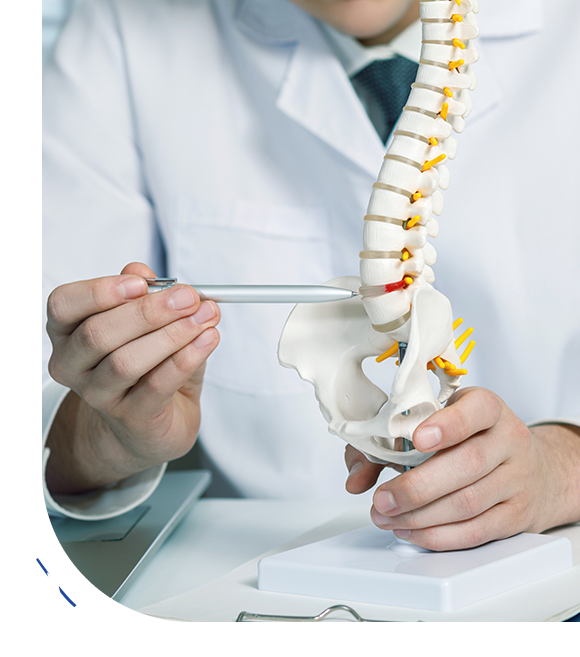
What are the Advantages of Endoscopic Spine Surgery?
Following are the key advantages of getting endoscopic spine surgery:
- Ultra-Minimally Invasive
- Fastest Recovery
- Minimal Post-Operative Pain
- Local/Spinal Anaesthesia
- Preserved Spinal Anatomy
- Outpatient Procedure
- Minimal blood loss
- Minimal scarring
- Excellent Success Rates
What are the Risks & Complications Involved in Endoscopic Spine Surgery?
While endoscopic spine surgery is extremely safe with complication rates lower than traditional techniques, patients should be aware of potential risks:
Recurrent Disc Herniation
Most common long-term concern—disc herniates again at the same level, typically within the first 6-12 months.
Incomplete Symptom Relief
A small percentage experience persistent or residual symptoms despite successful decompression. Causes include: nerve scarring or chronic changes from prolonged compression, unrecognized additional pathology (foraminal stenosis at other levels), central sensitization (chronic pain syndrome).
Nerve Root Injury
Rare complication from nerve manipulation during disc removal or instrument passage. Presents as new numbness, weakness, or pain in different distribution than pre-operative symptoms. Usually temporary.
Dural Tear
Tear in dura mater (covering of spinal cord and nerves) during surgery. Incidence lower with endoscopic approach compared to open surgery due to limited exposure and gentle technique.
Infection
Superficial wound infection or deep spinal infection (discitis, epidural abscess). Risk extremely low with endoscopic approach due to: minimal tissue exposure, short operative time, outpatient procedure limiting hospital-acquired infection.
Blood Clots (Very Rare)
Deep vein thrombosis (DVT) or pulmonary embolism. Risk significantly lower than traditional surgery due to: early mobilization (walking within hours), same-day discharge, minimal tissue trauma.
Conversion to Open Surgery
Rarely, endoscopic procedures may need conversion to microdiscectomy or open surgery if: inadequate visualization, complex anatomy not amenable to endoscopic approach, significant bleeding obscuring view, large sequestered fragments requiring wider exposure.
Reviewed By

Blog

Rett Syndrome Awareness Month 2026: Understanding, Support, and Early Intervention
World Cerebral Palsy Day 2026: Understanding, Support, and Awareness

World Meningitis Day 2026: Theme, Awareness, Prevention, Symptoms & Vaccination

World Alzheimer’s Day: Alzheimer’s Disease Awareness, Signs & Support
Comprehensive Guide to Choosing the Best Spine Surgeon in Chandigarh

Migraine Symptoms and Causes: When Headache Becomes Serious
Leading Brain & Spine Surgeons: Who Is the Best Neurosurgeon in Chandigarh?
Understanding Minimally Invasive Spine Surgery (MISS): Benefits and Risks

What are the Common Neurological Emergencies?

Chronic Kidney Disease
Frequently Asked Questions (FAQs)
What makes endoscopic spine surgery different from microdiscectomy and traditional spine surgery?
Endoscopic spine surgery is the most advanced, ultra-minimally invasive technique using a tiny 7-8mm keyhole incision (vs 2-3cm for microdiscectomy, 8-10cm for open surgery). The key difference is complete muscle preservation. Endoscopic surgery uses high-definition endoscope with camera for magnified visualization, can be performed under local/spinal anaesthesia (not general anaesthesia), enables next-day discharge and provides recovery 70-80% faster than traditional surgery.
How long do endoscopic spine surgery results last?
Endoscopic spine surgery provides excellent long-term outcomes with 90-95% success rates—comparable to traditional techniques. Most patients experience durable leg pain relief lasting many years to decades. Recurrent herniation occurs in 2-5% of patients, typically within the first 6-12 months.
How soon can I walk after endoscopic spine surgery?
Within 3-4 hours! This is the fastest mobilization among all spine surgery techniques. Patients walk independently with minimal assistance the same day—most walk to the bathroom within 3-4 hours after surgery. Early mobilization is encouraged as it prevents blood clots, reduces stiffness, and accelerates recovery.
Can endoscopic surgery treat multiple disc herniations?
Yes, endoscopic spine surgery can treat multiple level disc herniations in a single procedure or staged procedures depending on patient-specific factors. For true multiple symptomatic levels, endoscopic approach at each level through separate small incisions provides excellent decompression whilst maintaining ultra-minimally invasive benefits.
What activities can I do after endoscopic spine surgery?
Light activities including walking are permitted immediately after discharge. Gradual progression based on symptoms and healing: Week 1-2: Walking, light daily activities, avoid prolonged sitting. Week 2-4: Return to desk work, driving (consult surgeon), most daily activities. Week 4-6: Light exercise (swimming, cycling), progressive core strengthening. Week 6-8: Return to moderate physical activities and sports (consult surgeon). Month 3-6: Full unrestricted activities including strenuous exercise and contact sports with surgeon clearance.
How much does endoscopic spine surgery cost in Chandigarh?
Contact us at +91-7986115995 for detailed transparent pricing. Cost includes comprehensive package: consultation with Fellowship-trained neurosurgeon, detailed MRI review and surgical planning, advanced endoscopic spine surgery with HD equipment, anaesthesia, modular OT charges, same-day or overnight hospital stay (significantly shorter than traditional surgery), physiotherapy, medications, and follow-up care.
How do I schedule an endoscopic spine surgery consultation?
Contact our Neurosurgery Department at +91-7986115995 to schedule consultation with our well-trained endoscopic spine surgeon. Please bring: MRI scan of lumbar spine (films or CD—essential for surgical planning), previous treatment records and investigations, list of current medications, previous surgical reports if any, and your questions. Consultation includes comprehensive neurological examination, detailed MRI review correlating imaging with symptoms, discussion of endoscopic spine surgery technique and how it differs from traditional approaches, realistic outcome expectations including success rates and recovery timeline, and personalized treatment recommendations.