World Brain Tumor Day 2026: What Your Brain Is Trying to Tell You
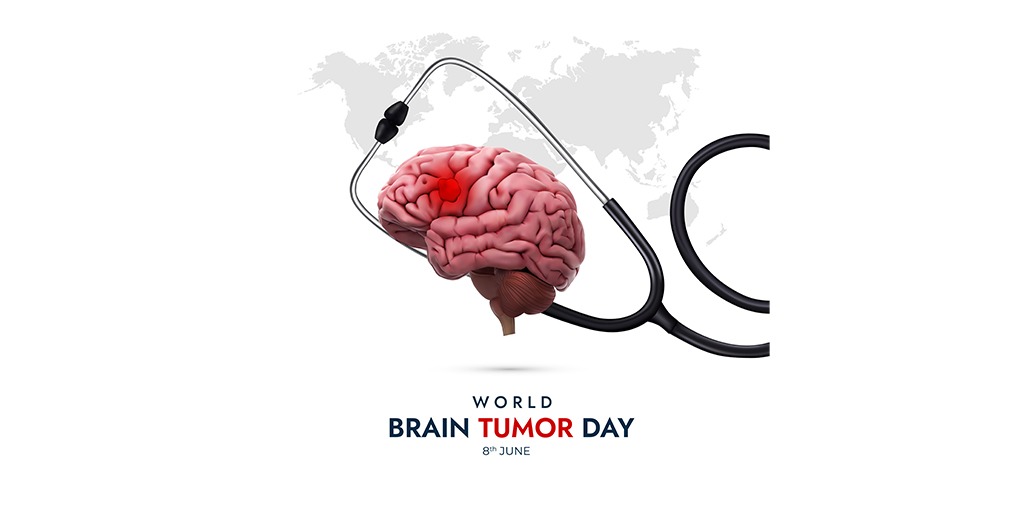
Every year on June 8, the world observes World Brain Tumor Day. Not to frighten people – but because the single biggest problem with brain tumors is that most people brush off the early signs as “just stress” or “just a headache.” And that delay costs lives.
Why Does This Day Exist?
World Brain Tumor Day was started in 2000 by a German patient support organisation that understood one hard truth – brain tumors are wildly under-discussed for how common they are. Over 3,08,000 people worldwide are diagnosed with a primary brain tumor every year. In India, that number crosses 28,000 annually. And these are only tumors that start in the brain – not the ones that travel there from other parts of the body, which are even more frequent.
Something Most People Get Wrong
When people hear “brain tumor,” they immediately imagine the worst. But nearly 1 in 3 brain tumors is benign – meaning not cancerous. The catch? Benign does not mean harmless. The skull is a closed, rigid box. Any growth inside it – cancerous or not – can press against vital areas and cause serious damage if ignored. In the brain, even a “small” problem in the wrong place is a big problem.
What May Cause a Brain Tumor?
Honestly – for most people, there is no clear single cause, and that is the truth medicine offers. The one proven environmental risk is past radiation exposure to the head. Mobile phones? Decades of research have not confirmed they cause brain tumors, despite the popular fear.
What does matter is family history. If a close blood relative has had a brain tumor, your risk is modestly higher. Certain inherited conditions also raise the odds. And a weakened immune system – from illness or long-term medication – is another known factor. For most people, though, it simply happens – which is exactly why the awareness that World Brain Tumor Day promotes every year matters so much.
The Symptoms People Almost Always Miss
Here is the part worth reading slowly. Brain tumors do not always announce themselves with a dramatic headache. Their symptoms depend on where in the brain they are growing – and that makes them sneaky.
A tumor at the front of the brain might first show up as mood changes, irritability, or uncharacteristic behaviour – things families chalk up to work pressure. One near the memory centre can cause forgetfulness or strange episodes of déjà vu. One pressing on the vision pathway can quietly steal your eyesight before a headache ever appears.
The signs that should prompt a visit to a neurologist without delay: headaches that are new, keep getting worse, or feel different from anything before – especially if they are worst in the morning; a first-ever seizure in an adult; nausea and vomiting with no stomach-related cause; sudden blurring or double vision; difficulty finding words or understanding speech; and unexplained weakness, clumsiness, or numbness on one side of the body. None of these symptoms mean you have a brain tumor. But every one of them means your brain deserves a proper check.
Treatment Today Is Not What It Was Ten Years Ago
Neurosurgery has advanced enormously. Surgeons today can perform procedures while the patient is awake – not as a frightening ordeal, but as a precise technique to protect speech and movement in real time. Targeted radiation can hit a tumor with pinpoint accuracy while leaving surrounding healthy tissue almost entirely untouched. There are now even wearable devices that use electric fields to slow tumor growth – a reality that would have sounded like science fiction a decade ago.
This is precisely what World Brain Tumor Day 2026 seeks to highlight – that early detection today opens doors to treatment options that simply did not exist before.
Healing Hospital Chandigarh – Here When It Matters
At Healing Hospital Chandigarh, our neurology and neurosurgery team brings together specialists across imaging, surgery, oncology, and rehabilitation – because a brain tumor diagnosis needs more than one expert, it needs a team working together around one patient.
If something feels off – a headache that won’t quit, a symptom you can’t explain – do not talk yourself out of getting it checked.
Call +91-9464343434 or visit www.healinghospital.co.in
Frequently Asked Questions
Q: When is World Brain Tumor Day observed?
World Brain Tumor Day is observed every year on June 8. It was established in 2000 by the German Brain Tumor Association to raise global awareness about brain tumors and support patients and their families.
Q: Is every brain tumor cancerous?
No. Nearly 1 in 3 brain tumors is benign, meaning non-cancerous. However, even a benign tumor inside the skull can cause serious damage by pressing on critical brain structures, so all brain tumors require medical evaluation and monitoring.
Q: What are the early warning signs of a brain tumor?
The most common early signs include persistent or worsening headaches – especially in the morning – new-onset seizures in an adult, unexplained nausea or vomiting, sudden vision or speech changes, memory difficulties, and unexplained weakness or numbness on one side of the body.
Q: Can mobile phones cause brain tumors?
<p?Decades of research across multiple countries have not established a confirmed causal link between mobile phone use and brain tumors. The only well-established environmental risk factor for brain tumors is prior exposure to ionising radiation to the head.
Q: What causes a brain tumor?
For the majority of cases, there is no single identifiable cause. Known risk factors include prior radiation exposure to the head, certain inherited genetic conditions, a family history of brain tumors, and a significantly weakened immune system.
Q: How are brain tumors treated today?
Treatment depends on the type, location, and grade of the tumor. Options include surgery – sometimes performed while the patient is awake for precision – targeted radiation therapy, chemotherapy, and newer approaches like wearable devices that use electric fields to slow tumor growth. Early detection significantly expands the treatment options available.
Q: When should I see a neurologist?
If you experience any new, persistent, or worsening neurological symptoms – unusual headaches, a first-ever seizure, vision or speech changes, unexplained memory issues, or one-sided weakness – consult a neurologist without delay. These symptoms do not necessarily mean a brain tumor, but they always deserve proper evaluation.
Q: How can I reach Healing Hospital Chandigarh for neurological consultation?
Call our helpline at +91-9464343434 or visit www.healinghospital.co.in to book an appointment with our neurology and neurosurgery team.