World Organ Donation Day 2026: Date, History, Facts and a Complete Guide to Organ Donation in India
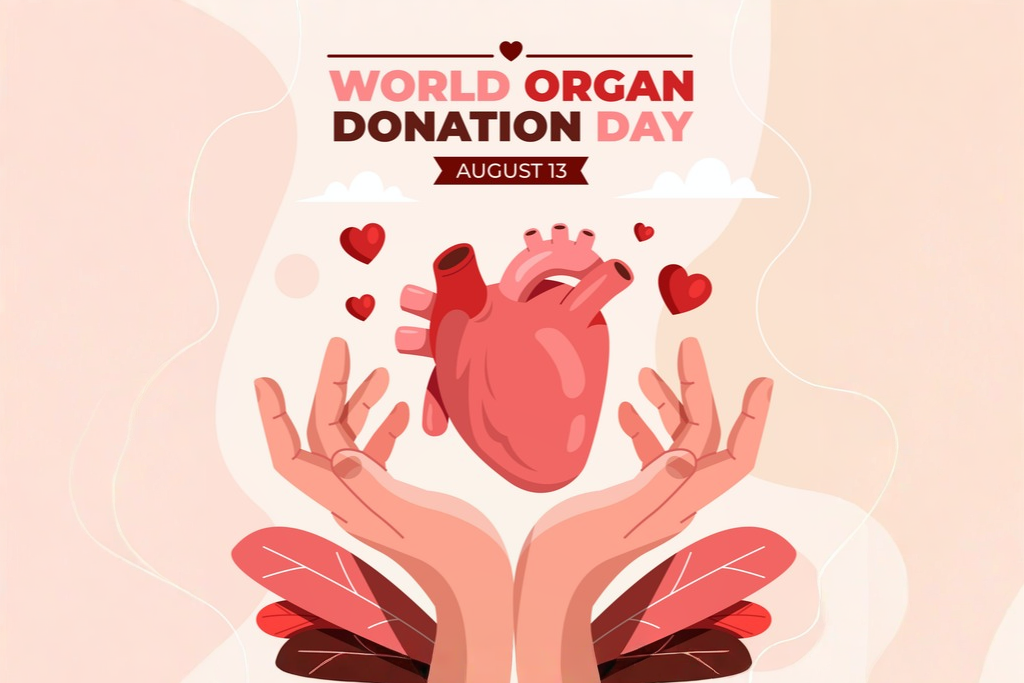
Every year, thousands of people in India wait for a life-saving organ transplant. While modern medicine can successfully replace failing kidneys, livers, hearts, lungs, and other organs, many patients never receive treatment simply because a suitable donor is not available in time. For many families, the biggest barrier is not medical technology but the shortage of registered organ donors and the lack of awareness about organ donation.
World Organ Donation Day is observed to encourage informed conversations about organ donation, dispel common misconceptions, and inspire more people to pledge their organs.
In this guide, you will learn about World Organ Donation Day 2026, its significance, the current state of organ donation in India, how the donation process works, common myths and facts, and how Healing Hospital in Chandigarh supports patients through advanced transplant-related care and organ donation awareness.
Quick Facts:-
- Date: Observed every year on August 13th.
- Purpose: A global awareness initiative that encourages people to pledge their organs and raises awareness about the life-saving impact of organ donation.
- Life-saving impact: A single deceased organ donor can save up to eight lives by donating vital organs and improve many more through tissue donation.
- India’s challenge: India performs one of the world’s highest numbers of organ transplants in absolute terms, yet the deceased organ donation rate remains below one donor per million population, significantly lower than countries such as Spain, which reports over 35 deceased donors per million population.
- National Organ Donation Day (India): Separate from World Organ Donation Day, National Organ Donation Day is observed on August 3 to commemorate India’s first successful deceased-donor heart transplant performed in 1994 and to promote organ donation awareness across the country.
The History and Significance of World Organ Donation Day
When Is World Organ Donation Day Observed?
World Organ Donation Day is observed every year on August 13th to raise awareness about the importance of organ donation and the urgent need to reduce the gap between organ demand and availability. Hospitals, transplant organizations, healthcare professionals, and public health authorities across the world use this occasion to educate communities, encourage organ donor registration, and promote informed conversations with families about donation.
The Legacy Behind World Organ Donation Day
The foundation of modern organ transplantation was laid in 1967, when South African cardiac surgeon Dr. Christiaan Barnard performed the world’s first successful human-to-human heart transplant. This historic achievement transformed organ transplantation into a viable treatment for patients with end-stage organ failure and paved the way for the advanced transplant programmes available today.
While World Organ Donation Day is inspired by the broader mission of promoting organ donation, August 13th is an awareness observance rather than the anniversary of a specific medical milestone. Its primary objective is to increase public awareness, encourage organ donor pledges, and improve donation rates worldwide.
World Organ Donation Day 2026 Theme
At the time of writing, the official theme for World Organ Donation Day 2026 has not been announced.
The 2025 theme was, “Answering the Call,” introduced by the Organ Donation and Transplant Alliance, recognizing the commitment of healthcare professionals involved in organ donation while encouraging greater public participation in donor registration and awareness initiatives.
World Organ Donation Day vs National Organ Donation Day in India
Although these observances share a common purpose, they mark different occasions.
- World Organ Donation Day (August 13): An international awareness campaign focused on encouraging organ donation and increasing public awareness worldwide.
- National Organ Donation Day in India (August 3): Observed under the guidance of NOTTO (National Organ and Tissue Transplant Organization) and the Ministry of Health & Family Welfare. Originally celebrated on November 27, it was shifted to August 3 in 2023 to commemorate India’s first successful deceased-donor heart transplant, performed on August 3, 1994.
Together, these two observances reinforce the importance of organ donation and help sustain awareness efforts throughout the month of August.
Why Organ Donation Matters: The Indian Scenario
Despite significant advances in transplant medicine, the demand for organs in India continues to far exceed their availability.
- Approximately 20 people die every day in India while waiting for a life-saving organ transplant.
- Around 1.8 lakh people develop kidney failure every year, yet only about 6,000 kidney transplants are performed annually.
- Nearly 2 lakh people die from liver failure or liver cancer each year. Although an estimated 25,000–30,000 liver transplants are needed annually, yet only around 1,500 procedures are performed.
- India records nearly 1.6 lakh road traffic fatalities every year, representing a significant potential for deceased organ donation. However, only about 1,000–1,200 deceased organ donations take place annually.
- More than 80% of organ transplants in India rely on living donors, while deceased organ donation, which is essential for heart, lung, pancreas, and many liver transplants – remains relatively uncommon.
The challenge is not simply a lack of potential donors. It is the result of limited awareness, delayed family consent, misconceptions about organ donation, and the need for stronger coordination within the healthcare system. World Organ Donation Day serves as an important reminder that informed decisions made today can save multiple lives tomorrow.
Understanding Organ Donation: Types and What Can Be Donated
Organ donation can take place in two ways:
- Living donation: A healthy individual donates one kidney or a portion of the liver to another person, usually a close relative. Both organs can continue to function normally after partial donation, making living donation a safe option for carefully selected donors.
- Deceased donation: Organs and tissues are donated after a person is legally declared dead, either following brainstem death or, in certain situations, after circulatory (cardiac) death.
A deceased donor can donate vital organs such as the kidneys, liver, heart, lungs, pancreas, and intestine, along with tissues including the corneas, skin, bone, heart valves, tendons, and blood vessels. One deceased donor can save up to eight lives through organ donation and improve the lives of many more through tissue transplantation.
The Legal Framework for Organ Donation in India
Organ donation in India is governed by the Transplantation of Human Organs and Tissues Act (THOTA), 1994, which was amended in 2011 to strengthen regulations and prevent illegal organ trade.
The Act legally recognizes brainstem death as a form of death, provided it is certified by an authorized panel of medical experts. It strictly prohibits the commercial sale or purchase of human organs and tissues.
The National Organ and Tissue Transplant Organisation (NOTTO), under the Ministry of Health & Family Welfare, serves as the country’s coordinating body for organ allocation, waiting lists, donor registration, and transplant-related data management.
Recent reforms introduced in 2023 removed the upper age limit for deceased-donor transplant recipients and eliminated state domicile restrictions, making it easier for eligible patients to register for transplantation anywhere in India under a unified national policy.
India has also developed the Green Corridor system, which enables police, hospitals, and airport authorities to coordinate traffic-free transportation of donated organs. This significantly reduces travel time and helps preserve organs such as the heart and liver, which remain viable for only a few hours after retrieval.
How to Register as an Organ Donor in India
Registering as an organ donor is a simple process that can be completed online through the portal of National Organ and Tissue Transplant Organisation (NOTTO). After completing the registration, you receive a digital donor pledge card.
Under Indian law, the family is still asked to provide consent before organ retrieval can take place. For this reason, healthcare experts strongly recommend discussing your decision with your loved ones in advance. Informing your family about your wishes significantly increases the likelihood that your decision will be honoured.
Common Myths & Facts About Organ Donation
Myth: Doctors may not try as hard to save my life if I am a registered organ donor.
Fact: Medical teams treating critically ill patients work solely to save the patient’s life. Organ donation is considered only after death has been legally declared by a registered medical practitioner.
Myth: I have a chronic medical condition, so I can’t donate my organs.
Fact: Many people with chronic medical conditions can still donate certain organs or tissues. Medical specialists evaluate each case individually at the time of donation.
Myth: Organ donation disfigures the body.
Fact: Organ retrieval is performed with the same dignity and surgical care as any other operation. It does not prevent families from conducting traditional funeral ceremonies.
Myth: Organs are given only to wealthy or influential people.
Fact: Organ allocation in India follows medical criteria such as blood group compatibility, tissue matching, and clinical urgency. Buying or selling organs is illegal under Indian law.
Who Can Become an Organ Donor?
Almost anyone can register as an organ donor regardless of age or existing medical conditions. The final decision about whether organs or tissues are suitable for transplantation is made by medical experts at the time of donation and not when a person registers.
Children and minors may become donors with appropriate parental or guardian consent, while adults can pledge independently. Rather than worrying about eligibility, the most important step is to register your decision and discuss it openly with your family.
Organ Donation and Transplant Care at Healing Hospital, Chandigarh
Healing Hospital in Chandigarh provides comprehensive evaluation, treatment, and long-term follow-up for patients requiring organ transplantation. Our multidisciplinary specialists in Nephrology, Hepatology,Critical Care, and Internal Medicine work together to support patients through every stage of the transplant journey. Right from the recipient assessment and living donor evaluation to post-transplant monitoring and lifelong care,every step is well taken care of. We remain committed to delivering evidence-based, patient-centred treatment while promoting awareness about the life-saving impact of organ donation.
Frequently Asked Questions
When is World Organ Donation Day observed?
World Organ Donation Day is observed every year on August 13 to raise global awareness about organ donation, encourage donor registration, and highlight the importance of saving lives through transplantation.
What organs and tissues can be donated?
A deceased donor can donate the kidneys, liver, heart, lungs, pancreas, and intestine, along with tissues such as the corneas, skin, bones, heart valves, tendons, and blood vessels. Living donors can usually donate one kidney or a portion of the liver.
What is the difference between living and deceased organ donation?
Living donation involves donating a kidney or part of the liver while alive. Deceased donation takes place after a person has been legally declared dead and allows donation of additional organs such as the heart, lungs, and pancreas.
Who can become an organ donor?
Almost anyone can register as an organ donor, regardless of age or current health. Medical specialists determine organ suitability only at the time of donation.
Can elderly people donate their organs?
Yes. There is no fixed upper age limit for organ donation. Doctors assess the condition of each organ individually before determining whether it is suitable for transplantation.
Why is organ donation important in India?
India has a significant shortage of donor organs, with thousands of patients waiting for life-saving transplants every year. Increasing awareness and donor registration can help bridge this gap and save more lives.
Where can I register for organ donation near me?
You can register online through the official NOTTO portal from anywhere in India. Many hospitals and authorised healthcare organisations also provide guidance on the registration process.
How do I book a consultation for organ transplantation near me in Chandigarh?
You can contact Healing Hospital in Chandigarh to schedule an appointment with our transplant specialists for organ donation counselling, transplant evaluation, or living donor assessment.