At Healing Hospital, Chandigarh, we understand that choosing In Vitro Fertilization (IVF) is both a medical and emotional decision. Couples seeking fertility treatment deserve more than advanced technology-they need experienced fertility specialists, transparent guidance, personalized treatment, and continuous support throughout their journey. Our Department of Gynaecology & Reproductive Medicine combines evidence-based fertility care with compassionate counselling to help couples overcome a wide range of infertility challenges and move closer to parenthood.
Led by experienced IVF specialists with over 14 years of expertise in reproductive medicine and supported by advanced embryology services in collaboration with the Apollo Fertility Laboratory, our team manages a wide spectrum of fertility conditions including blocked fallopian tubes, male factor infertility, recurrent IVF or IUI failure, diminished ovarian reserve, advanced maternal age, unexplained infertility, and couples requiring fertility preservation.
We provide comprehensive fertility care using internationally accepted treatment protocols and modern assisted reproductive technologies. From detailed fertility evaluation and ovarian stimulation to egg retrieval, embryo culture, blastocyst transfer, embryo freezing, ICSI, and pregnancy monitoring, every stage of treatment is carefully planned and delivered accordingly.
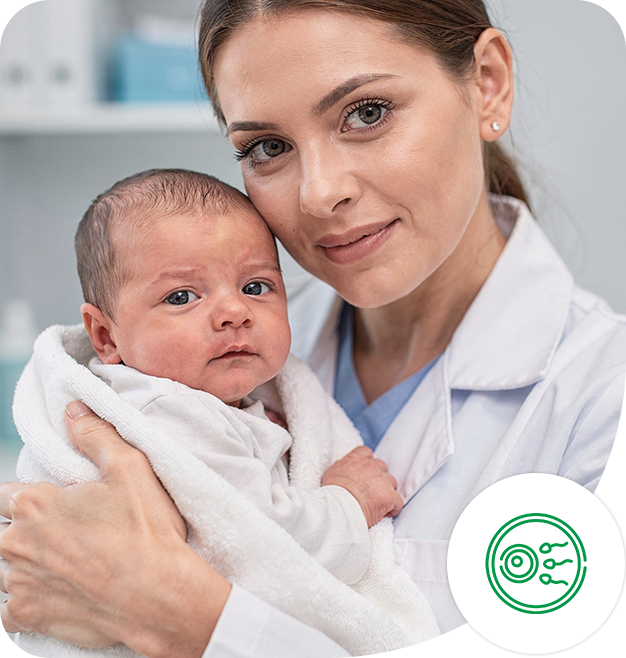
What is IVF?
In Vitro Fertilization (IVF) is an advanced assisted reproductive technology (ART) that helps couples achieve pregnancy when natural conception is difficult or unsuccessful. During an IVF cycle, mature eggs are collected from the woman's ovaries and fertilized with sperm in a specialised embryology laboratory. The resulting embryo(s) are then carefully transferred into the uterus, where they may implant and develop into a pregnancy.
IVF is recommended for a wide range of fertility challenges, including blocked fallopian tubes, male factor infertility, ovulation disorders, endometriosis, unexplained infertility, and cases where previous fertility treatments have not been successful. By overcoming many of the natural barriers to fertilization, IVF offers one of the most effective treatment options for couples experiencing infertility. Modern IVF techniques can also be combined with advanced procedures such as ICSI, blastocyst culture, embryo freezing, and genetic testing when clinically indicated, allowing treatment to be tailored to each couple's individual needs.
Schedule Your Appointment with
Our Expert Doctors
We are dedicated to driving lasting, positive transformation in healthcare management through innovation and patient-centered solutions.
Who is Recommended IVF?
IVF may be recommended for individuals or couples facing specific fertility challenges, particularly when other treatments are unlikely to be successful or have not resulted in pregnancy. Your fertility specialist may advise IVF in the following situations:
- Blocked, damaged, or absent fallopian tubes
- Moderate to severe male factor infertility
- Unexplained infertility after appropriate evaluation
- Failure to conceive after multiple IUI (Intrauterine Insemination) cycles
- Ovulation disorders that have not responded to medical treatment
- Endometriosis affecting fertility
- Diminished ovarian reserve or advanced maternal age
- Recurrent pregnancy loss, where genetic testing of embryos (PGT) may be recommended
- Need to reduce the risk of passing on certain inherited genetic disorders
- Fertility preservation before cancer treatment or other medical therapies that may affect fertility
- Previous tubal ligation or vasectomy, when surgical reversal is not suitable or preferred
- Individuals or couples requiring donor sperm, donor eggs, or gestational surrogacy, where legally and medically applicable
Types of IVF:-
Conventional IVF
This is the standard IVF method. Eggs are collected and mixed with sperm in a lab dish, allowing the fertilization to happen naturally. It is generally recommended when sperm count, motility, and morphology are within acceptable ranges.
Mild/Minimal Stimulation IVF
Mild IVF uses lower doses of fertility medications than a conventional IVF cycle, resulting in the development of fewer eggs. This approach may be suitable for selected women who prefer a gentler treatment protocol, are at risk of ovarian hyperstimulation syndrome (OHSS), or have a reduced ovarian reserve.
Natural Cycle IVF
Natural Cycle IVF is performed without ovarian stimulation medications. Instead, the single egg that develops naturally during the menstrual cycle is retrieved and fertilized. This option may be considered for women who cannot take fertility medications or prefer a medication-free approach, although success rates are generally lower than those of conventional IVF.
ICSI (Intracytoplasmic Sperm Injection)
Intracytoplasmic Sperm Injection (ICSI) is an advanced fertilization technique in which a single healthy sperm is injected directly into each mature egg using specialised micromanipulation equipment. It is commonly recommended for severe male factor infertility, poor fertilization in previous IVF cycles, surgically retrieved sperm, or other situations where conventional fertilization may be less successful. ICSI is frequently incorporated into IVF treatment, whenever clinically appropriate to optimize fertilization outcomes.
Blastocyst Culture & Transfer
In this technique, fertilized embryos are cultured in the laboratory for 5-6 days until they reach the blastocyst stage. Extended embryo culture allows embryologists to assess embryo development more accurately and select the embryo with the greatest implantation potential, when clinically appropriate.
Frozen Embryo Transfer (FET)
Frozen Embryo Transfer (FET) involves thawing and transferring previously frozen embryos into the uterus during a later treatment cycle. This approach allows patients to use embryos preserved from an earlier IVF cycle without undergoing another round of ovarian stimulation and egg retrieval. FET may be recommended after a planned freeze-all cycle, for fertility preservation, or when a fresh embryo transfer is not considered the most suitable option.
How is IVF performed? Step-by-Step Process
IVF is a carefully planned process involving several stages over a few weeks. Each step is designed to maximize the chances of successful fertilization, healthy embryo development, and implantation. Here's what you can expect during an IVF cycle:
1. Ovarian Stimulation
During a natural menstrual cycle, only one egg usually matures each month. In an IVF cycle, fertility medications are administered for approximately 8–12 days to stimulate the ovaries to produce multiple mature eggs. Regular ultrasound scans and blood tests help the fertility specialist monitor follicle growth and adjust medications whenever necessary.
2. Trigger Injection & Final Maturation
Once the follicles reach the desired size, a trigger injection is administered to complete the final stage of egg maturation. Egg retrieval is then precisely scheduled approximately 34–36 hours later to maximise the chances of collecting mature eggs.
3. Egg Retrieval (Ovum Pick-Up)
Egg retrieval is a short, minimally invasive procedure performed under sedation. Using transvaginal ultrasound guidance, the fertility specialist gently retrieves mature eggs from the ovaries with a fine needle. The procedure usually takes 20–30 minutes, and most patients return home the same day after a brief period of observation.
4. Sperm Collection & Preparation
On the day of egg retrieval, a semen sample is collected from the male partner or previously frozen sperm is prepared. The sample undergoes specialised laboratory processing to isolate the healthiest and most motile sperm. When required, sperm can also be obtained through surgical retrieval procedures such as TESA or PESA.
5. Fertilization
The retrieved eggs are fertilized in the embryology laboratory using either conventional IVF, where eggs and sperm are incubated together, or Intracytoplasmic Sperm Injection (ICSI), in which a single healthy sperm is injected directly into each mature egg. The most appropriate fertilization method is selected based on the couple's fertility evaluation.
6. Embryo Culture & Development
After fertilization, the embryos are cultured in specialised incubators that closely replicate the conditions within the human body. Experienced embryologists monitor their development daily, assessing embryo quality and selecting the healthiest embryo(s) for transfer. In suitable cases, embryos may be cultured until the blastocyst stage before transfer.
7. Embryo Transfer
The selected embryo(s) are gently transferred into the uterus using a soft, flexible catheter. This is a simple, minimally invasive procedure that usually does not require anaesthesia and is completed within a few minutes.
8. Luteal Phase Support
Following embryo transfer, progesterone supplementation is prescribed through injections, tablets, or vaginal preparations to support the uterine lining and improve the chances of successful implantation.
9. Pregnancy Test
Approximately 12–14 days after embryo transfer, a blood test measuring beta-human chorionic gonadotropin (β-hCG) is performed to determine whether implantation has occurred and the IVF cycle has resulted in pregnancy.
What Affects IVF Success Rates?
The success of IVF varies from one couple to another and depends on several medical and lifestyle factors. Understanding these factors can help you set realistic expectations. Some of the important factors are as follows:-
Age of the Woman
A woman's age is one of the most important factors influencing IVF success. Egg quality and quantity naturally decline with age, particularly after 35 years, which can affect fertilization, embryo development, and implantation rates.
Embryo Quality
The health and developmental potential of an embryo play a significant role in achieving pregnancy. During the IVF cycle, embryologists carefully monitor and grade embryos to select the one(s) with the highest implantation potential for transfer.
Ovarian Reserve
Ovarian reserve refers to the number and expected quality of eggs remaining in the ovaries. It is assessed using blood tests such as Anti-Müllerian Hormone (AMH) and antral follicle count (AFC) on ultrasound. Women with a better ovarian reserve generally produce more eggs during stimulation, increasing the number of embryos available for selection.
Uterine Receptivity
A healthy uterus is essential for successful embryo implantation. Conditions such as fibroids, endometrial polyps, adenomyosis, scar tissue, or a thin endometrial lining may reduce implantation rates and are evaluated and treated before embryo transfer whenever necessary.
Sperm Quality
Although IVF and ICSI can overcome many male fertility problems, sperm quality continues to influence fertilization, embryo development, and overall treatment outcomes. A comprehensive semen analysis and additional investigations, such as sperm DNA fragmentation testing, may be recommended when clinically indicated.
Lifestyle Factors
Maintaining a healthy body weight, eating a balanced diet, avoiding smoking and excessive alcohol consumption, managing chronic medical conditions, and following your doctor's advice regarding supplements such as folic acid and vitamin D can positively influence IVF outcomes.
Previous Fertility Treatment History
Previous IVF or IUI cycles provide valuable clinical information. Your fertility specialist reviews earlier treatment responses, embryo development, and implantation outcomes to optimise medication protocols and improve the chances of success in future cycles.
Embryology Laboratory Standards
The quality of the embryology laboratory plays an important role in IVF success. Advanced laboratory equipment, optimal culture conditions, strict quality control measures, and experienced embryologists help support healthy embryo development throughout the IVF process.
Why Choose Healing Hospital in Chandigarh For IVF?

Advanced Embryology Laboratory (in collaboration with Apollo Fertility Clinic) : Successful IVF depends not only on clinical expertise but also on the quality of the embryology laboratory. At Healing Hospital’s IVF Centre, the embryology services are provided in collaboration with the Apollo Fertility Laboratory, which follows stringent quality control protocols and ISO-certified laboratory standards. Equipped with advanced incubation systems, micromanipulation technology, and vitrification facilities for embryo freezing, the laboratory supports optimal embryo development throughout every stage of the IVF cycle.

Experienced Fertility Specialists with Advanced Fellowship Training : Our Department of Gynaecology & Reproductive Medicine is led by fertility specialists with over 14 years of dedicated experience in reproductive medicine and assisted reproductive technologies. With advanced fellowship training in Reproductive Endocrinology & Infertility from PGIMER, Chandigarh and AIIMS, New Delhi, along with internationally recognised qualifications including MRCOG (UK) and MNAMS, our specialists provide evidence-based fertility care tailored to each couple’s individual needs.

Personalized IVF Treatment Plans : No two couples experience infertility in the same way. Every IVF treatment plan is personalized after a comprehensive fertility evaluation, taking into account factors such as age, ovarian reserve, previous treatment history, underlying fertility conditions, and overall reproductive health. Throughout the IVF cycle, our team closely monitors follicular development and hormone levels to optimise treatment, minimise complications such as ovarian hyperstimulation syndrome (OHSS), and determine the most appropriate timing for egg retrieval and embryo transfer.
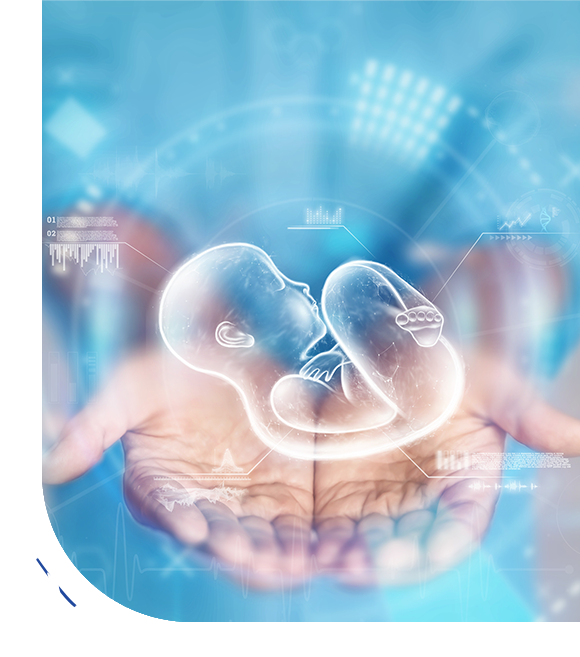
What are the Advantages of IVF?
Some of the key advantages of IVF include:
- One of the most effective fertility treatments available for many infertility conditions
- Helps overcome both male and female infertility factors
- Improves fertilization rates when combined with ICSI, where clinically indicated
- Allows embryologists to select the best-quality embryo(s) for transfer
- Offers the option of preimplantation genetic testing (PGT) for selected couples
- Enables embryo freezing (cryopreservation) for future pregnancy attempts
- Makes pregnancy possible using donor eggs or donor sperm, when medically or legally appropriate
- Supports gestational surrogacy in eligible cases, as permitted under applicable regulations
- Allows fertility preservation through embryo freezing before certain medical treatments
- Reduces the need for repeated ovarian stimulation when frozen embryos are available
- Provides personalized treatment protocols based on individual fertility needs
- Offers hope for couples who have not conceived with other fertility treatments such as ovulation induction or IUI
Potential Risks with IVF
Like any medical treatment, IVF carries certain risks. However, most complications are uncommon and can often be prevented or effectively managed through careful monitoring by an experienced fertility team.
1. Ovarian Hyperstimulation Syndrome (OHSS)
OHSS occurs when the ovaries respond excessively to fertility medications, leading to enlarged ovaries and symptoms such as abdominal bloating, discomfort, nausea, or fluid retention. Modern stimulation protocols have significantly reduced such incidences.
2. Twins or Multiple Pregnancies
If more than one embryo is transferred, there's a higher chance of twins, which can carry added risks for both mother and babies. Nowadays, the occurrences of this incidence have reduced.
3. Ectopic Pregnancy
In rare cases, an embryo may implant outside the uterus, most often in the fallopian tube. Early pregnancy monitoring and ultrasound examinations help detect this complication promptly.
4. Procedure-Related Risks (Egg Retrieval)
Egg retrieval is a minimally invasive procedure performed under sedation. Rarely, it may be associated with minor bleeding, infection, or injury to nearby structures. These complications are uncommon when the procedure is performed by experienced fertility specialists.
5. Side Effects of Fertility Injections
Some women may experience temporary side effects such as abdominal discomfort, bloating, headache, breast tenderness, mood changes, or fatigue during ovarian stimulation. These symptoms are generally mild and resolve after treatment.
6. Unsuccessful IVF Cycle
Despite advances in assisted reproductive technology, not every IVF cycle results in pregnancy. Success depends on several factors, including age, embryo quality, underlying fertility conditions, and overall reproductive health. Your fertility specialist will review the outcome and discuss the most appropriate next steps if pregnancy is not achieved.
7. Emotional & Psychological Impact
The IVF journey can be emotionally demanding for individuals and couples. Anxiety, uncertainty, and emotional stress may occur during different stages of treatment. At Healing Hospital, patients have access to dedicated psychiatrists and psychologists through our Department of Psychiatry & Mental Wellness, ensuring emotional support remains an integral part of comprehensive fertility care.
Blog

World Patient Safety Day 2026: Importance, Theme & Awareness
World Physiotherapy Day 2026: A Complete Guide to the Date, Theme and Recovery
National Eye Donation Fortnight: Importance, Eligibility, Process & Awareness

World Mosquito Day: Malaria, Mosquito-Borne Diseases, Symptoms & Prevention

World Organ Donation Day: Importance, Eligibility, Process & Awareness

Loose Motion Home Remedies: What to Eat and How to Stop Diarrhea Naturally

Sleep Apnea: Symptoms, Causes, Diagnosis & Treatment Options

SGPT Normal Range: When High SGPT Levels Need Medical Attention

Pregnancy Diet Chart: What to Eat During Pregnancy for a Healthy Baby

How to Reduce Belly Fat Without Crash Diets: Diet, Exercise & Lifestyle Tips
Frequently Asked Questions (FAQs)
What is IVF?
In Vitro Fertilization (IVF) is an assisted reproductive technique in which eggs are retrieved from the ovaries, fertilized with sperm in a specialised embryology laboratory, and the resulting embryo is transferred into the uterus to achieve pregnancy.
Who should consider IVF treatment?
IVF may be recommended for couples with blocked fallopian tubes, male factor infertility, ovulation disorders, endometriosis, unexplained infertility, recurrent pregnancy loss, or unsuccessful IUI cycles. It may also be advised for fertility preservation or when donor eggs, donor sperm, or gestational surrogacy are required.
What is the difference between IVF and ICSI?
In conventional IVF, eggs and sperm are placed together in a laboratory dish, allowing fertilization to occur naturally. In ICSI (Intracytoplasmic Sperm Injection), a single healthy sperm is injected directly into the egg. ICSI is commonly recommended for severe male infertility or previous fertilization failure.
How many IVF cycles are usually required?
Some couples achieve pregnancy during the first IVF cycle, while others may require more than one attempt. The number of cycles depends on factors such as age, fertility diagnosis, embryo quality, and previous treatment outcomes.
Is IVF treatment painful?
Most stages of IVF involve minimal discomfort. Egg retrieval is performed under sedation or anaesthesia, making the procedure comfortable. Hormone injections may cause mild temporary discomfort, while embryo transfer is usually painless.
How do I prepare before starting an IVF cycle?
Your fertility specialist may recommend maintaining a healthy weight, following a balanced diet, taking prescribed supplements such as folic acid, avoiding smoking and alcohol, managing chronic medical conditions, and completing all recommended fertility investigations before beginning treatment.
How much does IVF cost near me in Chandigarh?
The cost of IVF depends on the treatment protocol, medications, need for ICSI, embryo freezing, genetic testing, and other additional procedures. For personalized treatment plans and pricing, please contact us at +91-7696793034.
How do I book an IVF consultation near me?
You can schedule a consultation with our fertility specialists at Healing Hospital, Sector 34A, Chandigarh by contacting our appointment desk at +91-7696793034. Please bring your previous fertility investigations, medical records, and details of any prior fertility treatments to help our specialists develop a personalised treatment plan.