Dandruff and Itchy Scalp: Causes, Symptoms & Treatment
Dandruff is one of the most mismanaged skin conditions in my clinic. Not because it is complicated – it is not – but because people treat it like a hygiene problem when it is a medical one. Half my patients have been cycling through shampoos for months, searching for a reliable dandruff solution, before they ask why one works and another does not. The answer is that it depends on the cause. And most shampoos do not tell you that on the label.
This article is a straight explanation: what dandruff is, why it happens, what the evidence says about anti-dandruff treatment options, and when you need to stop self-treating and see a dermatologist.
What Dandruff Actually Is
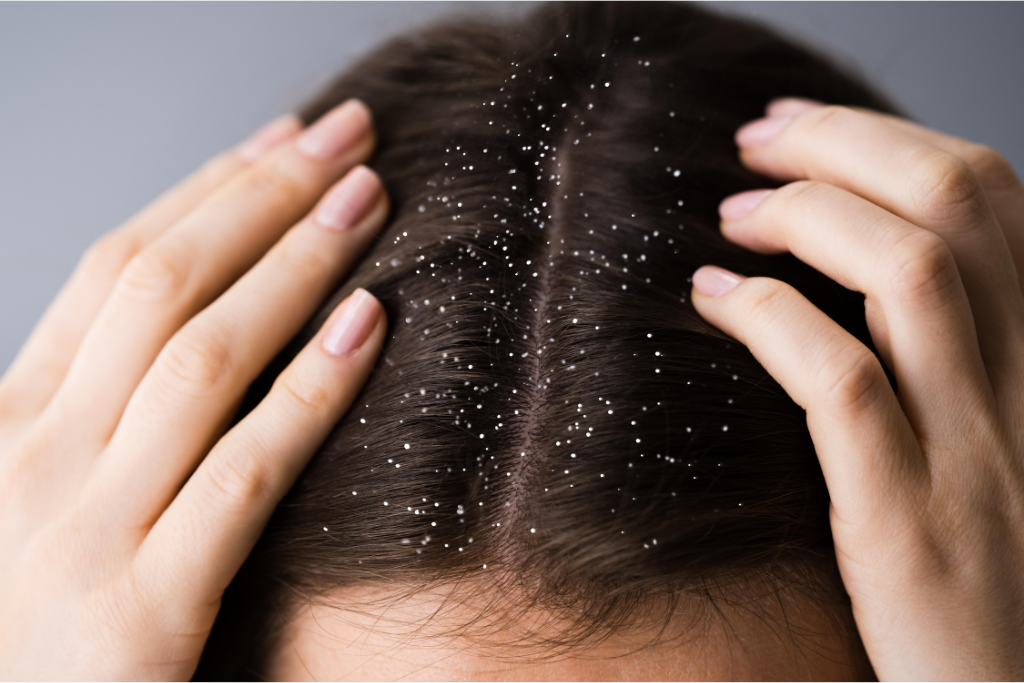
Dandruff is the visible shedding of dead skin cells from the scalp, almost always accompanied by itching. It is a symptom – not a disease in itself. The most common driver is a lipid-dependent yeast called Malassezia, which lives on most adult scalps without causing any trouble. In some people, it proliferates, breaks down scalp oils into irritant free fatty acids, disrupts the epidermal barrier, and triggers an inflammatory response that accelerates skin cell turnover. The result is the flakes most people recognise as hair dandruff – and keep unsuccessfully trying to wash away.
Current evidence shows the pathophysiology of seborrhoeic dermatitis – the most clinically significant dandruff-related condition – involves not just Malassezia overgrowth, but skin barrier dysfunction, sebaceous gland activity, and an immune response that engages multiple T-cell pathways. It is not a simple yeast-equals-flakes equation.
Why Your Scalp Is Flaking: The Main Causes
Getting this right matters. Finding the best solution for dandruff starts with understanding which type you are actually dealing with. Treating fungal dandruff with a moisturising shampoo achieves nothing. Treating dry scalp with an antifungal achieves nothing. Here is what is actually going on in each case:
Seborrhoeic Dermatitis
This is the most common cause of persistent dandruff. It is a chronic inflammatory skin condition – not just a scalp problem – producing greasy, yellowish adherent flakes, redness, and significant itchy scalp dandruff. It flares and remits, and it requires ongoing management rather than a one-time fix. It also appears on the face, around the eyebrows, nasolabial folds, and ears, which is a useful diagnostic clue if your scalp symptoms keep company with facial oiliness.
Dry Scalp
Frequently confused with dandruff, but a different condition with a different treatment. Dry scalp produces small, fine white flakes without oiliness – stripped moisture from harsh shampoos, cold weather, or over-washing. An antifungal shampoo will not help this and may make it worse.
Contact Dermatitis
A reaction to a product – hair dye, shampoo, conditioner, styling products. The timeline is the giveaway: flaking and itchy scalp that begins after a product change. Removing the trigger usually resolves it. Patch testing is useful if the trigger is not obvious.
Scalp Psoriasis
An autoimmune condition producing thick, silvery, adherent scales – distinctly different from the loose flaking of dandruff. Often extends beyond the hairline. Over-the-counter anti-dandruff treatment shampoos will not treat this adequately. It requires dermatological assessment and, in many cases, prescription therapy including vitamin D analogues, topical steroids, or biologics for severe disease.
Stress and Hormonal Changes
Stress worsens dandruff – this connection is real, not anecdotal. Psychological stress activates the hypothalamic-pituitary-adrenal axis, elevates cortisol, stimulates sebaceous gland activity, and impairs the immune surveillance that normally keeps Malassezia from proliferating. Worth noting: the direct RCT evidence linking stress to measurable Malassezia overgrowth in humans is still limited, but the physiological pathway is well-described. Hormonal changes at puberty, during pregnancy, and in certain medical conditions affect sebum production along similar lines.
When to Stop Self-Treating and See a Dermatologist
Most mild dandruff responds to over-the-counter medicated shampoos within four to six weeks if used correctly. If it does not – or if any of the following are present – no off-the-shelf hair dandruff solution will suffice, and you need a proper diagnosis:
- Thick, silvery, or firmly adherent yellowish scales, which suggest psoriasis or seborrhoeic dermatitis rather than simple dandruff
- Redness, swelling, or warmth on the scalp
- Hair thinning occurring alongside scalp symptoms
- Open sores or crusting from scratching
- Symptoms spreading to the face, ears, eyebrows, or chest
- Symptoms returning rapidly after stopping treatment – relapse within a few weeks of discontinuing a shampoo is common with seborrhoeic dermatitis and signals that maintenance therapy is needed
Continuing to cycle through shampoos when these signs are present delays the right diagnosis – and the right treatment.
What the Evidence Says About Dandruff Treatments
The right scalp treatment for dandruff depends entirely on the cause. Here is an honest summary of the evidence for each main option:
Ketoconazole (2%)
The strongest antifungal option in this category. In vitro and in vivo studies consistently show ketoconazole outperforms both selenium sulphide and zinc pyrithione in reducing Malassezia counts. It is available over the counter in India and on prescription. The evidence base includes randomised controlled trials comparing it against selenium sulphide 2.5% and zinc pyrithione 1%, showing comparable or superior clinical outcomes for seborrhoeic dermatitis and moderate-to-severe dandruff. It is the first-choice agent for fungal dandruff when a faster or more reliable response is needed.
Zinc Pyrithione (1–2%)
Has both antifungal and antibacterial properties. Well-evidenced for mild-to-moderate dandruff with a good safety profile. Widely available, good for maintenance once active treatment has controlled the flare. Less potent than ketoconazole as a standalone antifungal, but effective enough for most uncomplicated cases. The combination of ketoconazole 2% and zinc pyrithione 1% has been studied in a postmarketing trial and showed greater than 90% reduction in dandruff scores over four to six weeks – though postmarketing studies should be interpreted with appropriate caution relative to placebo-controlled RCTs.
Selenium Sulphide (2.5%)
Antifungal and keratolytic – it slows cell turnover as well as targeting Malassezia. Confirmed effective in RCTs including a three-arm trial comparing it against ketoconazole 2% and placebo. Relapse rates after stopping selenium sulphide are notable – approximately 50% of patients relapse within a month of discontinuing treatment – which is why maintenance is often necessary for seborrhoeic dermatitis regardless of which agent is used.
Coal Tar
Anti-inflammatory and anti-proliferative. The preferred scalp treatment for dandruff when symptoms are associated with psoriasis – it helps reduce scale and inflammation. Less commonly used for routine fungal dandruff because other options smell better and are easier to use. Efficacy in psoriasis-related scalp disease is well-established.
Salicylic Acid
A keratolytic – it loosens and removes scale rather than targeting the underlying cause. Most useful combined with an antifungal agent; on its own it addresses the symptom but not the driver.
Prescription Treatments
Necessary when OTC options used correctly for four to six weeks have not produced adequate response. Dermatologists may prescribe stronger antifungal formulations, topical corticosteroids for inflammation, and for scalp psoriasis, vitamin D analogues (calcipotriol) or biological therapies in refractory disease.
How to Use a Medicated Shampoo Correctly
Most treatment failures are not product failures – they are application failures. A medicated shampoo that is rinsed off in thirty seconds has not had time to work. The active ingredient needs contact time with the scalp: apply, work in, leave for three to five minutes, then rinse. Twice to three times a week during active treatment. This is basic but it is what most people skip.
Maintenance matters too. Once active dandruff is controlled, reducing frequency rather than stopping entirely – once a week or fortnightly – significantly lowers relapse rates. This is especially relevant for seborrhoeic dermatitis, where stopping treatment abruptly is reliably followed by a return of symptoms within weeks.
Scalp Hygiene and Diet: Supportive, Not Sufficient
Wash frequently enough to prevent sebum and dead skin buildup – what counts as ‘enough’ varies by individual. Avoid heavy oils applied directly to the scalp; they provide more substrate for Malassezia. Rinse hair products thoroughly.
Diet has a documented but modest connection to scalp health. Deficiencies in zinc, B vitamins, and omega-3 fatty acids are associated with increased inflammation. A balanced diet supports skin health from within, but diet alone will not resolve active seborrhoeic dermatitis – treat it as supportive, not primary.
What About Natural Remedies?
For those seeking a more natural dandruff solution, the evidence is limited but not entirely absent. Tea tree oil is the only natural remedy with meaningful RCT evidence. A 2002 randomised, single-blind study (Satchell et al., JAAD) in 126 participants found that a 5% tea tree oil shampoo produced 41% improvement in dandruff severity scores versus 11% in the placebo group over four weeks. That is a single study, and it used 5% concentration – not the vague ‘low concentration’ sometimes cited. The evidence for other concentrations is not established.
Aloe vera has anti-inflammatory and soothing properties but does not address fungal causes. It may reduce itchy scalp dandruff but will not treat seborrhoeic dermatitis.
Coconut oil is frequently recommended and has some in vitro antifungal activity, but robust clinical trial evidence for dandruff is lacking. Applied heavily to the scalp it may paradoxically worsen oily dandruff by increasing the lipid substrate available to Malassezia.
Frequently Asked Questions
Does dandruff cause hair loss?
Dandruff itself does not directly cause hair loss. Persistent scratching can damage follicles over time, and poorly controlled seborrhoeic dermatitis or scalp psoriasis can affect follicular health if left unmanaged for prolonged periods. If you are experiencing both scalp symptoms and noticeable hair thinning, that warrants a proper assessment – it is not something to attribute to dandruff alone without a diagnosis.
Is dandruff related to poor hygiene?
No. Dandruff is a medical skin condition, not a hygiene failure. Excessive washing with harsh shampoos can strip the scalp and worsen certain types. The judgement that comes with hair dandruff is not deserved – it is caused by fungal overgrowth, skin sensitivity, or inflammation, not cleanliness.
What is the difference between dandruff and dry scalp?
Dandruff typically involves an oily scalp with larger, yellowish, greasy flakes driven by fungal activity. Dry scalp produces small, fine, white flakes from insufficient moisture. Both cause itching but require opposite treatment approaches – anti-dandruff treatment for fungal dandruff, moisturising for dry scalp. Using an antifungal on a dry scalp will not help and may worsen it.
How long should I try a medicated shampoo before concluding it does not work?
Four to six weeks of correct use – two to three times per week with adequate contact time. If there is no meaningful improvement after this period, see a dermatologist. The shampoo may be targeting the wrong cause, or you may need prescription-strength treatment. The best solution for dandruff is always one matched to the correct diagnosis.
How do I consult a Dermatologist at Healing Hospital Chandigarh?
If dandruff or an itchy scalp has persisted despite over-the-counter treatment – or if you are unsure what you are actually dealing with – the dermatology team at Healing Hospital Chandigarh provides a full scalp assessment and a treatment plan matched to the actual cause. Call +91-9464343434 or visit www.healinghospital.co.in to book an appointment.