Sleep Apnea: Everything You Need to Know
Nearly 1 billion people worldwide live with sleep apnea – and the overwhelming majority have no idea. It is not just loud snoring or restless nights. Sleep apnea is a serious, chronic medical condition that quietly increases the risk of heart disease, stroke, high blood pressure, and cognitive decline with every undiagnosed night that passes.
Whether you have been told you snore, or you wake up exhausted despite a full night’s sleep, understanding sleep apnea symptoms is the first and most critical step. This complete guide covers everything from early warning signs and root sleep apnea causes to the latest sleep apnea test options, obstructive sleep apnea treatment, surgery, self-care strategies, and when to see a sleep apnea specialist.
What Is Sleep Apnea?
Sleep apnea is a sleep disorder characterized by repeated interruptions in breathing during sleep. These pauses – called apneas – can last anywhere from a few seconds to over a minute and may occur dozens or even hundreds of times per night. Each event partially or fully wakes the brain to restore normal breathing, fragmenting sleep so severely that even eight hours in bed can leave you feeling exhausted.
The word “apnea” comes from the Greek for “without breath”. And that is precisely what happens: your airway collapses, your brain sounds an alarm, your body lurches back into breathing – and the cycle repeats, all night, often without your conscious awareness.
Untreated sleep apnea is far more than a nuisance. It is linked to a cascade of serious health consequences including cardiovascular disease, metabolic disorders, depression, impaired memory, and a significantly elevated risk of accidents from daytime drowsiness.
Types of Sleep Apnea
Understanding the types of sleep apnea matters because the cause determines the treatment. There are three recognized forms:
1. Obstructive Sleep Apnea (OSA)
Obstructive sleep apnea is by far the most prevalent form, accounting for the vast majority of all cases. It occurs when the muscles in the throat relax during sleep, causing the soft tissue – the tongue, soft palate, and uvula – to collapse and physically block the upper airway. The brain detects the oxygen drop and briefly rouses the body to restore airflow, often with a gasp, snort, or choking sound – the classic hallmark of snoring and sleep apnea occurring together. OSA is directly linked to factors such as anatomical features of the neck, enlarged tonsils, and alcohol use before bed.
2. Central Sleep Apnea (CSA)
Central sleep apnea is less common and fundamentally different in origin. Here, the airway itself is not blocked – instead, the brain fails to send the correct signals to the muscles that control breathing. It is often associated with heart failure, stroke, high-altitude exposure, and certain medications (particularly opioids).
3. Complex (Mixed) Sleep Apnea
Also called treatment-emergent central sleep apnea, this form combines both obstructive and central patterns. It is sometimes identified in patients who begin CPAP therapy for OSA and subsequently develop central apnea episodes.
Sleep Apnea Symptoms You Should Never Ignore
Here are the key sleep apnea symptoms to know:
Nighttime Symptoms
- Loud, persistent snoring – especially snoring interrupted by silence, gasping, or choking
- Witnessed pauses in breathing – a partner noticing you stop breathing during sleep is one of the strongest diagnostic indicators
- Gasping or choking awake – sudden arousals where you are short of breath
- Frequent nighttime urination (nocturia) – often misattributed to bladder issues
- Restless sleep or excessive movement – the body’s attempt to restore breathing
- Night sweats – particularly from the effort of breathing against a blocked airway
- Grinding teeth (bruxism) – research increasingly links this to OSA
Daytime Symptoms
- Excessive daytime sleepiness – falling asleep in meetings, while watching TV, or even briefly while driving
- Morning headaches – caused by CO₂ build-up and reduced oxygen levels overnight
- Dry mouth or sore throat upon waking – from breathing through the mouth all night
- Difficulty concentrating and brain fog – fragmented sleep prevents the deep, restorative stages needed for memory consolidation
- Mood changes – irritability, depression, anxiety – sleep deprivation has profound effects on emotional regulation
- Reduced libido – hormonal disruption from poor sleep quality
Sleep Apnea Causes and Risk Factors
Understanding the sleep apnea causes helps explain both who is at risk and why certain treatments are effective. The underlying reasons for sleep apnea differ between obstructive and central types.
Causes of Obstructive Sleep Apnea
- Anatomical factors – A narrow airway, large tongue, or enlarged tonsils – all of these may cause obstruction in individuals
- Age – Risk increases with age; over 50% of adults 65 and older may have at least mild sleep apnea
- Sex – Men are 2–3x more likely to develop OSA than pre-menopausal women; this gap narrows significantly after menopause
- Alcohol and sedatives – Relax throat muscles, worsening airway collapse during sleep
- Smoking -increases inflammation and fluid retention in the upper airway; smokers are 1.2x more likely to have OSA. The link between snoring and sleep apnea is also significantly worsened by smoking
- Nasal congestion – Chronic blockage forces mouth breathing, increasing obstruction risk
- Family history – Genetic factors influencing jaw structure, neck anatomy, and obesity risk are heritable
- Hypothyroidism and other hormonal conditions Including PCOS in women
Causes of Central Sleep Apnea
- Heart failure or atrial fibrillation
- Stroke or brainstem injury
- High altitude (altitude-induced Cheyne-Stokes respiration)
- Opioid or narcotic pain medication use
- Kidney failure
When to Consult a Sleep Apnea Specialist?
Consult a sleep apnea specialist if you experience:
- Habitual loud snoring, especially with gasping or choking
- Persistent daytime fatigue
- Morning headaches, dry mouth, or a sore throat in the mornings
- A partner witnessing breathing pauses during your sleep
- Existing conditions like hypertension, heart disease, or obesity
Early consultation with a sleep apnea specialist avoids months or years of avoidable cardiovascular and cognitive risk.
How Is Sleep Apnea Diagnosed?
A formal diagnosis always requires a sleep apnea test. There are two primary types:
1. Polysomnography (PSG) – In-Lab Sleep Study
Conducted in a sleep clinic overnight, polysomnography monitors:
- Brain activity (EEG)
- Eye movement (EOG)
- Muscle activity (EMG)
- Heart rhythm (ECG)
- Blood oxygen levels
- Breathing effort and airflow
- Body position and limb movements
This comprehensive data allows clinicians to precisely calculate the Apnea-Hypopnea Index (AHI) – the number of apnea and hypopnea events per hour of sleep – which is used to classify severity:
| AHI Score | Severity |
| 0–5 events/hour | Normal |
| 6–15 events/hour | Mild OSA |
| 16–30 events/hour | Moderate OSA |
| 30+ events/hour | Severe OSA |
2. Home Sleep Apnea Test (HSAT)
For many patients, a home sleep apnea test offers a convenient, cost-effective alternative. These devices measure oxygen saturation, heart rate, airflow, and breathing effort from the comfort of your own bed.
Home sleep testing is growing rapidly, with HSAT devices expanding at approximately 45% annually and gaining broader insurance coverage.
Obstructive Sleep Apnea Treatment Options
Every treatment decision begins with one question: Why is your airway collapsing?
The cause – whether anatomical, positional, or neurological – must be precisely identified before any treatment can be truly effective. Once the root cause is established, there are two primary treatment pathways.
1. CPAP Therapy – Symptom Management, Not a Cure
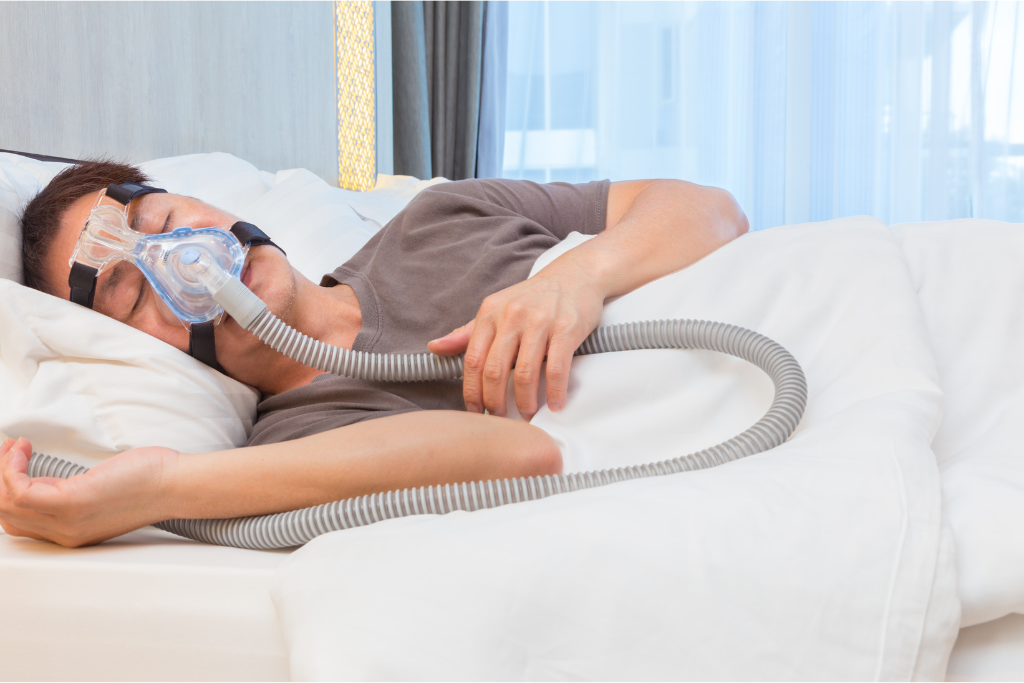
CPAP (Continuous Positive Airway Pressure) – a machine that delivers pressurised air through a mask worn during sleep, physically preventing the airway from collapsing.
However, it does not cure the root cause of OSA. The moment the machine is removed, the obstruction returns. There are no published long-term cure rates for CPAP – it is a nightly management device, not a solution.
Long-term CPAP compliance is also a well-documented challenge. Many patients find it difficult to sustain due to:
- Discomfort from the mask and straps
- Noise disrupting the patient or their partner
- Skin irritation and pressure sores
- Dryness in the nose and throat
- The inconvenience of travelling with equipment every night, indefinitely
CPAP remains a useful option as a short-term bridge or for patients who are not surgical candidates. But for those who want lasting freedom from sleep apnea – not just a machine to manage it – it does not address what is actually causing the problem.
2.Positional Therapy
It is useful when apneas occur primarily during back sleeping. Specialized pillows, wedges, or vibration-based wearables encourage side sleeping, which keeps the airway more open.
3.Hypoglossal Nerve Stimulation (Currently not available in India)
It is an implantable device – activated by the patient before sleep – that stimulates the nerve controlling tongue position, preventing airway collapse. An established option for patients with moderate-to-severe OSA who cannot use CPAP.
Sleep Apnea Surgery – The Permanent Solution
Sleep apnea surgery is an advancement in the field of sleep medicine that has helped identify the root cause of obstruction and remove it. It maintains our nasal cycle for breathing and is now the most advanced and helpful method to eradicate sleep apnea.
Unlike CPAP, which must be used every single night for the rest of your life, a successful surgical procedure corrects the problem at its root. No machine. No mask. No nightly routine. Just natural, unobstructed sleep – the way it should be.
Modern sleep apnea surgery has evolved significantly. Using nasal endoscopy and advanced imaging, surgeons can now precisely locate where the airway is collapsing – whether at the nasal passage, the soft palate, the tongue base, or the jaw – and address it with procedures tailored to each patient’s unique anatomy.
Types of Sleep Apnea Surgery
Surgical candidacy depends heavily on anatomy and the specific site of obstruction – a thorough ENT assessment with endoscopy or imaging is essential before any procedure. The main types of sleep apnea surgery include:
Types of OSA surgery include:
Tonsillectomy / Adenoidectomy – Highly effective when enlarged tonsils or adenoids are the primary obstruction. Often curative in children; beneficial in selected adults.
Uvulopalatopharyngoplasty (UPPP) – Removes excess tissue from the throat (uvula, soft palate, sometimes tonsils) to widen the airway. The most common OSA soft-tissue procedure.
Genioglossus Advancement – Moves the tongue’s attachment point forward on the jaw, preventing it from falling back during sleep.
Maxillomandibular Advancement (MMA) – Moves both jaws forward to create a structurally larger airway. One of the highest success rates of any OSA surgery, suitable for severe or complex anatomy cases.
Nasal Surgery – Correcting a deviated septum or reducing turbinate size improves airflow and may enhance the effectiveness of other treatments.
Why Patients Choose Healing Hospital for Sleep Apnea Surgery ?
Healing Hospital is North India’s premier centre of excellence for sleep apnea surgery – and has been for over a decade. For more than 10 years, our specialised surgical team has been at the forefront of diagnosing and treating this condition – continuously researching, refining techniques, and improving outcomes. We do not take a one-size-fits-all approach. Every patient undergoes a thorough evaluation – including nasal endoscopy and imaging – so treatment is precisely targeted to their anatomy.
To date, we have successfully treated more than 10,000 patients, helping them reclaim natural, restful sleep without lifelong dependency on a CPAP machine.
If you have been struggling with sleep apnea and want a permanent solution rather than a nightly management routine, we invite you to consult with our specialists.
Sleep Apnea Self-Care: Lifestyle Changes That Help
Sleep apnea self-care supports medical treatment and can meaningfully reduce severity, especially in mild cases:
- Sleep on your side – back sleeping worsens airway collapse due to gravity
- Avoid alcohol 3–4 hours before bed – it deepens muscle relaxation in the throat
- Quit smoking – reduces airway inflammation and swelling
- Treat nasal congestion – chronic blockage forces mouth breathing, worsening OSA
- Exercise regularly – strengthens upper airway muscles independent of weight loss
- Maintain a consistent sleep schedule – supports airway muscle tone and sleep architecture
Frequently Asked Questions
Q1. Is sleep apnea dangerous if left untreated?
Yes. Untreated OSA is strongly associated with hypertension, heart failure, stroke, type 2 diabetes, depression, and an elevated risk of road and workplace accidents from daytime drowsiness.
Q2: Can’t I just use CPAP forever – why consider surgery?
CPAP is effective at managing sleep apnea symptoms while it is being worn, but it has no proven long-term cure rate. Studies consistently show a significant percentage of patients struggle with compliance over time. When the machine comes off, the obstruction returns – because the underlying sleep apnea causes have not been addressed.
Sleep apnea surgery, by contrast, identifies and corrects the specific anatomical reason your airway is collapsing. For suitable candidates, this offers natural sleep without any device for the rest of their life.
Q4. What’s the difference between CPAP and BiPAP?
Understanding snoring vs sleep apnea is important. Snoring is the sound produced by vibrating airway tissue during sleep and can occur without any breathing interruption. Sleep apnea involves actual pauses in breathing – with measurable drops in blood oxygen – that fragment sleep and carry serious health consequences. Not everyone who snores has sleep apnea, but habitual loud snoring, particularly with gasping or choking, warrants a formal sleep apnea test.
Q5. How do I know if I need surgery for sleep apnea?
An ENT evaluation – including nasal endoscopy and imaging – identifies specific anatomical obstructions that sleep apnea surgery can address. A sleep apnea specialist assessment is essential before any surgical decision.
Q6. Does sleeping position really affect sleep apnea?
Significantly. Many patients experience a 20% or greater reduction in apnea events simply by switching from back to side sleeping. Positional therapy is a recognised and effective first-line sleep apnea self-care strategy, particularly for mild-to-moderate OSA.
Q7. How do I consult the best sleep apnea surgeon in North India?
Healing Hospital is a leading centre in North India for sleep apnea surgery and treatment. Book an appointment with our expert surgeon at +91-9464343434 or walk in directly.