National Bone and Joint Day 2026: Date, History, Causes and a Complete Guide to Bone and Joint Health
Most people don’t think much about their bones and joints until everyday activities like climbing stairs, walking, or getting up from a chair become painful. In many cases, bone and joint problems develop gradually over several years, with few or no warning signs in the early stages. Conditions such as osteoporosis, osteoarthritis, rheumatoid arthritis, vitamin D deficiency, and sports injuries can silently weaken bones, reduce joint function, and affect mobility if they are not recognised and treated early.
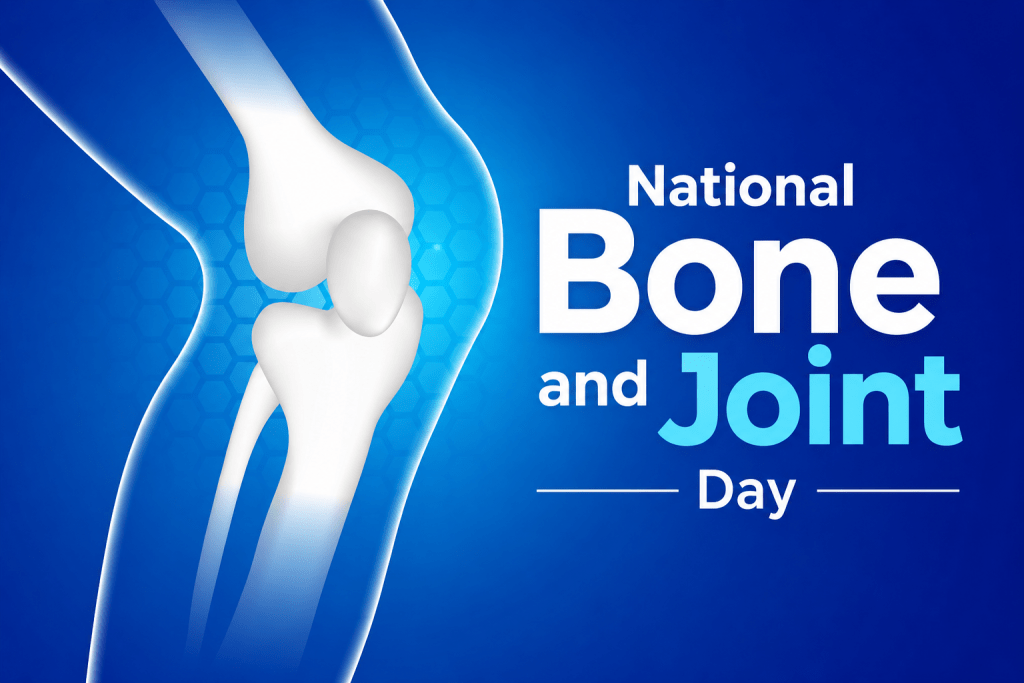
To promote early awareness and encourage preventive care, National Bone and Joint Day is observed across India every year on 4th August. The observance highlights the importance of maintaining healthy bones, joints, muscles, and the spine throughout life. It also encourages people to adopt healthy lifestyle habits, recognise early symptoms of musculoskeletal disorders, and seek timely medical care before these conditions begin to interfere with daily activities.
According to the Indian Orthopaedic Association (IOA), musculoskeletal disorders are among the leading causes of pain, disability, and reduced quality of life in India. Osteoporosis affects millions of Indians, particularly postmenopausal women and older adults, while osteoarthritis is becoming increasingly common due to ageing, obesity, sedentary lifestyles, and sports-related injuries. As India’s population continues to age and lifestyle-related risk factors increase, the burden of bone and joint diseases is expected to rise significantly.
In this comprehensive guide, we will explain everything you need to know about National Bone and Joint Day 2026, including its history and significance, common bone and joint conditions, risk factors, early warning signs, preventive measures, treatment options, and when you should consult an orthopaedic specialist. Whether you’re looking to improve your bone health, manage joint pain, or support a loved one living with arthritis or osteoporosis, this guide will help you make informed decisions for lifelong musculoskeletal health.
Quick Facts
- Date: 4th August (Observed annually in India)
- Established by: Indian Orthopaedic Association (IOA) in 2012
- Theme/Slogan:“Stronger Bones, Stronger India”
- Purpose: To promote awareness about bone, joint, spine, and musculoskeletal health. Encourage early diagnosis and reduce disability through timely treatment.
- Scope: A national observance in India, distinct from World Arthritis Day (12 October) and World Osteoporosis Day (20 October).
- India: More than 46 million Indian women are estimated to have osteoporosis, and 1 in 2 women over 50 are at risk of an osteoporosis-related fracture.
- Global: Around 200 million people worldwide live with osteoporosis, contributing to nearly 9 million fractures every year.
The History & Significance of National Bone and Joint Day
When Is National Bone and Joint Day Observed?
National Bone and Joint Day is observed every year on 4th August across India. The day is marked by hospitals, orthopaedicians, medical colleges, and healthcare organizations through awareness campaigns, free bone and joint health check-up camps, educational programmes, and community outreach activities. The primary objective is to encourage early diagnosis, promote preventive care, and educate people about maintaining lifelong bone and joint health.
Who Started National Bone and Joint Day, and Why?
National Bone and Joint Day was launched by the Indian Orthopaedic Association (IOA) in 2012 with the slogan “Stronger Bones, Stronger India.” The initiative was inspired by the global Bone and Joint Decade (2000–2010), an international movement dedicated to reducing the burden of musculoskeletal disorders through awareness, research, prevention, and improved patient care.
Recognizing that musculoskeletal conditions are a major cause of pain, disability, and reduced quality of life in India, the IOA introduced this annual observance to promote early detection and timely treatment of bone and joint disorders. The campaign also aims to educate people about adopting healthy lifestyle habits, preventing injuries, addressing nutritional deficiencies such as low calcium and vitamin D, and seeking medical attention before joint damage becomes irreversible.
Today, National Bone and Joint Day serves as an important reminder that many orthopaedic conditions including osteoarthritis, osteoporosis, rheumatoid arthritis, spine disorders, sports injuries, and fractures can often be prevented or managed successfully when recognized early. By increasing awareness and encouraging regular orthopaedic consultations, the observance supports the broader goal of helping people maintain mobility, independence, and a better quality of life at every stage of life.
Common Bone and Joint Conditions
Bone and joint disorders can affect people of all ages, although the risk generally increases with age, lifestyle factors, and underlying medical conditions. Some of the most common conditions include:
Osteoarthritis (OA)
Osteoarthritis is the most common form of arthritis and develops when the protective cartilage cushioning the ends of bones gradually wears away. It commonly affects the knees, hips, hands, and spine, causing pain, stiffness, swelling, and reduced joint movement. It is often associated with ageing, obesity, previous injuries, or repetitive joint stress.
Rheumatoid Arthritis (RA)
Rheumatoid arthritis is an autoimmune disease in which the immune system mistakenly attacks the lining of the joints. It often affects multiple joints on both sides of the body, leading to pain, swelling, morning stiffness, and progressive joint damage, if left untreated. Unlike osteoarthritis, it can develop at any age.
Osteoporosis
Osteoporosis is a condition in which bones become weak, brittle, and more likely to fracture. Often called a “silent disease,” it usually has no symptoms until a minor fall or injury causes a fracture. It is particularly common among postmenopausal women, older adults, and people with long-term calcium or vitamin D deficiency.
Gout
Gout is a type of inflammatory arthritis caused by the accumulation of uric acid crystals inside the joints. It typically causes sudden episodes of severe pain, redness, swelling, and tenderness in joints.
Tendinitis
Tendinitis refers to inflammation or irritation of a tendon, the tissue that connects muscle to bone. It commonly affects the shoulder, elbow, wrist, knee, and heel, causing pain during movement and limiting daily activities. Repetitive movements, sports injuries, and overuse are common causes.
Back and Spine Disorders
Back pain is one of the leading causes of disability worldwide. It may result from muscle strain, poor posture, degenerative disc disease, spinal arthritis, slipped discs, or other spine-related conditions. Persistent back pain should be evaluated to identify the underlying cause and prevent long-term complications.
What Causes Poor Bone and Joint Health?
Several factors can increase the risk of developing bone and joint disorders. While ageing is unavoidable, many risk factors can be modified through healthy lifestyle choices.
- Calcium and vitamin D deficiency: Inadequate intake weakens bones and increases the risk of osteoporosis and fractures.
- Physical inactivity: A sedentary lifestyle reduces bone strength, weakens supporting muscles, and limits joint flexibility.
- Excess body weight: Extra weight places additional stress on weight-bearing joints, particularly the knees, hips, and lower back.
- Advancing age: Bone density gradually declines with age, especially after menopause in women.
- Smoking and excessive alcohol consumption: Both interfere with bone formation, reduce calcium absorption, and delay healing.
- Family history: Genetics can increase the likelihood of conditions such as osteoporosis and rheumatoid arthritis.
- Previous fractures or joint injuries: Earlier injuries may increase the risk of developing osteoarthritis later in life.
- Repetitive physical strain: Heavy manual labour, prolonged standing, repetitive movements, and certain sports can accelerate joint wear and tear.
- Medical conditions and medications: Hormonal disorders, inflammatory diseases, long-term steroid use, and certain chronic illnesses can also weaken bones over time.
Signs and Symptoms You Shouldn’t Ignore
Many bone and joint disorders develop gradually, making it easy to overlook the early warning signs. Consult an orthopaedic specialist if you experience:
- Persistent joint pain or stiffness lasting more than two to three weeks.
- Swelling, warmth, or redness around a joint.
- Difficulty walking, climbing stairs, bending, or performing routine activities.
- Reduced range of motion or joint flexibility.
- Persistent neck or back pain that does not improve with rest or conservative treatment.
- Frequent muscle weakness or difficulty maintaining balance.
- Loss of height or a stooped posture, which may indicate osteoporosis-related spinal fractures.
- A fracture following a minor fall or injury, especially in older adults.
- Joint deformity or visible changes in joint shape.
While these symptoms do not always indicate a serious condition, persistent or worsening pain should never be ignored. Early diagnosis and timely treatment can help prevent further joint damage, preserve mobility, and improve long-term quality of life.
How Are Bone and Joint Conditions Diagnosed?
An accurate diagnosis is the first step toward effective treatment. Your orthopaedic specialist will evaluate your symptoms, medical history, lifestyle, and physical examination findings before recommending appropriate investigations.
Physical Examination
Your doctor will assess the affected joint for pain, swelling, tenderness, range of motion, muscle strength, joint stability, and walking pattern. This helps identify the likely cause of your symptoms and determine whether further investigations are needed.
X-rays
X-rays are usually the first imaging test recommended for bone and joint problems. They help detect fractures, joint space narrowing, arthritis, bone deformities, and alignment issues.
Bone Density (DEXA) Scan
A Dual-Energy X-ray Absorptiometry (DEXA) scan is the gold standard for diagnosing osteoporosis. It measures bone mineral density and provides a T-score, which compares your bone strength with that of a healthy young adult, helping assess fracture risk.
Blood Tests
Blood investigations may be advised to diagnose inflammatory and metabolic bone conditions. Tests such as rheumatoid factor (RF), anti-CCP antibodies, uric acid levels, vitamin D, calcium, inflammatory markers (ESR and CRP), and other laboratory tests help identify conditions like rheumatoid arthritis, gout, infections, or nutritional deficiencies.
MRI Scan
Magnetic Resonance Imaging (MRI) provides detailed images of cartilage, ligaments, tendons, muscles, spinal discs, and other soft tissues. It is particularly useful for diagnosing sports injuries, ligament tears, slipped discs, and early joint damage that may not appear on X-rays.
Treatment Options for Bone and Joint Conditions
Treatment depends on the underlying condition, its severity, your age, activity level, and overall health. Many patients improve with conservative treatment, while others may require minimally invasive procedures or surgery.
Physiotherapy and Rehabilitation
Physiotherapy is often the first line of treatment for osteoarthritis, back pain, sports injuries, and tendon disorders. Structured exercises help strengthen muscles, improve flexibility, reduce pain, restore mobility, and prevent future injuries.
Medications
Your doctor may prescribe medications to relieve pain and inflammation or treat the underlying condition. These may include pain relievers, anti-inflammatory medicines, disease-modifying antirheumatic drugs (DMARDs) for rheumatoid arthritis, medications to improve bone density in osteoporosis, and vitamin D or calcium supplements when required.
Joint Injections
For selected patients, corticosteroid injections can help reduce inflammation and pain, while viscosupplementation (hyaluronic acid) injections may improve joint lubrication and mobility in certain cases of knee osteoarthritis.
Arthroscopy
Arthroscopy is a minimally invasive surgical procedure performed through small incisions using a tiny camera and specialised instruments. It is commonly used to diagnose and treat ligament injuries, meniscus tears, cartilage damage, and other sports-related knee and shoulder conditions.
Joint Replacement Surgery
When severe arthritis or joint damage significantly limits daily activities and conservative treatment no longer provides relief, joint replacement surgery may be recommended. Modern knee and hip replacement surgeries offer excellent long-term outcomes, helping patients regain mobility, reduce pain, and improve their quality of life.
Prevention: How to Keep Your Bones and Joints Healthy
Although some bone and joint disorders cannot be completely prevented, adopting healthy lifestyle habits can significantly reduce your risk and help maintain mobility throughout life.
- Meet your daily calcium and vitamin D requirements through a balanced diet, safe sun exposure, and supplements if recommended by your doctor.
- Stay physically active with weight-bearing exercises such as walking, stair climbing, resistance training, yoga, or dancing to strengthen bones and muscles.
- Maintain a healthy body weight to reduce stress on your knees, hips, and spine.
- Avoid smoking and limit alcohol consumption, as both weaken bones and delay healing.
- Follow good posture and workplace ergonomics, especially if you spend long hours sitting at a desk.
- Warm up before exercise and sports to reduce the risk of muscle, ligament, and tendon injuries.
- Eat a balanced diet rich in calcium, protein, magnesium, and vitamin D to support lifelong bone health.
- Schedule regular bone health check-ups, particularly after the age of 50 or earlier if you have osteoporosis risk factors such as menopause, long-term steroid use, or a family history of fractures.
Comprehensive Orthopaedic Care at Healing Hospital, Chandigarh
At Healing Hospital in Chandigarh, our Department of Orthopaedics provides comprehensive care for a wide range of bone, joint, and spine conditions. Our experienced orthopaedic surgeons offer accurate diagnosis, personalised treatment plans, and advanced surgical and non-surgical care to help patients regain mobility and live pain-free.
Our services include:
- Orthopaedic consultations for bone, joint, and spine disorders
- Digital X-ray and advanced diagnostic imaging
- Bone density (DEXA) screening for osteoporosis
- Physiotherapy and rehabilitation services
- Sports injury management
- Arthroscopic (keyhole) surgery
- Knee and hip replacement surgery
- Fracture and trauma management
- Personalised osteoporosis prevention and treatment programmes
Whether you are experiencing persistent joint pain, recovering from an injury, or looking to maintain lifelong bone health, our orthopaedic specialists are here to help.
Frequently Asked Questions (FAQs)
1. When is National Bone and Joint Day observed?
National Bone and Joint Day is observed across India every year on 4th August to raise awareness about bone, joint, and musculoskeletal health and encourage early diagnosis and preventive care.
2. Who started National Bone and Joint Day?
The Indian Orthopaedic Association (IOA) launched National Bone and Joint Day in 2012 under the slogan “Stronger Bones, Stronger India” to educate people about preventing and treating musculoskeletal disorders.
3. What are the most common bone and joint diseases?
Some of the most common conditions include osteoarthritis, rheumatoid arthritis, osteoporosis, gout, back pain, tendon injuries, fractures, and sports-related injuries.
4. What is the difference between osteoarthritis and rheumatoid arthritis?
Osteoarthritis develops due to gradual wear and tear of joint cartilage, whereas rheumatoid arthritis is an autoimmune disease in which the body’s immune system attacks the joints, causing inflammation and damage.
5. Who is at the highest risk of osteoporosis?
Postmenopausal women, older adults, people with low calcium or vitamin D levels, individuals taking long-term steroid medications, smokers, and those with a family history of osteoporosis are at higher risk.
6. How is osteoporosis diagnosed?
Osteoporosis is diagnosed using a DEXA (bone density) scan, which measures bone mineral density and helps determine your fracture risk.
7. When is joint replacement surgery recommended?
Joint replacement surgery is usually considered when severe arthritis causes persistent pain, stiffness, and reduced mobility that do not improve with medications, physiotherapy, or other conservative treatments.
8. Can bone and joint diseases be prevented?
While not all conditions are preventable, maintaining a healthy weight, exercising regularly, consuming adequate calcium and vitamin D, avoiding smoking, and seeking timely medical care can significantly reduce your risk.
9. When should I consult an orthopaedic doctor near me?
Consult an orthopaedic specialist if you have persistent joint pain, swelling, repeated injuries, difficulty walking, back pain lasting more than a few weeks, or a fracture after a minor fall.
10. Where can I get a DEXA scan near me in Chandigarh?
Healing Hospital, Chandigarh, offers comprehensive bone health assessments, orthopaedic consultations, bone density (DEXA) scans, physiotherapy, sports injury management, and advanced treatment for a wide range of bone and joint conditions. Book an appointment with our orthopaedic specialists for expert evaluation and personalised care.