We understand that concerns about your nose shape, size, breathing difficulties, post-injury deformities, and desire for enhanced facial features can affect confidence, self-image, and quality of life. At our plastic surgery hospital in Chandigarh, we have spent years helping people in Chandigarh and across Punjab, Haryana, and other states of India & overseas, regain their confidence in life through our expert nose surgery or rhinoplasty surgery. Our treatment and care plan includes aesthetic nose reshaping, functional septoplasty for breathing improvement, revision rhinoplasty for previous unsatisfactory results, advanced surgical techniques for enhancing facial features, comprehensive post-operative care, and long-term follow-up.
With extensive experience in facial aesthetic surgery and commitment to patient-centred ethical practice, our doctors with 8+ years of surgical excellence provide proven expertise in rhinoplasty ensuring optimal aesthetic outcomes with patient safety, natural appearance, and satisfaction as highest priorities. That’s why people choose our hospital when they are looking for a rhinoplasty surgery doctor in Chandigarh.
What is Rhinoplasty?
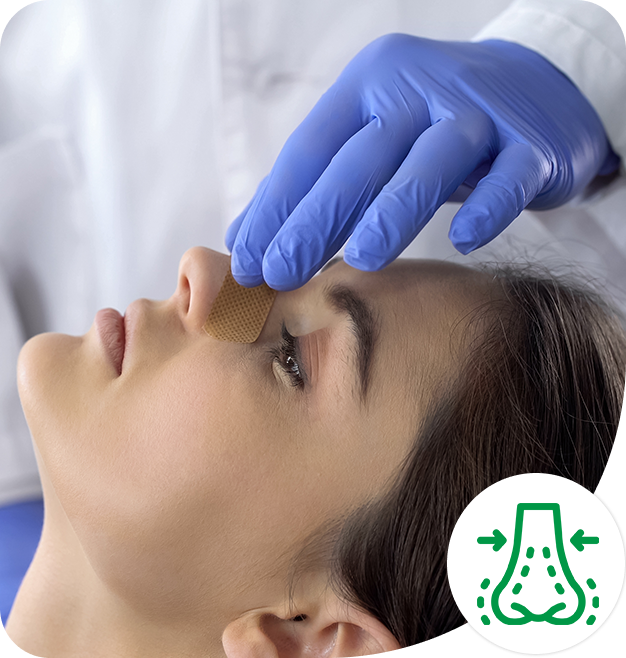
Rhinoplasty (commonly called "nose job") is a surgical procedure that reshapes, resizes, or reconstructs the nose to improve appearance and/or breathing function.
Performed under general anaesthesia, the procedure involves reshaping nasal bones and cartilages through carefully planned incisions (either closed or open rhinoplasty), modifying nasal structures to achieve desired shape, and aiming to achieve natural, proportional facial features.
This procedure addresses concerns including dorsal hump (bridge bump), wide or bulbous nasal tip, crooked nose, nostril asymmetry, and post-traumatic deformities.
Schedule Your Appointment with
Our Expert Doctors
We are dedicated to driving lasting, positive transformation in healthcare management through innovation and patient-centered solutions.
Who Should Consider Rhinoplasty?
Rhinoplasty is suitable for individuals with:
- Aesthetic Concerns
- Functional Breathing Problems
- Post-Traumatic Deformities
- Congenital Abnormalities
- A need for Revision Rhinoplasty
- Realistic Expectations
Types of Rhinoplasty
Our plastic surgeons in Chandigarh use different surgical techniques depending on the patient’s needs and requirements:
Open Rhinoplasty
Open rhinoplasty uses a small incision across the columella, which is the tissue between the nostrils, along with internal incisions. This provides better visibility of the nasal bones, cartilage, septum, and supporting structures. It can be suitable for complex reshaping, significant asymmetry, structural correction, graft placement, post-traumatic deformity, or revision rhinoplasty.
Closed Rhinoplasty
In closed rhinoplasty, all incisions are made inside the nostrils, so there is no external columellar scar. It can be appropriate for selected patients requiring straightforward refinements, such as limited hump reduction or minor contour changes.
Preservation Rhinoplasty (Semi-Open Rhinoplasty)
Preservation rhinoplasty, also known as semi-open rhinoplasty, is a tissue-preserving technique that aims to maintain important nasal structures while refining the nose’s shape. It can involve limited internal incisions with a small, discreet access point, depending on the surgical plan. This approach can be considered for selected patients requiring dorsal hump correction, profile refinement, or subtle reshaping while preserving the natural nasal framework
Tip Refinement
Tip refinement focuses on the shape, width, projection, rotation, or definition of the nasal tip. It can help address a bulbous, drooping, broad, asymmetrical, or poorly defined tip without reshaping the entire nose.
Augmentation Rhinoplasty
Augmentation rhinoplasty adds height or projection to a low bridge or under-projected nose. Structural grafts can be taken from the nasal septum, ear, or rib, depending on the amount of support required and whether the surgery is primary or revision.
Revision Rhinoplasty
Revision rhinoplasty corrects persistent aesthetic or functional concerns after previous nose surgery. It can address asymmetry, breathing difficulty, loss of support, over-resection, scar-related deformity, or an unsatisfactory contour.
What Happens Before, During, & After Rhinoplasty?
Before the Surgery
Preoperative Assessment
Your consultation can include:
- A detailed discussion of your aesthetic goals.
- Review of previous nasal surgery, injuries, allergies, and medical history.
- External nasal examination and assessment of facial proportions.
- Evaluation for septal deviation, nasal-valve narrowing, turbinate enlargement, or other causes of obstruction.
- Review of medicines, smoking or tobacco use, allergies, and previous anaesthesia issues.
Surgical Planning
The surgeon discusses realistic and achievable changes based on your anatomy, skin, cartilage, facial balance, and healing capacity. Planning can include:
- Choosing open or closed rhinoplasty.
- Dorsal hump reduction.
- Nasal bone narrowing or repositioning.
- Tip refinement or rotation.
- Bridge augmentation.
- Cartilage grafting for support or contour.
- A personalized recovery and follow-up schedule.
During the Surgery
Anaesthesia
Rhinoplasty is commonly performed under general anaesthesia. An experienced anaesthesia team monitors breathing, oxygen levels, blood pressure, heart rate, temperature, and other vital signs throughout the procedure. An endotracheal tube can be used to maintain airway safety.
Surgical Incisions
- Open approach: A small, usually inverted-V incision is made across the columella, along with internal incisions. The nasal skin is carefully elevated to expose the underlying bone and cartilage.
- Closed approach: All incisions remain inside the nostrils, with the surgeon working through more limited exposure.
Nasal Reshaping
Depending on the treatment plan, surgery can involve:
- Reducing a dorsal hump by reshaping excess bone and cartilage.
- Narrowing or straightening the nasal bridge.
- Refining the nasal tip.
- Using cartilage grafts to strengthen the nose or enhance projection.
- Preserving or restoring structural support to maintain a stable long-term result.
After the Surgery
Hospital Stay
A 2-night stay is usually advised for observation, pain control, bleeding surveillance, and safe recovery from anaesthesia. If packing has been placed, it is commonly removed during the follow-up visits. The patient can initially experience swelling, redness, or obstructed nasal airflow. It is recommended to follow all the instructions regarding wound care, medicines, sleeping position, physical activity, and follow-up visits.
Rhinoplasty Surgery Recovery & Success Factors
Gradual Recovery and Swelling Control
After cosmetic rhinoplasty surgery in Chandigarh, swelling and bruising usually improve progressively, while nasal-tip definition can continue developing for several months. Following postoperative instructions, protecting the nose, avoiding pressure or strenuous activity, and attending follow-up visits support a smoother recovery.
Minimal Scarring and Careful Surgical Technique
Closed rhinoplasty leaves no external incision, while the small columellar scar from open rhinoplasty generally fades and blends with the surrounding skin over time. Precise suturing, proper incision care, sun protection, and avoiding smoking can support better scar healing after nose reshaping surgery.
Natural Facial Harmony and Realistic Expectations
Successful cosmetic rhinoplasty aims for balanced nasal proportions, refined contours, and a natural-looking result rather than an artificial or “operated” appearance. Clear communication about achievable changes, patience during swelling reduction, and realistic expectations are essential for patient satisfaction; final refinement can take up to 12 months or longer.
Why Choose Healing Hospital in Chandigarh for Rhinoplasty?

Advanced Rhinoplasty Facility and Surgical Safety : Healing Hospital’s Advanced Plastic & Aesthetic Surgery Centre in Chandigarh performs rhinoplasty in advanced modular operation theatres that are designed for sterile, controlled, and precise cosmetic surgery. The facility includes specialized rhinoplasty instruments, comprehensive anaesthesia monitoring, and ICU backup for enhanced perioperative safety.

Comprehensive Facial Aesthetic Surgery Expertise : Beyond rhinoplasty, our surgeons’ comprehensive plastic surgery expertise encompass a full spectrum of facial aesthetic procedures including facelift, blepharoplasty (eyelid surgery), brow lift, facial fat grafting, and facial reconstruction.

Surgical Ethical Practice with Realistic Expectation Setting : Our team’s practice philosophy emphasizes ethical care, transparency, and realistic expectation settings. During consultation, an honest assessment of achievable changes is done based on your nasal anatomy and facial proportions, along with the limitations and realistic outcomes of the surgery.
Advantages of Rhinoplasty Surgery
The following are the advantages of getting a nose surgery done:
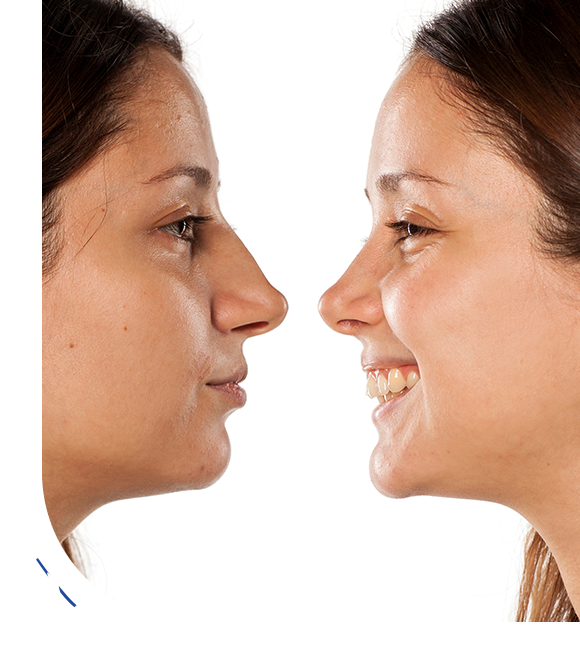
- Enhances facial features, if performed correctly
- Enhanced nose shape
- Increased confidence
- Corrects birth defects
- Repairs trauma
- Natural appearance
- Long-lasting results
- Minimal visible scarring
- Safe procedure
- Customizable outcomes
- Quick recovery
Risks & Complications of a Rhinoplasty Surgery
Rhinoplasty surgery is generally safe when performed by a qualified surgeon in an appropriately equipped facility, but it is still a surgical procedure with potential risks. The likelihood of complications depends on the patient’s anatomy, surgical technique, skin and tissue characteristics, medical history, and healing response.
Bleeding
Minor blood-stained drainage or bleeding during the first 24–48 hours can be expected. Significant bleeding is uncommon but can require nasal packing, cauterisation, medication, or, rarely, a return to the operating room. Persistent or heavy bleeding should be reported immediately.
Septal Perforation
A septal perforation is a hole in the tissue separating the nostrils. It is rare but can occur because of surgical trauma or impaired healing. Possible symptoms include whistling while breathing, crusting, dryness, recurrent bleeding, or nasal blockage. Small perforations can be monitored, while symptomatic cases can require specialised surgical repair. Published rates vary by procedure and patient group, so a fixed “less than 1%” rate should not be assumed for every case.
Prolonged Swelling
Swelling and bruising are common after rhinoplasty and usually improve gradually. Swelling at the nasal tip often takes the longest to settle, particularly in patients with thicker skin or after complex and revision surgery. The final cosmetic result can take many months to mature, so early postoperative appearance should not be considered the final outcome.
Skin and Contour Problems
Skin thickness can affect the final appearance:
- Thick, sebaceous skin can not drape smoothly over newly refined cartilage and bone, which can limit tip definition.
- Thin skin can reveal minor irregularities, graft edges, or contour changes more easily.
- Healing can occasionally lead to unevenness, visible irregularities, pigmentation changes, or delayed settling.
Careful surgical planning and realistic expectations are especially important for patients with very thick or very thin nasal skin.
Numbness and Altered Sensation
Temporary numbness or tingling of the nasal tip, upper lip, or upper teeth can occur because of swelling and temporary nerve irritation. Sensation generally improves as healing progresses, although persistent altered sensation is possible but uncommon.
Asymmetry or Unsatisfactory Shape
Minor asymmetry is common in facial structures, and healing can occur unevenly on each side. Some patients can also remain dissatisfied with the bridge, tip, nostrils, profile, or overall facial balance despite technically successful surgery. Additional treatment can occasionally be considered after the nose has fully healed.
Need for Revision Rhinoplasty
Some patients can require or request revision rhinoplasty because of healing variations, persistent asymmetry, contour irregularities, breathing changes, structural weakness, or a desire for further refinement. Reported revision rates vary across studies and depend on case complexity, technique, follow-up period, and how revision is defined; published estimates range from approximately 5–15% in some series.
Reviewed By
Blog
Breast Augmentation Surgery Cost in Chandigarh: Price & Selection Guide 2026
Minimally Invasive Plastic Surgery Options in Chandigarh You Should Know About
Why Patients Trust the Best Cosmetic Surgeons in Chandigarh for Life-Changing Results
Best Cosmetic Surgeons in Chandigarh for Facial & Body Contouring
Frequently Asked Questions (FAQs)
What is the eligibility for undergoing a nose surgery in Chandigarh?
You can be a suitable candidate for rhinoplasty in Chandigarh if you have a specific cosmetic concern about your nose, are in generally good health, have realistic expectations, and understand the achievable changes. You should also be willing to stop smoking or using nicotine as advised before and after your nose surgery, because nicotine can impair healing
Will my rhinoplasty look natural?
When planned and performed appropriately, rhinoplasty surgery in Chandigarh can create a natural-looking nose that complements your facial features. The goal is balanced facial harmony and not an obviously operated appearance. The results depend on your anatomy, skin, cartilage, healing, and the extent of reshaping required.
Will I have visible scars after rhinoplasty?
In closed rhinoplasty, all incisions are inside the nose, so there is usually no visible external scar. Open rhinoplasty involves a small incision on the columella, between the nostrils, which generally fades significantly during healing. Scar visibility varies according to skin type, genetics, aftercare, and healing response.
When will I see my final rhinoplasty results?
You can notice an initial cosmetic improvement after the splint is removed, commonly around one week, although swelling will still be present. Bruising and much of the visible swelling often improve over the next 4–6 weeks, while subtle swelling at the nose tip can take around 6–12 months to settle. The full rhinoplasty surgery recovery timeline varies between patients.
What is revision rhinoplasty? Which hospital performs rhinoplasty surgery near me?
Revision rhinoplasty is a corrective nose surgery performed after a previous rhinoplasty to address concerns such as asymmetry, contour irregularity, loss of support, or dissatisfaction with the result. Healing Hospital in Sector-34A, Chandigarh performs rhinoplasty surgery under expert guidance and supervision.
What is revision rhinoplasty?
Corrective surgery for unsatisfactory results from previous rhinoplasty, more technically challenging due to scar tissue and altered anatomy, often requires cartilage grafting. It is advised to typically wait 12 months after primary rhinoplasty before revision (allowing complete healing) under the supervision of experienced surgeons.
How much does rhinoplasty surgery cost in Chandigarh?
The nose surgery cost in Chandigarh varies according to the complexity of the procedure, surgical approach, anaesthesia, hospital charges, graft requirements, and whether the surgery is primary or revision. A simple tip refinement can cost differently from complete rhinoplasty with septoplasty or grafting. Contact Healing Hospital’s Plastic Surgery Centre in Chandigarh at +91-8526343434 for a personalized estimate covering consultation, surgery, anaesthesia, hospital stay, postoperative care, and follow-up.
How do I find a rhinoplasty surgeon near me?
If you are searching for a nose surgeon near you, or a qualified plastic surgery doctor in Chandigarh, Healing Hospital provides consultation and treatment planning for cosmetic and reconstructive nose reshaping. A consultation helps determine the appropriate technique, expected recovery, possible risks, and estimated nose surgery cost.
How do I book a nose surgery consultation in Chandigarh?
To enquire about rhinoplasty surgery in Chandigarh, call Healing Hospital’s appointment desk at +91-8526343434. During your consultation, bring your medical history, current medication list, previous nasal surgery records, and photographs or examples that help explain your preferred aesthetic style. The surgeon will assess your nose and discuss realistic, personalised treatment options.