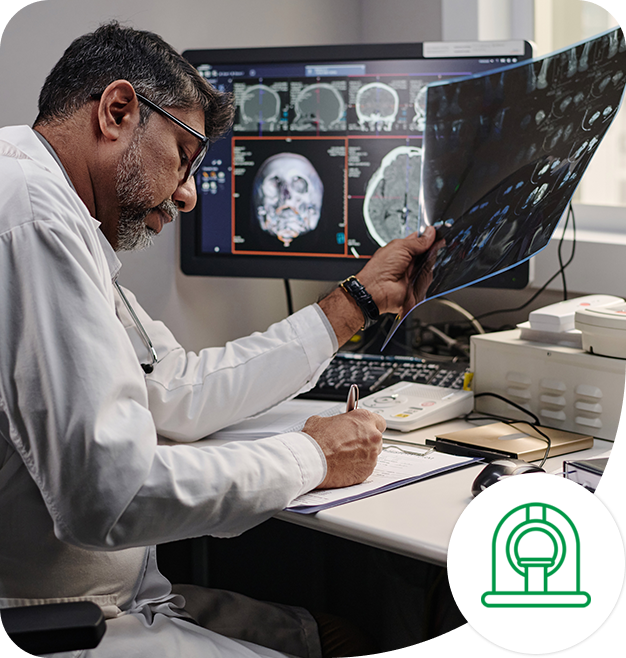
A CT scan (computed tomography scan) is an imaging test that provides detailed pictures of the inside of your body. It uses X-rays and computer processing to create cross-sectional images, commonly called slices. These images show bones, organs, blood vessels, and soft tissues in greater detail than conventional X-rays. Doctors use CT scans to investigate the causes of pain, injuries, infections, and various other medical conditions.
At Healing Hospital, our Radiology Department offers CT scans in Chandigarh to support accurate diagnosis and treatment planning. Each scan is performed by a trained radiology team following established safety protocols. The procedure is generally painless and takes only a few minutes, although the total time may vary depending on the type of scan and whether, contrast material is required or not. Most patients can return home on the same day.
If your doctor has recommended a CT scan or you have symptoms that require further investigation, consult our radiology team to understand the procedure, its benefits, and what to expect.
What Is a CT Scan?
CT stands for Computed Tomography. During the procedure, you lie on a motorised table that moves through a circular scanner while an X-ray tube rotates around your body. Detectors capture X-ray signals from multiple angles, and a computer processes these signals to create detailed cross-sectional images that a radiologist can examine from different views.
A CT scan helps doctors assess the size, shape, and position of internal organs and identify abnormalities. It can detect conditions such as kidney stones, fractures, internal bleeding, infections, blockages, and abnormal growths. It can also help guide procedures such as biopsies and assist in surgical planning.
Some CT scans use a contrast agent, a special substance that helps certain organs, blood vessels, and tissues appear more clearly in the images. Contrast may be administered orally or through an intravenous (IV) injection, depending on the type of scan and the area being examined.
The type of CT scan recommended depends on your symptoms, the body part requiring examination, and your overall health.
Schedule Your Appointment with
Our Expert Doctors
We are dedicated to driving lasting, positive transformation in healthcare management through innovation and patient-centered solutions.
Types of CT Scan
Your doctor recommends a particular type of CT scan based on your symptoms, medical history, and previous test results. Different scans are designed to examine specific parts of the body and help identify various medical conditions.
CT Scan Without Contrast (Plain CT)
A plain CT scan is performed without a contrast agent. It is commonly used to detect bleeding in the brain, fractures, and kidney stones. It may also be recommended for patients who cannot receive contrast material.
CT Scan With Contrast
A contrast-enhanced CT scan uses a special contrast agent, usually administered through a vein in the arm and, in some cases, given orally. The contrast helps highlight blood vessels, organs, and abnormal areas, allowing the radiologist to assess tumours, infections, inflammation, and blood flow more clearly.
CT Head and Brain
A CT scan of the head and brain examines the brain, skull, and surrounding structures. It helps evaluate head injuries, stroke, bleeding, severe headaches, and swelling in the brain.
CT Chest and HRCT Chest
A CT chest scan examines the lungs, heart, and surrounding structures. High-resolution computed tomography (HRCT) provides detailed images of lung tissue and is particularly useful for evaluating persistent cough, breathlessness, lung infections, and interstitial lung diseases.
CT Abdomen and Pelvis
A CT scan of the abdomen and pelvis examines organs such as the liver, pancreas, spleen, kidneys, bowel, and urinary bladder. It helps investigate abdominal pain, infections, tumours, and bowel-related conditions.
CT KUB (Kidneys, Ureters, and Bladder)
A CT KUB scan is commonly used to detect stones in the kidneys and ureters. It helps determine the size and exact location of a stone, allowing the urologist to plan appropriate treatment.
CT Angiography
CT angiography uses contrast material to produce detailed images of blood vessels. It helps identify narrowing, blockages, blood clots, and weakened areas in blood vessels in the brain, neck, chest, abdomen, and limbs.
Note: Your doctor may recommend a plain or contrast-enhanced CT scan depending on the clinical requirement. Factors such as altered kidney function, allergies to contrast material, pregnancy status, and other medical conditions may also be considered before the scan. The radiology team will guide you on the most appropriate scan and any preparation required.
Who is Recommended a CT Scan?
Your doctor may recommend a CT scan when more detailed images are needed to investigate symptoms, confirm a diagnosis, or plan treatment.
A CT scan may be recommended in the following situations:
- Head injury, sudden severe headache, or suspected stroke: To assess possible bleeding, swelling, or other abnormalities in the brain.
- Severe or persistent abdominal pain: To investigate the underlying cause when the diagnosis is unclear.
- Suspected kidney stones: To identify stones in the kidneys or ureters, particularly when accompanied by pain in the side or back.
- Persistent cough, breathlessness, or chest pain: To examine the lungs and other structures in the chest.
- Injuries following an accident: To assess suspected fractures, internal bleeding, or damage to internal organs.
- Suspected infection, abscess, or inflammation: To identify and assess abnormalities within the body.
- A lump or abnormal finding on an X-ray or ultrasound: To obtain more detailed images of the affected area.
- Cancer staging and follow-up: To assess the extent of cancer, monitor treatment response, and check for changes over time.
- Suspected narrowing or blockage of blood vessels: To evaluate blood flow and identify vascular abnormalities.
- Surgical planning or biopsy guidance: To help doctors assess the affected area and plan or guide certain procedures.
What Happens Before, During, and After a CT Scan?
A CT scan involves three main stages: preparation, the scanning procedure, and post-scan care. The exact process may vary depending on the type of scan, your medical history, and whether contrast material is required.
Before the Scan
Pre-Scan Evaluation
The radiology team reviews your doctor's request, symptoms, and medical history before the scan. Inform the team about any known allergies, particularly previous reactions to contrast material or medicines. Also mention if you have kidney disease, diabetes, thyroid problems, or asthma.
If you are pregnant or think you might be pregnant, inform the team before the scan. Carry your previous medical reports and imaging records, as these may help with the evaluation.
Preparation
Preparation depends on the type of CT scan and whether contrast material is required.
- CT scan without contrast: You can usually eat and drink normally unless your doctor or radiology team gives you different instructions.
- CT scan with contrast: You may be asked to avoid food for approximately 4–6 hours before the scan. Your doctor may also recommend a kidney function test before administering contrast material.
- Abdominal CT scan: You may be asked to drink a special oral contrast solution to help visualise the bowel more clearly.
Wear loose, comfortable clothing. You may be asked to change into a hospital gown and remove metal objects such as jewellery, belts, hearing aids, and dentures before the scan.
During the Scan
Positioning
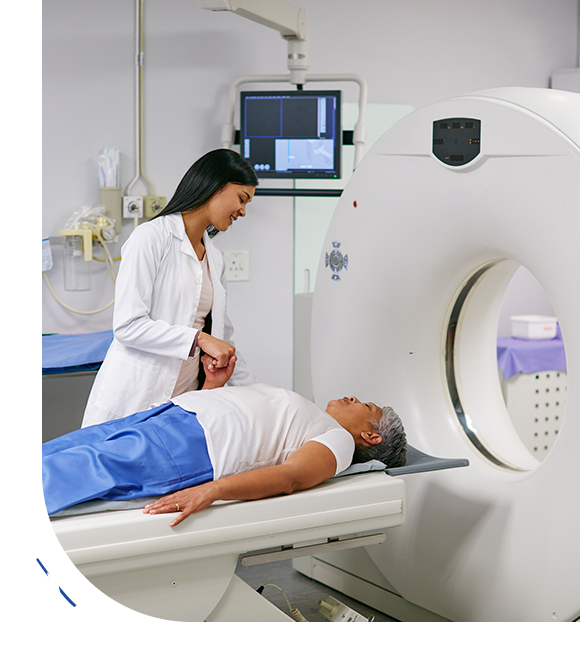
A trained radiology technologist helps you lie on a padded examination table. The table moves slowly through a large, ring-shaped CT scanner. Unlike an MRI machine, a CT scanner is not a long, enclosed tube. During the procedure, the technologist monitors you from an adjoining room and communicates with you.
Scanning
You will need to remain still during the scan to help obtain clear images. The technologist may ask you to hold your breath for a few seconds while the images are being captured. The scanning process generally takes around 15-20 minutes.
After the Scan
Recovery and Reports
Most patients can resume their normal activities soon after the scan. If you have received contrast material, the radiology team may ask you to remain for a short observation period before leaving.
A radiologistexamines the images and prepares a report for your treating doctor. Your doctor then explains the findings and discusses any further tests or treatment that may be required. The reporting time varies depending on the type of scan, the complexity of the findings, and whether the scan is urgent.
CT Scan Recovery and Factors Affecting Results
Most patients do not require a recovery period after a CT scan. You can usually eat, drink, drive, and return to your regular activities unless your doctor advises otherwise.
After a CT Scan With Contrast
If you have received contrast material, you may be advised to drink adequate water, provided you do not have any medical condition that requires fluid restriction. This helps your body eliminate the contrast through urine.
Some people may experience mild itching, a rash, or nausea after contrast administration. Inform the radiology team if you feel unwell during or after the scan. Seek immediate medical attention if you develop difficulty breathing, swelling, or other signs of a severe allergic reaction.
Factors That Support Clear CT Scan Results
The quality of CT scan images depends on several factors:
- Lying still: Movement during the scan can blur the images and affect their clarity.
- Holding your breath when instructed: This helps capture clear images of the chest and abdomen.
- Following preparation instructions: Adhering to fasting and other instructions helps ensure the scan is performed correctly.
- Providing a complete medical history: Information about allergies, kidney problems, existing medical conditions, and previous reactions to contrast helps the team plan the scan safely.
- Bringing previous reports: Earlier scans and medical reports allow the radiologist to compare findings and identify changes over time.
- Discussing the results with your doctor: CT scan findings need to be interpreted alongside your symptoms, medical history, and other test results to guide further care.
Advantages of a CT Scan
A CT scan offers several advantages in diagnosing medical conditions and planning treatment:
- Provides detailed images of bones, organs, soft tissues, and blood vessels.
- Is a quick imaging procedure, making it particularly useful in emergency situations.
- Helps identify injuries, internal bleeding, and infections.
- Detects abnormalities that may not be clearly visible on conventional X-rays.
- Supports surgical planning and guides procedures such as biopsies.
- Helps monitor treatment response and changes in medical conditions over time.
- Is generally painless and does not require surgical cuts or stitches.
- Is usually performed as an outpatient procedure, without requiring an overnight hospital stay.
Risks and Complications of a CT Scan
A CT scan is generally safe when performed by a trained team using appropriate imaging protocols. Doctors recommend it when the expected diagnostic benefits outweigh the potential risks. However, it is important to understand the possible risks and precautions.
Radiation Exposure
A CT scan uses X-rays and exposes the body to ionising radiation. The radiation dose is generally kept as low as reasonably achievable while obtaining images of sufficient quality for diagnosis. Although the risk from an individual scan is small, repeated exposure may increase the lifetime risk of cancer. Your doctor recommends a CT scan only when clinically necessary. Children are more sensitive to radiation, so their scan protocols and doses are adjusted carefully.
Reaction to Contrast Material
Some patients may experience mild reactions to contrast material, including itching, a rash, nausea, or a temporary warm sensation. Severe allergic-like reactions are rare but can occur. The radiology team reviews your history of allergies and previous contrast reactions before the scan and is prepared to manage any reaction.
Kidney-Related Risks After Contrast
In some patients, contrast material may be associated with a risk of kidney injury, particularly in those with existing kidney disease or certain other risk factors. Your doctor may recommend a kidney function test before the scan and provide specific advice about fluid intake based on your medical condition.
Pregnancy
CT scans are generally avoided during pregnancy unless the expected medical benefit justifies the potential risk to the developing baby. Inform your doctor and the radiology team if you are pregnant or think you might be pregnant. Depending on the clinical requirement, an ultrasound or MRI may be considered as an alternative.
Discomfort at the Injection Site
Mild pain, bruising, or swelling may occur where the contrast material is injected. In some cases, contrast can leak into the surrounding tissue, a complication known as contrast extravasation. Inform the technologist immediately if you experience pain, burning, or swelling during the injection.
Anxiety or Feeling Closed In
Some patients may feel anxious during a CT scan. The scanner has a short, ring-shaped opening rather than a long, enclosed tunnel, and the scanning process is usually brief. Inform the radiology team if you feel uncomfortable or anxious so they can guide and support you during the procedure.
When to Seek Medical Attention: Seek immediate medical attention if you develop hives, swelling of the face or throat, difficulty breathing, or other signs of a severe allergic reaction after receiving contrast. Also contact your doctor promptly if you experience persistent vomiting, significantly reduced urine output, or severe pain and swelling at the injection site.
Why Choose Healing Hospital for a CT Scan in Chandigarh?

In-House CT Scan and MRI Services : Healing Hospital has an in-house Radiology Department offering CT scan and MRI services. Having these diagnostic services under one roof helps coordinate investigations and makes relevant imaging reports available to your treating doctor for further evaluation and treatment planning.

ICU Backup and Emergency Support : Healing Hospital has a well-equipped Intensive Care Unit (ICU) and emergency services to support patients who require urgent medical attention. This provides access to additional hospital support when clinically necessary.

Experienced Radiology Team and Focus on Patient Safety : Our Radiology Department combines modern imaging equipment with the expertise of trained technologists and radiologists to support accurate diagnosis and treatment planning. Our team follows established radiation safety protocols, using the lowest radiation dose reasonably achievable while maintaining image quality. Before scans involving contrast material, relevant medical information, including allergy history and kidney function, is reviewed to identify potential risks and take appropriate precautions.
CT Scan Cost in Chandigarh
The cost of a CT scan in Chandigarh depends on several factors, including the body part being examined, the number of regions covered, and whether contrast material is required. Additional imaging sequences or specialised reconstructions may also affect the overall cost. For example, a CT scan of the head may have a different cost from a CT scan of the chest, abdomen, or a CT angiography.
At Healing Hospital, the cost is shared after reviewing your doctor's recommendation and confirming the type of scan required. Our Radiology Departmentprovides a cost estimate before the procedure so that you can understand the expected charges and plan accordingly.
Meet Our CT Scan Specialists in Chandigarh
At Healing Hospital, CT scans are performed by trained radiology technologists, and the images are reviewed by experienced radiologists. Our Radiology team guides patients through the procedure, explains the necessary steps, and addresses their questions to help ensure a comfortable experience.
Call: +91-94643 43434 to enquire about CT scan appointments or consultations with our Radiology Department.
Book Online: Visit www.healinghospital.co.in or contact the hospital's front desk for appointment assistance.
Reviewed By

Blog

White Discharge During Pregnancy: Understanding Normal, Clear, Brown, and Yellow Discharge
PCOS Symptoms Every Woman Should Know

Reasons for Delayed Periods: Pros, Cons, & Medical Recommendations

Best Gynaecologist in Chandigarh Offering Advanced & Compassionate Care

Complete Women’s Health Care with Dr. Ramandeep Kaur, Gynae Doctor in Chandigarh

Best Gynae Doctor in Chandigarh for Advanced Gynecology Treatments

Female Gynaecologist in Chandigarh for Pregnancy and Fertility Care

Top Gynaecologist in Chandigarh: Complete Guide for First-Time Visitors

Why You Should Choose the Top Gynaecologist in Chandigarh for Your Health
Best Gynae Doctor in Chandigarh: Your Complete Guide to Women’s Health Specialists
Frequently Asked Questions (FAQs)
What Is a CT Scan?
A CT scan is an imaging test that uses X-rays and computer processing to create detailed cross-sectional images of the inside of the body. It helps doctors diagnose injuries, infections, kidney stones, tumours, and many other medical conditions.
Is a CT Scan Painful?
No. The scan itself is painless. You only need to lie still on the examination table. If contrast material is used, you may feel a small pinch when the IV cannula is inserted and a temporary warm sensation when the contrast is administered.
How Long Does a CT Scan Take?
The scanning process usually takes around 5–15 minutes. However, the complete visit, including preparation and any waiting time, may take approximately 30–60 minutes. A contrast-enhanced scan may take longer.
How Should I Prepare for a CT Scan?
Preparation depends on the type of scan. For a contrast-enhanced CT scan, you may be asked to avoid food for approximately 4–6 hours. Inform the radiology team about any allergies, kidney problems, diabetes, or pregnancy. Wear comfortable clothing, remove metal objects, and follow the instructions provided by your doctor.
What Is the Difference Between a CT Scan and an MRI?
A CT scan uses X-rays and is generally quicker. It is commonly used to examine bones, lungs, internal bleeding, and injuries, particularly in emergencies. An MRI uses a magnetic field and radio waves and provides detailed images of soft tissues, including the brain, spinal cord, and joints. Your doctor recommends the appropriate investigation based on your symptoms and medical condition.
Is a CT Scan Safe?
A CT scan is generally safe when performed for an appropriate medical reason. It involves exposure to a small amount of ionising radiation, which is kept as low as reasonably achievable while maintaining image quality. Your doctor considers the potential benefits and risks before recommending the scan.
Is Contrast Dye Safe, and Who Should Take Extra Precautions?
Contrast material is generally well tolerated by most patients. However, people with a history of reactions to contrast material or reduced kidney function may require additional precautions. Inform the radiology team about your allergies, kidney health, and current medicines before the scan.
Can I Have a CT Scan During Pregnancy?
CT scans are generally avoided during pregnancy unless the expected medical benefit outweighs the potential risk. Inform your doctor and the radiology team if you are pregnant or think you might be. Depending on your condition, an ultrasound or MRI may be considered as an alternative.
How Much Does a CT Scan in Chandigarh generally costs?
The cost depends on the body part being examined, the number of regions scanned, and whether contrast material is required. Healing Hospital provides a cost estimate after confirming the type of scan recommended.
Who Is the Best Radiologist in Chandigarh for a CT Scan?
Choosing the right radiologist depends on their qualifications, experience, area of expertise, and the type of imaging required. At Healing Hospital, experienced radiologists review CT scan images and prepare detailed reports to support accurate diagnosis and treatment planning. You can contact our Radiology Department for assistance with your imaging requirements.
How Do I Book a CT Scan in Chandigarh?
Call +91-94643 43434 to enquire about or book a CT scan at Healing Hospital. You can also visit www.healinghospital.co.in or contact the hospital’s front desk for appointment assistance.
 Emergency 24×7 : 01725088883