Normal Creatinine Levels by Age: Blood Test Range & Results Explained
Serum creatinine is one of the key measurements used to assess kidney function in routine blood tests. However, seeing a value outside the reference range can be concerning, especially when you are unsure what it means. Creatinine levels vary with age, sex, muscle mass, and overall health, so the same reading may have different implications for different individuals. Understanding the normal creatinine levels by age can help you interpret your results and recognise when medical attention may be necessary. This article explains normal creatinine ranges, causes of high and low readings, associated symptoms, testing methods, and ways to support kidney health. First, let’s understand what creatinine is and how its levels reflect kidney function.
What is Creatinine and What Does It Indicate About Kidney Function?
Creatinine is a waste product formed during normal muscle metabolism. Your muscles use a compound called creatine to produce energy, and some of it is converted into creatinine.
The kidneys filter creatinine from the bloodstream and eliminate it through urine. When kidney filtration declines, creatinine may accumulate in the blood.
A creatinine blood test measures the concentration of this waste product. Doctors use the result to assess kidney function and identify changes that may require investigation.
However, the normal creatinine level in blood depends on individual characteristics. A creatinine result alone cannot confirm or rule out kidney disease. Doctors also consider estimated glomerular filtration rate (eGFR), urine investigations, and medical history.
How is Creatinine Measured in a Blood Test?
Creatinine levels are measured through a simple blood test in which a small sample is collected from a vein, usually in the arm. The laboratory measures serum creatinine and reports the result in milligrams per decilitre (mg/dL) or micromoles per litre (µmol/L).
Fasting is not usually necessary for a standalone creatinine blood test, although additional investigations may require preparation.
Doctors may recommend avoiding strenuous exercise or substantial cooked-meat consumption before testing. Patients should also inform their doctor about any medications or supplements they take rather than stopping them independently.
Creatinine vs eGFR: What is the Difference?
| Serum creatinine | eGFR |
| Measures creatinine concentration in blood | Estimates kidney filtration efficiency |
| Influenced by muscle mass and diet | Calculated using creatinine, age and sex in standard adult equations |
| Helps monitor changes in kidney function | Helps assess kidney function and classify chronic kidney disease |
| Requires interpretation with other investigations | Requires interpretation alongside urine tests and clinical findings |
Doctors may also recommend a urine albumin-to-creatinine ratio (uACR) test to detect protein leakage that could indicate kidney damage.
What are Normal Creatinine Levels by Age?
Normal creatinine levels change throughout life, primarily because muscle mass and kidney function change with age. Children generally have lower readings than adults, while men often have higher values than women.
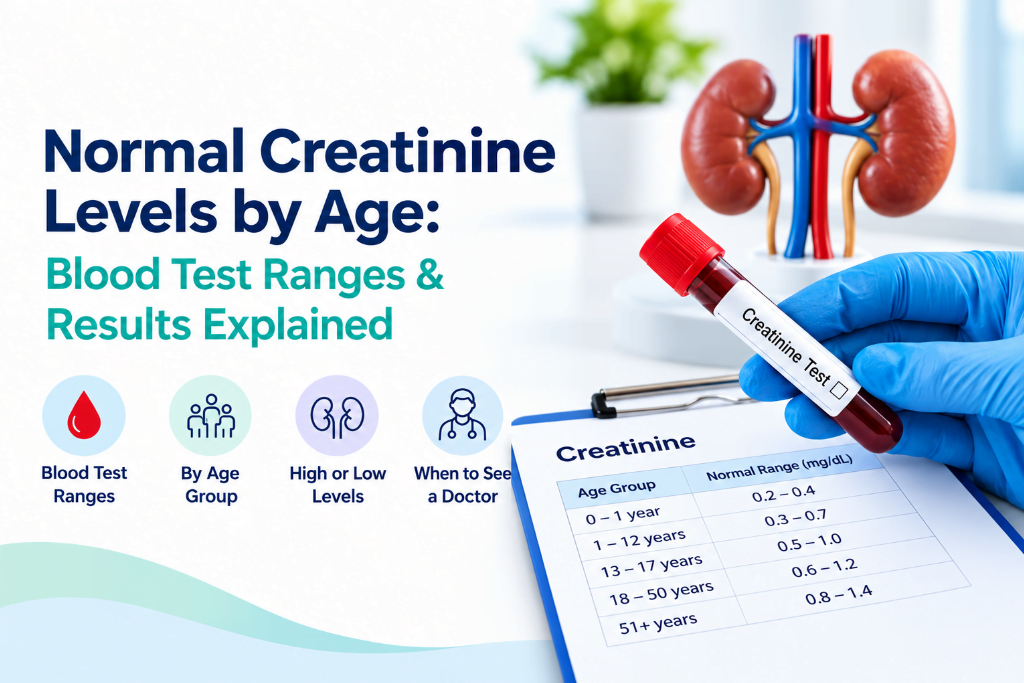
The following table presents examples of normal serum creatinine levels by age:
| Age group | Normal serum creatinine (mg/dL) |
| Infants (0–11 months) | 0.17–0.42 |
| Children (1–5 years) | 0.19–0.49 |
| Children (6–10 years) | 0.26–0.61 |
| Boys (11–14 years) | 0.35–0.86 |
| Girls (11–15 years) | 0.35–0.86 |
| Males (15 years and above) | 0.74–1.35 |
| Females (16 years and above) | 0.59–1.04 |
Note: These are illustrative laboratory reference intervals, not universal diagnostic thresholds. Values for newborns, particularly in the first days of life, require age-specific interpretation. Different laboratories may use different methods and ranges.
Creatinine Levels in Children
Children generally have lower creatinine concentrations because they have less muscle mass. Levels gradually increase with physical growth and muscle development.
Creatinine Levels in Adults
Adult men typically have higher readings because of greater average muscle mass. However, body composition, diet, and physical activity can influence individual results.
Creatinine Levels in Older Adults
Older adults may have lower creatinine production because muscle mass generally decreases with age. Consequently, a seemingly normal result does not always indicate healthy kidney function.
The creatinine normal range must therefore be interpreted alongside age, sex, clinical history and other kidney function tests.
What Factors Affect Normal Creatinine Levels?
Several physiological and lifestyle factors can influence serum creatinine:
- Age: Muscle development and age-related changes influence creatinine production.
- Sex: Differences in average muscle mass contribute to different reference ranges.
- Muscle mass: People with greater muscle mass may naturally have higher readings.
- Diet: Eating substantial amounts of cooked meat before testing can temporarily increase creatinine.
- Exercise: Strenuous physical activity may cause short-term elevations.
- Hydration: Dehydration may increase creatinine concentrations by affecting kidney filtration.
- Pregnancy: Increased kidney filtration during pregnancy generally reduces serum creatinine.
- Medicines and supplements: Certain medications and creatine supplements may influence results.
These factors explain why doctors assess laboratory results in the context of individual health rather than relying on a single number.
What Does a High Creatinine Level Mean?
High creatinine can indicate that the kidneys are not filtering waste effectively. However, an elevated result does not necessarily mean permanent kidney damage.
For example, dehydration may temporarily increase creatinine, while persistently elevated readings may suggest an underlying kidney condition.
Common Causes of High Creatinine Levels
Understanding the causes of high creatinine helps determine whether further investigation is required.
- Dehydration: Inadequate fluid intake or substantial fluid loss can reduce blood flow to the kidneys.
- Acute kidney injury: Sudden kidney dysfunction may develop due to severe infections, illness or certain medications.
- Chronic kidney disease: Progressive kidney damage can reduce filtration efficiency over time.
- Diabetes and hypertension: Poorly controlled blood glucose and blood pressure can damage kidney blood vessels.
- Kidney infections: Certain infections may affect kidney tissue and filtration.
- Urinary obstruction: Kidney stones or other blockages may interfere with urine drainage.
- Medicines: Some medications can affect kidney function or alter creatinine measurements.
Doctors may recommend repeat testing, urine investigations or imaging to identify the underlying cause.
What are the Symptoms Associated with High Creatinine Levels?
Elevated creatinine itself usually does not produce specific symptoms. Instead, symptoms may develop because of the underlying kidney condition.
Common high creatinine symptoms that may indicate kidney dysfunction include:
- Swelling around the ankles, feet, legs or face
- Changes in urine output or urination frequency
- Persistent fatigue or weakness
- Loss of appetite
- Nausea or vomiting
- Shortness of breath
- Difficulty concentrating in advanced kidney disease
Importantly, early kidney disease may develop without noticeable symptoms. Therefore, individuals with diabetes, hypertension, or other risk factors should undergo kidney function testing as recommended by their doctors.
What Does a Low Creatinine Level Mean?
Low creatinine usually indicates reduced creatinine production rather than impaired kidney filtration.
Possible causes include:
- Reduced muscle mass: Less muscle tissue produces less creatinine.
- Ageing: Age-related muscle loss can decrease serum creatinine.
- Inadequate nutrition: Poor protein and calorie intake may contribute to reduced muscle mass.
- Prolonged illness: Certain chronic conditions can cause muscle wasting.
- Pregnancy: Increased kidney filtration can produce lower blood creatinine readings.
- Liver conditions: Some liver disorders may reduce creatine production.
An isolated low reading is often less concerning than a high result. Nevertheless, persistently low or unexpectedly declining values may warrant evaluation, particularly when accompanied by muscle weakness or unexplained weight loss.
How to Reduce High Creatinine Levels and Support Kidney Health
People frequently search for how to reduce creatinine level after receiving an abnormal report. However, treatment should focus on identifying and managing the underlying cause rather than simply lowering the reported number.
The following measures may help protect kidney function:
- Maintain appropriate hydration: Drink sufficient fluids to prevent dehydration, unless your doctor has recommended fluid restrictions.
- Control blood pressure: Monitor blood pressure regularly and take prescribed medicines to reduce the risk of kidney damage.
- Manage diabetes: Maintain blood glucose within recommended targets through medical treatment, diet and monitoring.
- Follow a balanced diet: Reduce excessive salt intake and follow personalised protein recommendations. Potassium and phosphorus restrictions are necessary only for selected patients.
- Avoid unnecessary painkillers: Frequent use of non-steroidal anti-inflammatory drugs (NSAIDs), such as ibuprofen, may harm the kidneys.
- Maintain healthy habits: Exercise appropriately, avoid smoking and maintain a healthy body weight.
- Monitor kidney function: Repeat creatinine, eGFR and urine tests according to medical advice.
When it comes to understanding how to control creatinine levels, it is important to note that some causes of elevated creatinine are reversible, while others require long-term medical management. Avoid unverified remedies or supplements that claim to cleanse the kidneys. Consult your doctor for personalised advice.
When Should You Consult a Doctor for Abnormal Creatinine Levels?
An abnormal result does not always indicate serious disease, but unexplained or persistent changes deserve medical attention.
Consult a doctor if:
- Your creatinine repeatedly exceeds the laboratory reference range.
- Previous reports show a progressive increase.
- Your eGFR is reduced, or urine tests indicate protein leakage.
- You have diabetes, hypertension or a family history of kidney disease.
- You experience persistent swelling, fatigue or changes in urination.
Seek urgent medical assessment if you develop very little urine output, severe breathlessness, confusion or rapidly worsening symptoms.
Timely evaluation can help identify potentially treatable causes and guide appropriate kidney care.
Get Your Kidney Function Evaluated at Healing Hospital, Chandigarh
Abnormal creatinine levels may result from temporary changes, such as dehydration, or underlying conditions affecting kidney function. Identifying the cause is essential for determining the appropriate course of treatment.
At Healing Hospital, Chandigarh, our Nephrology Department offers comprehensive care for kidney-related conditions, including acute kidney injury, chronic kidney disease and complications associated with diabetes and hypertension. Our specialists use relevant diagnostic investigations and individualised treatment approaches to support kidney health.
Take a proactive step towards protecting your kidney health. Book an appointment with a nephrologist in Chandigarh at Healing Hospital for expert guidance and personalised care.
Frequently Asked Questions
Q.1. Can creatinine levels be normal even if someone has kidney disease?
Yes. People with early kidney disease or low muscle mass may have creatinine readings within the laboratory reference range. Doctors also consider eGFR, urine albumin levels and other findings. A normal creatinine result alone does not completely rule out kidney problems.
Q.2. How often should I get my creatinine levels checked?
Testing frequency depends on individual risk factors. People with diabetes, hypertension or established kidney disease may need periodic monitoring. At Healing Hospital, a nephrologist can recommend an appropriate testing schedule based on kidney function, medical history and treatment requirements.
Q.3. Can creatine supplements increase serum creatinine?
Yes. Creatine supplements can increase serum creatinine readings in some individuals without necessarily indicating kidney damage. However, supplements may complicate interpretation of kidney function tests. Inform your doctor about their use, particularly if you have an existing kidney condition.
Q.4. Does a high creatinine level mean I will need dialysis?
Not necessarily. Dialysis decisions depend on overall kidney function, symptoms, fluid balance, electrolyte abnormalities and other complications rather than a particular creatinine value alone. Many people with elevated readings can be managed through treatment of the underlying condition and regular monitoring.
Q.5. Can a normal creatinine result vary between two laboratories?
Yes. Laboratories may use different testing methods, instruments and reference intervals. Small variations can also occur because of hydration, diet or recent physical activity. When monitoring kidney function, doctors consider trends and may recommend using the same laboratory where practical.
Q.6. Can vegetarians have lower creatinine levels?
Some vegetarians may have slightly lower serum creatinine because their diets contain less dietary creatine and cooked meat. Muscle mass and overall nutrition also influence readings. A vegetarian diet does not automatically indicate poor kidney function, and results should be interpreted individually.
Q.7. Can high creatinine levels return to normal after treatment?
They may, depending on the cause. Creatinine elevated by dehydration or certain reversible kidney problems can improve after appropriate treatment. However, chronic kidney damage may not be reversible. A specialist can assess the likelihood of improvement through clinical examination and follow-up investigations.
Q.8. Can Healing Hospital evaluate abnormal creatinine levels alongside other health conditions?
Yes. Healing Hospital’s kidney specialists assess abnormal creatinine results in patients with conditions such as diabetes, hypertension and chronic kidney disease. Evaluation may include blood tests, urine investigations and kidney imaging when necessary, helping determine suitable treatment and ongoing monitoring requirements.