Brain Tumour: Symptoms, Causes, Diagnosis and Treatment
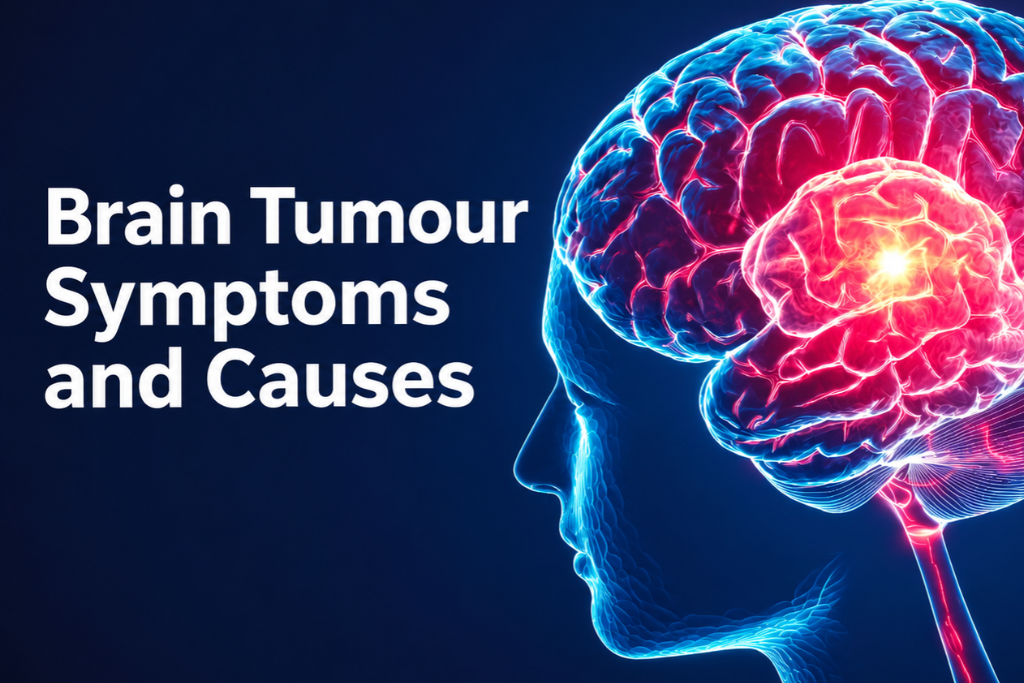
Most people brush off a headache as something minor: too much screen time, skipped meals, poor sleep or stress. And usually, that’s it. But when a headache feels different from your usual ones, keeps coming back or comes with other unexplained changes in the body, it’s worth paying attention.
Brain tumours are relatively uncommon, but they can affect anyone, and their symptoms often overlap with everyday health issues. Because the brain controls nearly every function of the body, a tumour can cause a wide range of signs depending on where it develops, sometimes affecting vision, speech, balance, memory or even mood. Recognising these changes early can make a real difference in getting timely care.
In this article, we’ll explore brain tumour symptoms, their possible causes, how brain tumours are diagnosed and the treatment options available, so you know what to watch for and when to consult a doctor.
Brain Tumour: An Overview
A brain tumour is an abnormal growth of cells in the brain or nearby structures. Some tumours grow slowly, while others grow more rapidly and affect surrounding brain tissue. Both non-cancerous and cancerous tumours can cause health problems, particularly when they press on areas responsible for essential functions.
Types of Brain Tumours
Brain tumours can be classified as benign or malignant based on their behaviour.
- Benign brain tumour: A non-cancerous growth that generally grows more slowly. However, it can cause problems if it presses on important areas of the brain.
- Malignant brain tumour: A cancerous growth that can invade surrounding brain tissue. Its behaviour depends on the tumour type and grade.
They can also be classified according to where they originate.
- Primary brain tumour: Develops in the brain or its surrounding tissues. Examples include gliomas and meningiomas. Primary tumours can be benign or malignant.
- Secondary brain tumour: Develops when cancer spreads to the brain from another part of the body. Also called a brain metastasis, it is cancerous.
A tumour’s type, grade, location and growth pattern help doctors decide whether monitoring, surgery or other treatments are appropriate.
What are the Early Symptoms of a Brain Tumour?
The early symptoms of a brain tumour vary according to where the growth develops and how it affects the surrounding brain tissue. Symptoms can appear gradually or become noticeable over a shorter period. Some people experience several changes, while others have only one or no obvious symptoms initially.
Common brain tumour symptoms include:
Persistent or Worsening Headaches
Headaches can occur for many reasons, including migraine, tension and other medical conditions. A headache alone is not enough to identify a brain tumour.
However, a new headache pattern, persistent pain that progressively worsens, or a headache accompanied by vomiting, seizures or neurological changes warrants medical assessment. Some people experience a headache due to a brain tumour, but the pattern differs between individuals.
Seizures
A seizure can involve uncontrolled movements, changes in awareness, unusual sensations or a brief period of confusion. A seizure without a known cause needs prompt medical assessment, as it can have several possible explanations, including a brain tumour.
Nausea and Vomiting
Persistent nausea or vomiting, particularly alongside worsening headaches or other neurological symptoms, can sometimes occur when a tumour increases pressure inside the skull. These symptoms also have many other causes and need assessment in context.
Changes in Vision or Hearing
Blurred vision, reduced peripheral vision, double vision or changes in hearing can occur when a tumour affects areas or nerves involved in these functions. New or progressive changes should not be ignored.
Speech Difficulties
Difficulty finding words, understanding speech or communicating clearly can occur when a tumour affects areas of the brain involved in language. Sudden speech difficulties require emergency assessment because they can also indicate a stroke.
Weakness, Numbness or Difficulty with Movement
A tumour affecting areas that control movement or sensation can cause weakness, numbness or reduced coordination. Symptoms can affect one side of the body, depending on the area involved.
Problems with Balance and Coordination
Unsteadiness, difficulty walking or problems coordinating movements can occur when a tumour affects parts of the brain responsible for balance and coordination.
Memory Problems, Confusion or Personality Changes
Some tumours affect thinking, memory, concentration, mood or behaviour. Changes that are unusual for the person, persist or interfere with everyday activities should be discussed with a doctor.
Unusual Drowsiness or Fatigue
Unexplained drowsiness or a noticeable change in alertness can occur with certain brain tumours, particularly when pressure inside the skull increases. Sudden difficulty waking someone or a reduced level of consciousness requires emergency care.
Important: The signs of a brain tumour overlap with those of many other conditions. Experiencing one or more symptoms does not confirm a tumour, but persistent, worsening or unexplained changes deserve medical attention.
What Causes Brain Tumours?
The exact brain tumour causes remain unknown in most cases. However, research has identified certain factors associated with an increased risk of developing specific types of brain tumours.
- Age: Brain tumours can develop at any age, although many types are more common in older adults. Certain types are also more common in children and younger people.
- Inherited genetic conditions: Rare conditions such as neurofibromatosis, tuberous sclerosis, Li-Fraumeni syndrome and von Hippel-Lindau syndrome increase the risk of certain brain tumours.
- Family history: Having a close relative who has had a brain tumour is associated with a slightly increased risk, although most brain tumours are not inherited.
- Exposure to ionising radiation: Previous radiotherapy to the head is associated with an increased risk of some brain tumours. The risk from medical radiation is generally low, and necessary investigations or treatment should not be avoided without medical advice.
- Obesity: Being overweight or living with obesity is associated with an increased risk of meningioma, a tumour that develops in the membranes surrounding the brain and spinal cord.
These risk factors do not mean that someone will develop a brain tumour. Many people diagnosed with the condition have no identifiable risk factors.
How is a Brain Tumour Diagnosed?
Brain tumour diagnosis involves assessing symptoms, examining the nervous system and using appropriate investigations to determine whether a tumour is present. The tests recommended depend on the person’s symptoms, medical history and examination findings.
Neurological Examination
A doctor assesses functions such as muscle strength, reflexes, coordination, balance, memory and vision. The examination helps identify changes that could point to a problem affecting the brain or nervous system.
MRI and CT Scans
A brain MRI uses magnetic fields and radio waves to produce detailed images of the brain. It helps doctors identify an abnormal growth and assess its location and features.
A CT scan uses X-rays to create images of the brain. It can be useful in urgent situations or when an MRI is unsuitable. Depending on the findings, additional imaging or tests might be needed. A scan can identify a suspected tumour, but imaging alone does not always establish its exact type.
Biopsy and Further Tests
A biopsy involves taking a small tissue sample for examination under a microscope. It can help identify the tumour type and grade. However, a biopsy is not appropriate or necessary in every case, particularly when accessing the tumour carries significant risk.
Doctors may also recommend additional imaging or laboratory tests to help clarify the diagnosis and guide treatment. The investigations depend on the suspected tumour and the person’s individual circumstances.
What are the Treatment Options for a Brain Tumour?
Treatment depends on the tumour’s type, grade, size and location, as well as the person’s overall health and symptoms. Some slow-growing tumours that are not causing symptoms can be monitored with regular scans. Others require active treatment.
The medical team considers the potential benefits and risks of each approach before recommending a treatment plan.
Brain Tumour Surgery
Brain tumour surgery aims to remove as much of the growth as can be safely accessed, obtain tissue for diagnosis or relieve pressure on surrounding structures. The approach depends on the tumour’s location and its relationship to areas responsible for functions such as speech, movement and vision.
Complete removal is not always possible or appropriate. In some cases, a biopsy or partial removal is safer than attempting to remove the entire tumour.
A neurosurgery department assesses whether an operation is suitable and considers how surgery fits into the person’s overall treatment plan.
Radiotherapy
Radiotherapy uses high-energy radiation to damage tumour cells. It can be recommended after surgery, as an alternative when surgery is unsuitable, or as part of treatment for certain tumour types.
The dose and schedule depend on the diagnosis and the treatment goals.
Chemotherapy
Chemotherapy uses medicines to destroy or control cancer cells. It is used for certain brain tumours, depending on the tumour type and its characteristics. It can be given alongside radiotherapy or after surgery when clinically appropriate.
Targeted Therapy and Medicines to Manage Symptoms
Some tumours have specific molecular changes that make targeted medicines suitable. These treatments are appropriate only for certain tumour types and depend on the results of relevant tests.
Doctors can also prescribe medicines to manage symptoms, such as seizures or swelling around a tumour. These medicines support symptom control but do not replace tumour-directed treatment when that treatment is needed.
When Should You Seek Medical Attention?
Seek medical advice if you experience a new or persistent headache, repeated unexplained vomiting, progressive changes in vision, unexplained weakness or other neurological symptoms. A headache that feels different from your usual headaches or becomes progressively worse also warrants assessment.
Seek emergency medical care for a first seizure, sudden weakness or numbness, sudden difficulty speaking, a sudden severe headache, or a sudden change in consciousness. These symptoms can indicate serious conditions that require urgent evaluation.
Not every symptom points to a brain tumour. A medical assessment helps establish the likely cause and determine whether further investigations are necessary.
Seeking the Right Care
A brain tumour diagnosis can bring many questions about treatment, recovery and what lies ahead. Understanding your diagnosis and discussing the available options with experienced neurologists can help you make informed decisions about your care. The right treatment approach depends on the tumour’s type, location, size and your individual health needs.
If you are exploring neurosurgery in Chandigarh, look for a team with relevant expertise in assessing and treating brain conditions. A neurologist can help evaluate your symptoms, while a neurosurgeon can assess whether surgery is appropriate for a diagnosed tumour. Seeking advice from qualified specialists can help you understand your options and decide on the next steps in your care.
Frequently Asked Questions
Q. What Are the Common Brain Tumour Symptoms?
Common brain tumour symptoms include persistent or worsening headaches, seizures, nausea, vomiting, vision or speech changes, weakness, balance problems and changes in memory or behaviour. These symptoms can also occur with other conditions, so medical assessment is important.
Q. Does Every Headache Indicate a Brain Tumour?
No. Most headaches are not caused by brain tumours. However, a new or worsening headache, particularly when accompanied by vomiting, seizures or neurological changes, warrants medical evaluation.
Q. What are the Main Brain Tumour Causes?
The exact brain tumour causes remain unknown in most cases. Certain inherited genetic conditions, increasing age and previous exposure to ionising radiation are associated with a higher risk of specific tumour types. Many people develop brain tumours without any identifiable risk factor.
Q. Is a Brain MRI Enough to Confirm a Brain Tumour?
A brain MRI can help identify a suspected tumour and show its location and features. However, doctors sometimes need additional investigations or a biopsy to establish the exact diagnosis. The tests required depend on the individual case.
Q. Can a Benign Brain Tumour Require Surgery?
Yes. A benign brain tumour can press on surrounding structures and affect essential functions, depending on its size and location. Doctors consider its growth, symptoms and potential risks when deciding between monitoring and treatment.
Q. When is Brain Tumour Surgery Necessary?
Brain tumour surgery may be recommended to remove a tumour, obtain tissue for diagnosis or relieve pressure on the brain. It is not suitable for every tumour, and the decision depends on its location, type, size and the person’s overall health.