International Brain Tumour Awareness Week 2026: Know the Symptoms, Early Diagnosis, and Treatment Options
Have you ever wondered whether a persistent headache, unexplained seizures, changes in vision, or difficulty with balance could signal a serious neurological condition? While these symptoms can have many causes, recognising persistent or unusual changes and seeking timely medical evaluation is important. Brain tumours can affect people of different ages, and their impact varies depending on the tumour type, location, and growth pattern.
According to the International Agency for Research on Cancer (IARC), an estimated 321,731 new cases and 248,500 deaths from brain and central nervous system cancers were recorded worldwide in 2022. These figures highlight the importance of greater awareness, advances in research, timely diagnosis, and access to appropriate treatment.
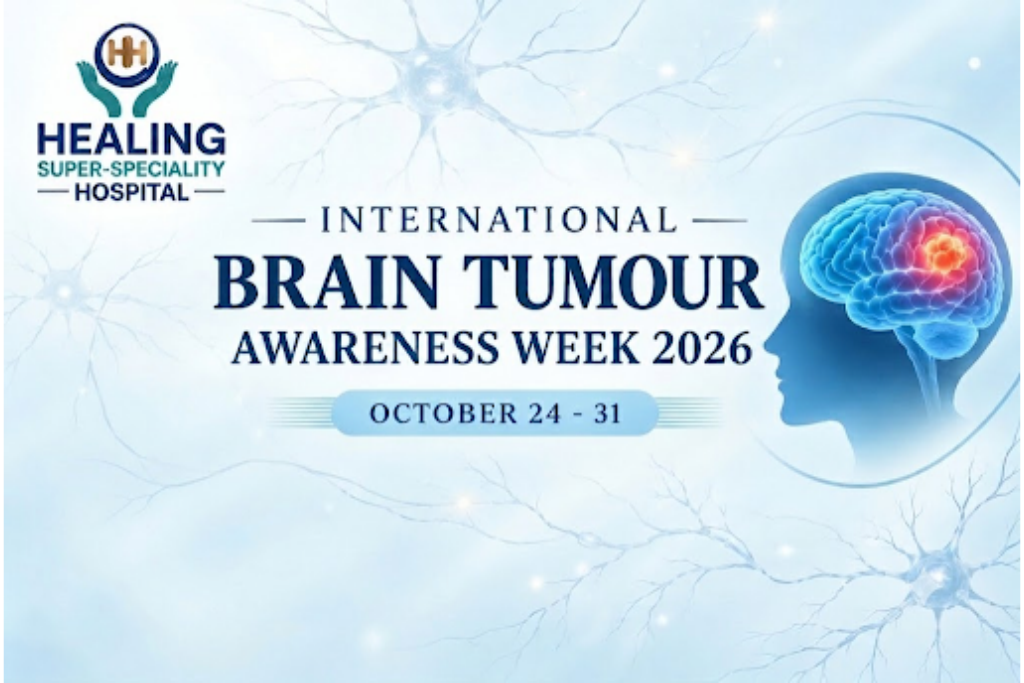
Observed from 24 to 31 October 2026, International Brain Tumour Awareness Week highlights the experiences of patients and families while encouraging greater understanding of brain tumours and the challenges associated with diagnosis, treatment, and recovery.
This article explores the types of brain tumours, their warning signs and risk factors, diagnostic methods, and treatment options, along with ways to support awareness and people affected by the condition.
History of International Brain Tumour Awareness Week
International Brain Tumour Awareness Week began in 2007, with the inaugural campaign held from October 21 to 27. The initiative was led by the International Brain Tumour Alliance (IBTA), established in 2005 to bring together patient advocacy groups, healthcare professionals, researchers, and caregivers. Its primary aim was to raise global awareness of brain tumours, highlight the challenges faced by patients and families, and encourage greater investment in research.
Over the years, the awareness week has grown into an international initiative involving patient organisations, hospitals, researchers, and communities. Activities have included educational seminars, awareness campaigns, fundraising events, and the “Walk Around the World for Brain Tumours”, which encourages people to come together in support of research and patient care.
The initiative continues to highlight the importance of recognising symptoms, improving access to diagnosis and treatment, supporting patients and caregivers, and advancing brain tumour research. By encouraging collaboration and sharing the experiences of those affected, International Brain Tumour Awareness Week helps keep the needs of the global brain tumour community in focus.
International Brain Tumour Awareness Week 2026 Theme
The International Brain Tumour Alliance (IBTA) highlights the importance of greater collaboration, greater knowledge, and greater hope in its 2026 awareness messaging. This focus underscores the need for stronger partnerships among patients, caregivers, healthcare professionals, researchers, and advocacy organisations to improve understanding of brain tumours and advance research.
By encouraging knowledge-sharing, supporting affected families, and promoting access to appropriate care, the initiative aims to strengthen collective efforts towards better outcomes for people living with brain tumours.
What is a Brain Tumour? What are its Types?
A brain tumour develops when abnormal cells grow uncontrollably in the brain or surrounding structures. Its effects depend on factors such as the tumour’s type, size, location, and growth rate.
While some tumours grow slowly, others can be aggressive and require prompt treatment.
Even a benign tumour can cause significant problems if it presses on areas responsible for essential functions such as movement, speech, vision, or memory.
Types of Brain Tumours
Brain tumours are broadly classified as primary or metastatic, depending on where they originate. They are also classified as benign or malignant based on their biological characteristics.
1. Primary Brain Tumours
These tumours originate in the brain or nearby structures rather than spreading from another organ. Examples include gliomas, meningiomas, and pituitary tumours. Their behaviour ranges from slow-growing to aggressive, depending on the specific diagnosis.
2. Metastatic Brain Tumours
These develop when cancer spreads to the brain from another part of the body. Common sources include lung cancer, breast cancer, and melanoma.
3. Meningiomas
Meningiomas arise from the meninges, the protective membranes surrounding the brain and spinal cord. Many are slow-growing and non-cancerous, although some can behave more aggressively or compress nearby brain structures.
4. Gliomas
Gliomas develop from glial cells, which support nerve cells in the brain. This group includes astrocytomas, oligodendrogliomas, and ependymomas. Glioblastoma is an aggressive grade 4 glioma.
5. Pituitary Tumours
These tumours develop in the pituitary gland, which regulates hormone production. They may cause hormonal imbalances or affect nearby structures, sometimes leading to vision changes or headaches.
6. Other Brain Tumours
Other types include vestibular schwannomas, which arise from cells surrounding the nerve responsible for hearing and balance, and certain embryonal tumours, which occur more commonly in children.
How Does a Brain Tumour Affect the Brain?
A brain tumour can affect brain function by damaging or compressing nearby tissue or increasing pressure inside the skull. The symptoms depend largely on the tumour’s location, size, and growth rate. Its effects may include:
- Movement and sensation: Weakness, numbness, tingling, or difficulty with balance and coordination.
- Speech and language: Difficulty finding words, understanding speech, reading, or writing.
- Memory and thinking: Problems with memory, attention, planning, or processing information.
- Vision and hearing: Blurred or double vision, loss of part of the visual field, or changes in hearing.
- Seizures: Disrupted electrical activity in the brain can trigger seizures.
- Mood and personality: Noticeable changes in behaviour, mood, or personality.
- Hormonal function: Tumours affecting the pituitary gland may disrupt hormone production and regulation.
Brain Tumour Symptoms and Warning Signs
According to the International Brain Tumour Alliance (IBTA), symptoms can develop gradually over weeks or months or appear suddenly, requiring urgent medical attention. Many of these symptoms can also occur with other conditions, so their presence does not necessarily indicate a brain tumour.
1. Headaches
A new or progressively worsening headache, particularly one that wakes you from sleep or is worse in the morning, warrants medical evaluation, especially when accompanied by other neurological symptoms.
2. Seizures
A seizure, also called a fit, can be an initial sign of a brain tumour. A first-time seizure requires emergency medical assessment.
3. Weakness, Numbness, or Tingling
Some people experience weakness, numbness, or tingling in an arm or leg. One side of the body can be affected, depending on the area of the brain involved.
4. Memory and Thinking Problems
Difficulty concentrating, short-term memory problems, slowed thinking, and unusual cognitive changes can occur in some cases.
5. Nausea and Vomiting
Persistent nausea or vomiting, particularly when accompanied by worsening headaches, can indicate increased pressure inside the skull and requires medical assessment.
6. Changes in Speech, Vision, or Hearing
Symptoms can include slurred speech, difficulty finding words, blurred or double vision, loss of part of the visual field, or changes in hearing.
7. Changes in Personality or Mood
Unexplained changes in personality, irritability, social withdrawal, or unusual behaviour can occur when a tumour affects areas of the brain involved in mood and behaviour.
Note: Most people experiencing these symptoms do not essentially have a brain tumour. However, persistent or worsening symptoms should not be ignored. If you notice concerning neurological changes, consult a neurologist or a neurosurgeon for an appropriate evaluation. At Healing Hospital in Chandigarh, the Department of Neurosciences provides specialist assessment to help identify the cause of symptoms and guide the next steps in care.
Brain Tumour Risk Factors
The exact cause of most brain tumours remains unknown. However, research has identified certain risk factors associated with specific types of brain tumours, including older age, previous exposure to ionising radiation, and certain inherited genetic conditions. Having a risk factor does not necessarily mean that a person will develop a brain tumour. Cancer Research UK and the NHS provide further information on established risk factors.
1. Previous Radiation Exposure
Radiation exposure to the head, particularly from radiotherapy used to treat another condition, is a recognised risk factor for certain brain tumours. According to the International Brain Tumour Alliance (IBTA), this is the only well-established risk factor apart from rare genetic causes.
2. Inherited Genetic Conditions
A small proportion of brain tumours are associated with inherited genetic conditions. These include neurofibromatosis, tuberous sclerosis, von Hippel–Lindau disease, and Li-Fraumeni syndrome. Genetic counselling and testing can be recommended for individuals or families with a relevant medical history.
3. Family History
Brain tumours have been observed in some families without a confirmed inherited genetic condition. Researchers continue to investigate the potential genetic and environmental factors that may explain these patterns.
4. Cancer in Other Parts of the Body
Certain cancers, including lung cancer, breast cancer, and melanoma, can spread to the brain and form metastatic tumours. People diagnosed with these cancers should follow their treating doctor’s recommendations for monitoring and evaluation.
5. Age
Brain tumours can develop at any age, but the types and frequency vary across age groups. Children and adults tend to develop different types of brain tumours, while certain aggressive types are more common in older adults.
Brain Tumour Diagnosis
Diagnosis usually begins when symptoms prompt medical evaluation or when a brain abnormality is identified during imaging performed for another reason. There is no routine screening test recommended for brain tumours in people without symptoms or specific risk factors.
1. Medical History and Neurological Examination
A neurological examination assesses functions such as muscle strength, sensation, reflexes, balance, coordination, speech, vision, and memory. These findings help determine which investigations may be needed.
2. CT Scan
A computed tomography (CT) scan is often used for rapid assessment in emergencies. It can help identify bleeding, swelling, fluid build-up, or a mass in the brain. A CT scan may be followed by an MRI for more detailed evaluation.
3. MRI Scan
Magnetic resonance imaging (MRI) provides detailed images of the brain and is commonly used to assess a suspected brain tumour. It helps doctors determine the tumour’s location, size, and relationship to surrounding structures. Specialised MRI techniques can also help characterise the tumour and support treatment planning.
4. Other Supporting Tests
These may include eye examinations to assess vision or pressure-related changes, blood tests to evaluate general health, and cerebrospinal fluid (CSF) analysis in selected cases. Specialised imaging can also be used to support diagnosis or plan treatment. CSF testing is not suitable for every suspected brain tumour and is performed only when clinically appropriate.
5. Biopsy and Laboratory Analysis
When tissue diagnosis is needed, a neurosurgeon may obtain a small sample of the tumour through a biopsy or remove tumour tissue during surgery, when appropriate. The pathology team examines the sample to determine the tumour type, grade, and relevant molecular features. These findings help guide treatment decisions and provide information about the tumour’s likely behaviour.
Why Timely Brain Tumour Detection Matters
Early diagnosis of a brain tumour can help doctors identify the tumour type, assess its location and growth, and determine the most appropriate treatment. Timely evaluation is particularly important when symptoms are new, persistent, or progressively worsening, as some tumours can affect vital brain functions or increase pressure inside the skull.
Early diagnosis can make a difference in several ways:
- Timely treatment: Identifying a tumour early may allow treatment to begin before significant neurological complications develop.
- Preserving brain function: Prompt assessment can help doctors identify pressure on critical brain structures and reduce the risk of further damage.
- More informed treatment planning: MRI scans, biopsy when indicated, and other investigations help establish the diagnosis and guide personalised treatment decisions.
- Better symptom management: Early intervention may help manage symptoms such as seizures, headaches, weakness, and changes in vision or coordination.
- Improved quality of life: Appropriate treatment and rehabilitation can help patients maintain independence and manage the physical and cognitive effects of the tumour.
Not every brain tumour causes noticeable symptoms in its early stages, and early detection does not guarantee a better outcome in every case.
Brain Tumour Treatment, Rehabilitation, and Long-Term Care
At Healing Hospital in Chandigarh, the Neurosurgery and Neurology departments provide evaluation and management of conditions affecting the brain and nervous system, coordinating with other specialists when required.
1. Observation and Monitoring
Some brain tumours are discovered incidentally during imaging and may not require immediate treatment. The doctors can then order more scans to monitor for changes in tumour’s size or behaviour. Treatment can be considered if the tumour grows or begins causing symptoms.
2. Surgery
When safe and appropriate, surgery can be used to remove as much of the tumour as possible while protecting essential brain functions. Some tumours may require only a biopsy because of their location or the risks associated with removal.
3. Radiation Therapy
Radiation therapy uses high-energy radiation to destroy tumour cells or slow their growth. It can be recommended after surgery, as an alternative when surgery is unsuitable, or as part of a combined treatment plan.
4. Chemotherapy and Other Medicines
Depending on the tumour type, treatment may include chemotherapy, targeted medicines, or other drug therapies. Chemotherapy may be given alone or alongside radiation therapy. Doctors can also prescribe corticosteroids to reduce swelling around a tumour and anti-seizure medicines when needed to manage seizures.
5. Treatment in Children
Treatment for childhood brain tumours depends on the tumour type, location, grade, and the child’s age. Surgery, chemotherapy, and radiation therapy may be used individually or in combination. Since brain tumour treatment can affect developing brain function, hormones, learning, and cognition, children require long-term follow-up to monitor possible late effects and support their development.
6. Rehabilitation Support
Rehabilitation can help patients regain abilities, adapt to changes, and maintain independence during recovery. It can include:
- Physiotherapy: Supports movement, strength, balance, and coordination.
- Occupational therapy: Helps patients manage daily activities and adapt to changes at home or work.
- Speech and language therapy: Supports communication and swallowing difficulties.
- Cognitive rehabilitation: Helps address difficulties with memory, attention, and planning.
- Nutritional support: Helps maintain adequate nutrition, strength, and recovery, with guidance from a dietitian when needed.
7. Emotional Support and Long-Term Care
A brain tumour diagnosis can cause anxiety, fear, and low mood for patients and their families. Psychological support and care can help people manage emotional distress throughout treatment and recovery. At Healing Hospital in Chandigarh, the Psychiatry Department can provide support when required.
International Brain Tumour Awareness Week 2026: How You Can Participate
The International Brain Tumour Alliance (IBTA) encourages people to take part in awareness activities of all sizes, recognising that even small efforts can help highlight the challenges faced by patients and their families.
1. Learn the Warning Signs
Familiarise yourself with the symptoms of brain tumours and share reliable information with family and friends. Understanding which symptoms require prompt or emergency medical attention can help people seek care at the right time.
2. Do Not Ignore Persistent Symptoms
If you or someone you know experiences persistent or worsening headaches, new-onset seizures, vision changes, or unexplained neurological or behavioural changes, seek medical evaluation rather than delaying care.
3. Share Reliable Information
Share information from trusted sources, such as the IBTA, to improve understanding and address common misconceptions. Brain tumours are not contagious, and a diagnosis is not anyone’s fault.
4. Support Patients and Caregivers
Small acts of support can make a difficult journey easier. Offer to accompany someone to appointments, help with meals or transport, or simply listen without judgement. Encourage patients to discuss concerns and treatment decisions with their healthcare team.
5. Use the IBTA Awareness Toolkit
The IBTA provides awareness resources that may include campaign materials, logos, social media graphics, and ideas for activities. Visit the official IBTA Website to check the available toolkit, participation guidance, and registration options.
6. Organise or Join an Awareness Activity
Consider organising a community walk, educational talk, webinar, or awareness session at your school or workplace. You can also contact local healthcare organisations to learn about confirmed events and opportunities to participate.
7. Raise Awareness Online
Share verified information about brain tumours, patient experiences, and the importance of research during International Brain Tumour Awareness Week, 24–31 October 2026. Use relevant campaign hashtags, such as #BrainTumourAwarenessWeek and #IBTAW, where appropriate.
Conclusion
A brain tumour diagnosis can change lives in an instant, bringing uncertainty, fear, and difficult questions for patients and their families. Behind every diagnosis is a personal journey that calls for compassion, timely medical attention, and support. Raising awareness can help people feel less alone and encourage informed decisions throughout that journey.
International Brain Tumour Awareness Week is an opportunity to turn awareness into meaningful action. Learning about warning signs, sharing reliable information, and supporting patients and caregivers can help build greater understanding of the challenges associated with brain tumours.
If you or someone close to you has persistent neurological symptoms or concerns about a scan result, seek advice from a qualified medical professional. At Healing Hospital, Chandigarh, the Neurosciences team provides specialist evaluation and coordinated care to help patients understand their diagnosis and explore appropriate treatment options. You can contact the hospital to enquire about an appointment.
Frequently Asked Questions
Q. What is the significance of International Brain Tumour Awareness Week?
International Brain Tumour Awareness Week is a global awareness initiative that highlights the challenges faced by people living with brain tumours and their families. It encourages public education, patient support, and greater investment in brain tumour research.
Q. When is International Brain Tumour Awareness Week 2026?
International Brain Tumour Awareness Week 2026 will be observed from 24 October to 31 October 2026. The week brings together individuals and organisations to raise awareness about brain tumours and promote support for affected patients and caregivers.
Q. What are the common warning signs of a brain tumour?
Common symptoms may include persistent or worsening headaches, seizures, unexplained nausea or vomiting, vision changes, difficulty speaking, memory problems, weakness, and changes in balance or coordination. Symptoms vary depending on the tumour’s location, size, and type. These symptoms do not necessarily indicate a brain tumour, but persistent or concerning symptoms should be evaluated by a medical professional.
Q. Are all brain tumours cancerous?
No, not all brain tumours are cancerous. Some are benign (non-cancerous), while others are malignant (cancerous). However, even a benign tumour can cause serious health problems depending on its size, location, and effect on surrounding brain structures.
Q. How are brain tumours diagnosed?
Brain tumours can be evaluated through a neurological examination and imaging tests, such as magnetic resonance imaging (MRI) or computed tomography (CT). Depending on the findings, a specialist may recommend further investigations, including a biopsy, to determine the tumour’s type and guide treatment decisions.
Q. Can brain tumours be treated?
Yes, many brain tumours can be treated, but the appropriate approach depends on the tumour’s type, grade, location, size, and the patient’s overall health. Treatment may involve surgery, radiation therapy, chemotherapy, targeted therapies, or regular monitoring. A specialist can recommend an individualised treatment plan based on the diagnosis.
Q. Can brain tumours be prevented?
There is currently no established way to prevent most brain tumours. Some risk factors, such as previous radiation exposure to the head and certain inherited genetic conditions, are recognised, but many brain tumours develop without a clearly identifiable cause. Awareness of symptoms and timely medical evaluation remain important.
Q. Which department treats brain tumours at Healing Hospital, Chandigarh?
Neurosurgeons and neurologists in the Neurosciences department evaluate and manage brain tumours. Have a look at our Neurology & Neurosurgery departments at Healing Hospital to learn more about our services.
Q. Where can I consult a doctor for brain tumour treatment in Chandigarh?
For information about consultations and available services, contact the Neurosciences department at Healing Hospital, Sector 34 A, Chandigarh, at +91-9607343434 or 7986115995. If you or someone else has a seizure or sudden severe symptoms, call emergency services at +91-9464343434 immediately rather than waiting for an appointment.
Q. How much does brain tumour treatment cost in Chandigarh?
The cost depends on the type and grade of the tumour, the tests needed, the surgery or other treatments planned, the hospital stay, and rehabilitation needs. Contact Healing Hospital at +91-9607343434 or 7986115995 for information about available services and consultation fees.
Q. How can I participate in International Brain Tumour Awareness Week 2026?
You can learn the warning signs, share reliable information, support patients and caregivers, use the IBTA toolkit, and join or organise an activity. You can also share verified facts on social media during the week using #BrainTumourAwarenessWeek and #IBTAW.