An MRI scan is particularly useful for examining soft tissues in detail. Doctors recommend it to investigate the cause of persistent pain, nerve-related symptoms, injuries and various other medical conditions. It also helps assess affected areas and supports accurate diagnosis and treatment planning. It is generally a painless procedure and does not require an overnight hospital stay. However, it usually takes longer than a CT scan. The duration depends on the body part being examined, the type of scan and whether contrast material is required.
At Healing Hospital, Chandigarh, our Radiology Department offers MRI scan facilities to support detailed evaluation and clinical decision-making. Equipped with a GE MRI system, our facility is supported by a trained radiology team that performs scans while following established safety protocols.
If your doctor has advised an MRI scan or your symptoms require further investigation, visit the front desk at Healing Hospital, Chandigarh. Our concerned team can guide you through the procedure, its benefits and the necessary preparations.
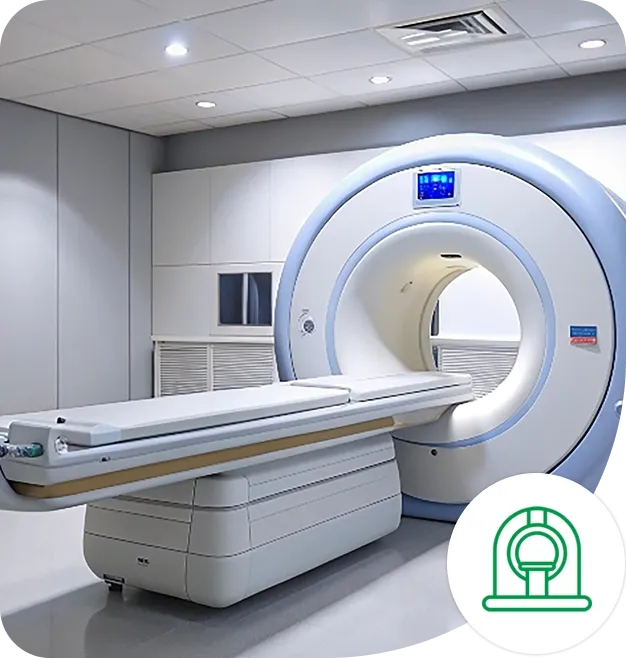
What is an MRI?
MRI stands for Magnetic Resonance Imaging. During the procedure, you lie on a motorised table that moves into a large, tube-shaped scanner containing a powerful magnet. The magnetic field and radio waves interact with hydrogen atoms in the water present in your body, producing signals that are detected by special coils. A computer processes these signals to create detailed images that a radiologist can examine from different angles.
An MRI scan helps doctors assess the structure and condition of soft tissues in the body. It can provide detailed images of the brain, spinal cord, nerves, muscles, ligaments, cartilage and internal organs, including the liver and uterus. It can help identify tumours, inflammation, infections, tissue tears and abnormalities in blood vessels. MRI is also used to support surgical planning and assess how well a treatment is working.
Some MRI examinations require a contrast agent, a special substance that helps certain tissues and blood vessels appear more clearly in the images. It is usually administered through a vein in the arm.
The type and duration of the MRI scan depends on your symptoms, the body part being examined and your overall health. Your physician will determine the most appropriate examination based on your clinical requirements.
Schedule Your Appointment with
Our Expert Doctors
We are dedicated to driving lasting, positive transformation in healthcare management through innovation and patient-centered solutions.
Types of MRI Scans
Your doctor recommends a specific MRI scan based on your symptoms, medical history and previous test results. Different types of MRI scans examine particular areas of the body and help investigate a range of medical conditions.
MRI Brain
An MRI brain scan examines the brain, brainstem and surrounding structures in detail. It helps evaluate conditions associated with headaches, seizures, stroke, dizziness, memory problems, brain tumours, infections and neurological disorders such as multiple sclerosis.
MRI Spine (Cervical, Thoracic and Lumbar)
An MRI spine scan examines the spinal bones, intervertebral discs, spinal cord and surrounding nerves. It helps investigate persistent neck pain, back pain, numbness or weakness in the arms and legs. It can identify disc bulges, nerve compression and narrowing of the spinal canal.
MRI of Joints (Knee, Shoulder, Hip and Ankle)
An MRI joint scan provides detailed images of ligaments, tendons, cartilage and surrounding muscles. It helps assess sports-related injuries, ligament and meniscus tears, rotator cuff injuries and persistent joint pain when the underlying cause is unclear.
MRI Abdomen and Pelvis
An MRI abdomen and pelvis scan examines internal organs such as the liver, pancreas, kidneys, uterus, ovaries and bladder. It helps evaluate tumours, cysts and inflammatory conditions, providing detailed information when additional assessment is required.
MRCP (Magnetic Resonance Cholangiopancreatography)
MRCP is a specialised MRI examination that provides detailed images of the bile ducts, gallbladder and pancreatic duct. It helps detect stones, blockages and narrowing in these structures. Unlike conventional endoscopic procedures, MRCP is non-invasive and does not require instruments to be passed into the body. However, MRCP can not be interchanged with ERCP, which is an endoscopic diagnostic as well as therapeutic procedure.
MRI With Contrast
A contrast-enhanced MRI uses a special contrast agent, usually administered through a vein, to make certain tissues and structures more visible. It helps radiologists assess tumours, infections, inflammation and blood vessels in greater detail.
Important Note: Your doctor may recommend an MRI with or without contrast, depending on your clinical requirements. Before the scan, factors such as kidney function, previous contrast reactions, pregnancy status and the presence of implants or metallic objects in the body shall be reviewed. Our radiology team guides you on the appropriate scan and any preparation required.
Who Recommended an MRI?
Your doctor may recommend an MRI when detailed images of soft tissues are needed to investigate symptoms, confirm a diagnosis, or plan treatment.
An MRI can be recommended in the following situations:
- Persistent headache, seizures, dizziness, or suspected stroke: To examine the brain for tumours, bleeding, blocked blood supply, or other changes.
- Neck or back pain with numbness, tingling, or weakness: To look for disc problems, nerve compression, or spinal cord changes, as ordered by neurologists.
- Joint injuries and persistent joint pain: To check ligaments, tendons, cartilage, and muscles after sports or accident injuries, as ordered by orthopaedicians.
- Suspected multiple sclerosis or other nerve conditions: To assess the brain and spinal cord, as ordered by neurosurgeons.
- Abdominal or pelvic problems: To examine the liver, pancreas, bile ducts, uterus, ovaries, or other organs when other tests are not enough.
- A lump or abnormal finding on an X-ray, ultrasound, or CT scan: To obtain more detail about the affected area.
- Suspected infection or inflammation of bone, spine, or soft tissue: To find the extent of the problem.
- Cancer staging and follow-up: To assess the extent of the disease and monitor treatment response.
- Surgical planning: To help surgeons plan or guide certain procedures.
What Happens Before, During and After an MRI Scan?
An MRI scan involves three main stages: preparation, the scanning procedure and post-scan care. The exact process may vary depending on the type of MRI, your medical history and whether contrast material or sedation is required.
Before the MRI Scan
1. Pre-Scan Evaluation and Safety Screening
Before the scan, the radiology team reviews your doctor's prescription, symptoms and medical history. You will also be asked to complete a safety questionnaire, as an MRI scanner uses a powerful magnetic field.
Inform the team, if you have any of the following:
- A pacemaker, defibrillator or cochlear implant.
- Brain aneurysm clips, metallic stents or artificial heart valves.
- Joint replacements, metal plates, screws or rods.
- Insulin pumps, nerve stimulators or other implanted medical devices.
- Metal fragments in your body or eyes, particularly following an injury or welding-related exposure.
- Tattoos, permanent makeup or piercings that may contain metallic components.
Also inform them about any allergies, kidney disease, diabetes or previous reactions to MRI contrast material. If you are pregnant or think you might be pregnant, let the team know before the scan.
2. Preparation for the Scan
Preparation depends on the type of MRI examination and whether contrast material is required.
- MRI of the Brain, Spine or Joints: You can generally eat and drink normally, unless advised otherwise.
- MRI of the Abdomen, Pelvis or MRCP: You may be asked to avoid food for approximately 4–6 hours before the scan. For certain pelvic examinations, you may also be asked to arrive with a comfortably full bladder.
- MRI With Contrast: Depending on your medical history and the contrast agent being used, your radiologist may recommend a kidney function test before the procedure.
Wear loose, comfortable clothing without metal components. You may be asked to change into a hospital gown. Remove jewellery, watches, hairpins, belts, hearing aids, dentures and other metallic accessories before entering the scan room. Keep mobile phones, bank cards and metro cards outside, as the magnetic field can damage electronic devices and magnetic strips.
During the MRI Scan
1. Positioning
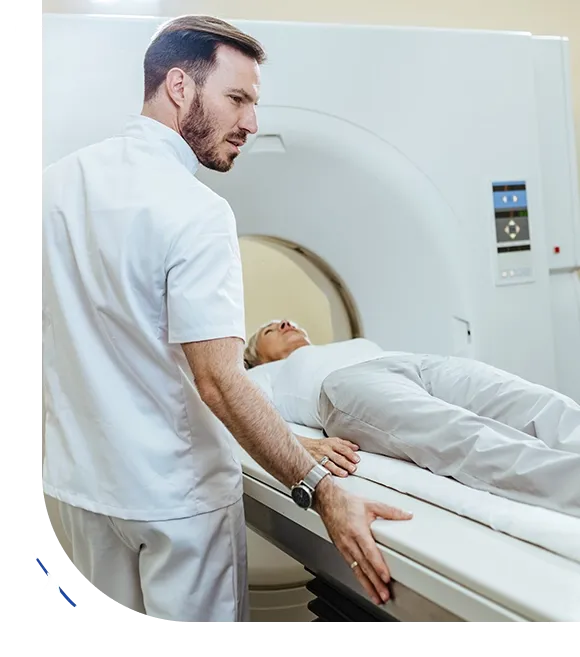
A trained radiology technologist helps you lie comfortably on a padded scanning table. Specialised coils are positioned around the body part being examined to receive signals and produce clear images.
The table then moves gradually into the MRI scanner. The technologist monitors the procedure from an adjoining room and communicates with you through an intercom. You will also be given a hand-held alarm device to alert the team, if you need assistance.
2. The Scanning Procedure
You will need to remain as still as possible during the scan, as even slight movements can affect image quality. For certain examinations, you may be asked to hold your breath briefly.
The scanner produces loud knocking and buzzing sounds during image acquisition. Earplugs or headphones are provided to help reduce the noise. You may also experience a mild sensation of warmth in the area being scanned.
Most MRI scans take approximately 30–45 minutes, depending on the body part and examination type. Scans involving multiple body regions or contrast administration may take longer. Including preparation and other formalities, your overall visit may take approximately 45–90 minutes.
3. Contrast Administration
If your MRI requires contrast, a small intravenous cannula (thin tube) is placed in a vein, usually in your arm. The contrast agent is administered through this cannula to make certain tissues and structures more visible in the images. You may experience a brief pinch during insertion or a cool sensation when the contrast is injected.
After the MRI Scan
-
Recovery and Reporting
Most patients can return to their normal activities immediately after an MRI scan. If contrast is used, a short observation period may be recommended. If sedation is given, you will be monitored until you are fully awake. You may need someone to accompany you home.
A radiologist reviews the images and prepares a report for your treating doctor. Your doctor will explain the findings and advise you on any further tests or treatment. The time taken to prepare the report depends on the scan and its findings.
Advantages of an MRI Scan
An MRI scan offers several benefits in diagnosing medical conditions and planning treatment:
- Detailed Soft Tissue Images: Provides clear images of the brain, spinal cord, muscles, ligaments and cartilage.
- No Ionising Radiation: Uses magnetic fields and radio waves instead of X-rays.
- Better Tissue Assessment: Helps identify abnormalities that may not be clearly visible on X-rays or other imaging tests.
- Multiple Viewing Angles: Produces images in different planes for detailed examination.
- Early Detection: Helps identify tumours, nerve problems, joint injuries and other abnormalities.
- Treatment Planning: Supports surgical planning and helps monitor treatment progress.
- Non-Invasive Procedure: Does not involve surgical cuts or stitches and is generally painless.
- Outpatient Examination: Most patients can return home the same day without an overnight hospital stay.
Risks and Precautions for an MRI Scan
An MRI scan is generally safe when performed by a trained team following proper safety protocols. However, certain precautions are important before and during the procedure.
Metal and Implants
The MRI scanner uses a powerful magnet that can affect metal objects and certain implanted devices. Inform the radiology team if you have a pacemaker, metal implant, surgical clips or any history of metal injury. Some modern implants are MRI-safe under specific conditions and must be checked before the scan.
Reaction to Contrast Material
Some patients may experience mild reactions to MRI contrast, such as nausea, headache, itching or a cool sensation. Serious allergic reactions are rare. Inform your doctor about any previous allergies or reactions to contrast.
Kidney-Related Risks
In patients with severely reduced kidney function, certain MRI contrast agents may rarely cause a serious condition affecting the skin and internal organs. Your doctor may recommend a kidney function test before contrast administration and consider alternatives if needed.
Pregnancy
MRI does not use ionising radiation and may be performed during pregnancy when medically necessary. However, contrast material is generally avoided during pregnancy unless essential. Inform your doctor if you are pregnant or think you might be.
Heating and Skin Burns
Radio waves used during MRI can cause mild warming. Rarely, metallic objects or certain tattoo pigments may cause skin irritation or a burning sensation. Inform the technologist immediately if you feel unusual heat or discomfort.
Anxiety and Feeling Claustrophobic
The enclosed scanner may cause anxiety or discomfort in some patients. Inform the radiology team beforehand. They can explain the procedure, provide reassurance and discuss options such as mild sedation when appropriate.
Loud Noise
The MRI scanner produces loud knocking and buzzing sounds. Earplugs or headphones are provided to help protect your hearing and reduce discomfort.
Why Choose Healing Hospital for an MRI Scan in Chandigarh?

In-House MRI and CT Scan Facility : Healing Hospital has an in-house Radiology Department offering MRI and CT scan services. Having both imaging facilities under one roof makes it easier to coordinate diagnostic investigations without the need to visit multiple centres.

Consultation and Diagnostic Care Under One Roof : As a multispeciality NABH-accredited hospital, Healing Hospital brings radiology services and specialist consultations together. Patients can access the relevant medical expertise for evaluation, diagnosis and further treatment planning within the same hospital.

24×7 Emergency and Trauma Support : Healing Hospital provides 24×7 Emergency and Trauma Services, supported by ICU facilities for patients requiring urgent medical attention. With a focus on fast and reliable reporting, our Radiology Department supports timely clinical evaluation and treatment decisions.
MRI Scan Cost in Chandigarh
The cost of an MRI scan in Chandigarh depends on several factors, including the body part being examined, the number of areas scanned and whether contrast material is required. Specialised examinations, such as MRCP, may also have different charges. For example, the cost of an MRI brain scan may differ from that of an MRI spine, knee or abdomen.
At Healing Hospital, Chandigarh, the cost is shared after reviewing your doctor's recommendation and confirming the type of MRI required. Our Radiology Department provides a cost estimate before the procedure, helping you understand the expected charges and plan accordingly. You can call at +91-9607343434 for detailed pricing or visit our front desk in Sector 34-A, Chandigarh.
Meet Our MRI Specialists in Chandigarh
At Healing Hospital, MRI scans are performed by trained radiology technologists, and the images are reviewed by experienced radiologists. Our Radiology team, in co-ordination with Neurology, Neurosurgery, Orthopaedics,Gynaecology, Gastroenterology, and Internal Medicine teams, guide you through each step of the procedure, addresses your concerns and helps make your experience as comfortable as possible.
Call: +91-96073 43434, 94643 43434 to enquire about MRI appointments or consultations with our Radiology Department.
Book Online: Visit www.healinghospital.co.in or contact the hospital's front desk for appointment assistance.
Reviewed By

Blog

White Discharge During Pregnancy: Understanding Normal, Clear, Brown, and Yellow Discharge
PCOS Symptoms Every Woman Should Know

Reasons for Delayed Periods: Pros, Cons, & Medical Recommendations

Best Gynaecologist in Chandigarh Offering Advanced & Compassionate Care

Complete Women’s Health Care with Dr. Ramandeep Kaur, Gynae Doctor in Chandigarh

Best Gynae Doctor in Chandigarh for Advanced Gynecology Treatments

Female Gynaecologist in Chandigarh for Pregnancy and Fertility Care

Top Gynaecologist in Chandigarh: Complete Guide for First-Time Visitors

Why You Should Choose the Top Gynaecologist in Chandigarh for Your Health

Best Gynae Doctor in Chandigarh: Your Complete Guide to Women’s Health Specialists
Frequently Asked Questions (FAQs)
What Is an MRI Scan?
An MRI scan is an imaging test that uses a strong magnetic field and radio waves to create detailed images of the inside of the body. It helps doctors examine the brain, spine, joints, muscles and internal organs.
Is an MRI Painful?
No. An MRI scan is generally painless. You need to lie still during the procedure and may hear loud knocking sounds or feel mild warmth. If contrast is required, you may feel a brief pinch when the IV cannula is inserted.
How Long Does an MRI Scan Take?
Most MRI scans take around 30–45 minutes, depending on the body part and type of examination. Scans involving multiple areas or contrast may take longer. Including preparation, your overall visit may take approximately 45–90 minutes.
How Should I Prepare for an MRI Scan?
Preparation depends on the type of MRI. For an abdominal or pelvic MRI, you may be asked to avoid food for approximately 4–6 hours. Inform the radiology team about any implants, metallic objects in your body, allergies, kidney problems or pregnancy. Wear comfortable clothing without metal and remove jewellery and other metallic accessories before entering the scan room.
What Is the Difference Between an MRI and a CT Scan?
An MRI uses magnetic fields and radio waves to produce detailed images of soft tissues, such as the brain, spinal cord and joints. A CT scan uses X-rays and is generally faster. It is commonly used to assess bones, the lungs, internal bleeding and emergency conditions. Your doctor recommends the appropriate scan based on your symptoms and medical condition.
Is an MRI Scan Safe?
Yes. An MRI scan is generally safe when appropriate safety checks are followed. It does not use ionising radiation. However, because the scanner uses a powerful magnetic field, the radiology team must check for implants, metallic objects and other potential safety concerns before the procedure.
Who Should Not Have an MRI or May Need Extra Precautions?
People with certain implants, such as some pacemakers, cochlear implants or aneurysm clips, may require additional safety checks before an MRI. Those with metal fragments in the body, particularly in the eyes, severe kidney disease or a history of reactions to MRI contrast also need special consideration. Always inform the radiology team about your medical history and implanted devices before the scan.
Can I Have an MRI During Pregnancy?
An MRI does not use ionising radiation and may be performed during pregnancy when medically necessary. However, contrast material is generally avoided unless considered essential. Inform your doctor and the radiology team if you are pregnant or think you might be.
How Much Does an MRI Scan Cost in Chandigarh?
The cost of an MRI scan in Chandigarh depends on the body part being examined, the number of regions scanned and whether contrast material is required. At Healing Hospital, a cost estimate is provided after confirming the type of MRI recommended. You can contact +91-9607343434 or visit our front desk for detailed pricing.
How Do I Choose a Radiologist for an MRI in Chandigarh?
Consider the radiologist’s qualifications, experience and expertise in the type of imaging required. At Healing Hospital, experienced radiologists review MRI images and prepare reports to support clinical evaluation and treatment planning. You can contact our Radiology Department for assistance with your imaging requirements.
How Do I Book an MRI Scan in Chandigarh?
Call +91-9607343434, 94643 43434 to enquire about or book an MRI scan at Healing Hospital. You can also visit www.healinghospital.co.in or contact the hospital’s front desk for appointment assistance.
 Emergency 24×7 : 01725088883