
Headache Types Explained: Pain Patterns, Causes & Treatment
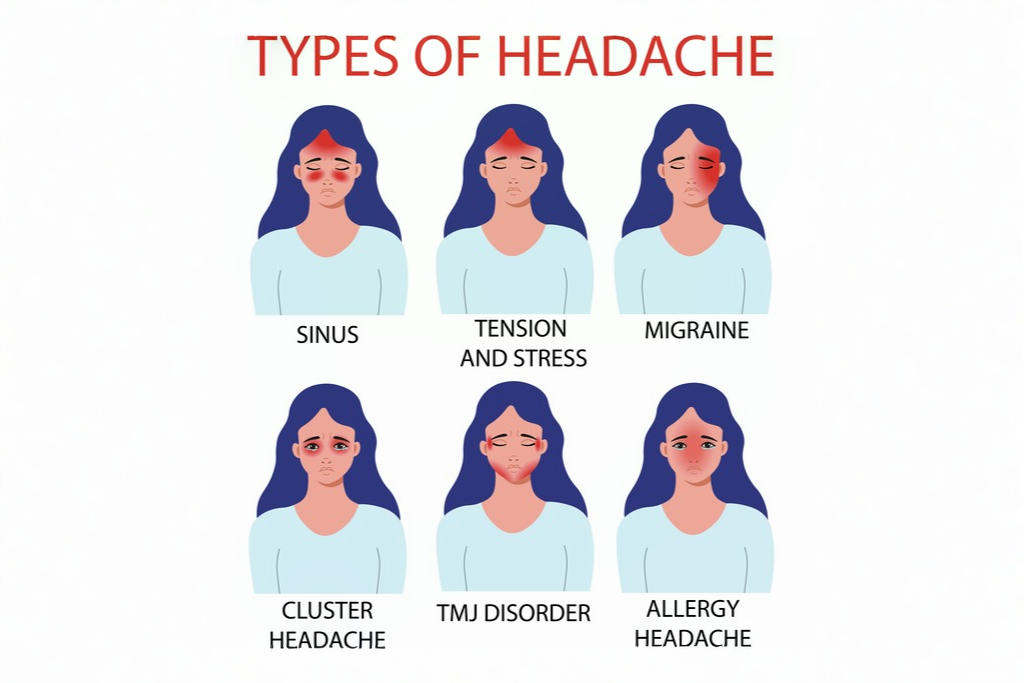
A headache can turn even the simplest daily activities into a struggle. Sometimes, it feels like a tight band around the forehead. At other times, it may cause throbbing pain on one side of the head or persistent discomfort near the neck. While occasional headaches are common, recurring episodes can be frustrating, especially when their cause remains unclear.
Understanding different headache types is important because each may have distinct symptoms, triggers and treatment requirements. This article explains common headache patterns, their possible causes, available treatments and signs that indicate a need for medical attention.
What are the Different Types of Headaches?
Headaches are broadly classified into two categories:
1. Primary Headaches
These occur independently rather than as symptoms of another medical condition. Common examples include migraines, cluster headaches and tension-type headaches.
2. Secondary Headaches
These develop due to an underlying condition or identifiable factor, such as an infection, head injury or medication overuse.
Understanding this classification helps explain why different types of headaches require different approaches to diagnosis and treatment.
Common Headache Types, Their Causes and Symptoms
The following are some commonly recognised headache disorders and patterns.
1. Tension-Type Headache
Among the most common headache disorders, tension-type headaches typically cause dull, pressing pain on both sides of the head. People often describe the sensation as a tight band around their forehead.
Stress, poor sleep and muscular tenderness may contribute to these headaches. Unlike migraines, they generally do not worsen with routine physical activity.
2. Migraine
Migraine is a neurological disorder characterised by recurring attacks of moderate to severe headache, which may involve throbbing pain, nausea and sensitivity to light or sound. Some people also experience visual disturbances known as aura.
Migraine attacks may be triggered by disrupted sleep, hormonal changes or missed meals. Appropriate migraine treatment depends on attack frequency, severity and individual medical history.
3. Cluster Headache
Cluster headaches cause extremely severe pain, usually around one eye. Attacks may occur repeatedly over several weeks before a period without symptoms.
Other symptoms include eye redness, watering, nasal congestion and restlessness. Although less common than migraines, cluster headaches can significantly affect daily functioning.
4. Sinus-Related Headache
Sinus inflammation may cause facial pain, pressure and discomfort around the forehead or cheeks, particularly when accompanied by nasal symptoms.
However, headaches frequently mistaken for sinus headaches may actually be migraines. Accurate diagnosis is therefore important before selecting treatment.
5. Medication-Overuse Headache
Frequent use of medicines for headache relief can sometimes contribute to persistent headaches.
Medication-overuse headache commonly develops in people with an existing headache disorder who regularly overuse acute headache medicines over several months. Medical supervision is important when addressing this condition.
6. Cervicogenic Headache
Cervicogenic headaches originate from structures in the neck. Pain may begin at the back of the head and spread towards the forehead.
Restricted neck movement or discomfort during certain movements may accompany these headaches.
7. Hormonal Headache
Hormonal fluctuations, particularly changes in oestrogen levels, can influence migraine attacks.
Some women experience headaches around menstruation, pregnancy or menopause. Identifying the relationship between symptoms and hormonal changes may support treatment planning.
8. Exertional Headache
These headaches develop during or following strenuous activities such as running or weightlifting.
Some exertional headaches are primary disorders. However, a new headache triggered by strenuous exercise requires medical assessment to exclude underlying conditions. Sudden, extremely severe pain requires emergency attention.
Headache Types by Pain Location: What Does the Location Suggest?
Different types of headache pain may affect the forehead, temples, back of the head or areas around the eyes. Although the location can provide useful clues, it cannot confirm a diagnosis.
|
Pain Location |
Possible Causes |
|
Forehead and temples |
Tension-type headache, migraine or sinus inflammation |
|
One side of the head |
Migraine or cluster headache |
|
Back of the head |
Cervicogenic headache, tension-type headache or occipital neuralgia |
|
Behind one eye |
Cluster headache, migraine or eye-related conditions |
|
Both sides |
Tension-type headache or migraine |
|
Entire head |
Tension-type headache, infection-related headache or other conditions |
Understanding these headache types and their associated symptoms can help identify possible causes. For instance, headaches at the back of the head may be associated with tension-type headaches, cervicogenic headaches or occipital neuralgia. The nature of the pain, its duration and accompanying symptoms can provide further clues, although an accurate diagnosis requires clinical assessment.
What Causes Different Types of Headaches?
When it comes to the types of headache and reason behind each, it is important to distinguish triggers from underlying medical conditions.
Common contributing factors include:
- Stress and emotional strain
- Irregular sleep patterns
- Dehydration and missed meals
- Prolonged screen use and eye strain
- Hormonal fluctuations
- Caffeine withdrawal
- Neck-related problems
- Infections and other medical conditions
Not every trigger affects everyone equally. Recording headache episodes may help identify recurring patterns.
When Should You Consult a Doctor or Be Concerned About a Headache?
Most headaches are not caused by serious medical conditions. However, certain symptoms require prompt attention.
Warning Signs Requiring Emergency Medical Attention
Seek emergency medical care for:
- A sudden, extremely severe headache
- Headache accompanied by facial drooping, weakness or difficulty speaking
- Severe headache with fever and neck stiffness
- Headache associated with seizures, confusion or loss of consciousness
- Severe headache following a head injury
- A severe headache accompanied by sudden vision loss or a painful, red eye
Sudden neurological symptoms, such as facial drooping, weakness or difficulty speaking, may indicate a stroke and require immediate medical attention. Early diagnosis is crucial for determining the appropriate course of brain stroke treatment, as timely intervention can help reduce the risk of complications.
When to Consult a Neurologist
Consider medical evaluation if headaches become more frequent, worsen progressively, interfere with everyday activities or change from their usual pattern.
A neurologist in Chandigarh can assess recurring symptoms and determine whether further neurological evaluation is necessary.
How are Different Headache Types Diagnosed?
Diagnosis begins with understanding the patient’s symptoms and medical history.
A doctor may assess:
- Pain characteristics: Location, severity, duration and frequency.
- Associated symptoms: Nausea, visual changes or neurological difficulties.
- Possible triggers: Sleep patterns, stress and medication use.
- Physical examination: Relevant neurological and general health findings.
- Investigations: MRI, CT scans or other tests when clinically indicated.
Not every headache requires brain imaging. A neurologist can assess the symptoms and determine whether further investigations are necessary. At Healing Hospital, the Neurology Department provides evaluation and care for patients experiencing recurring or persistent headaches.
Headache Treatment: What are the Available Options?
Headache types and treatment approaches vary depending on the diagnosis, symptom severity and individual health considerations.
Medicines for Headache Relief
Headache treatment may involve medicines to relieve an ongoing attack or preventive therapies to reduce the frequency of recurring headaches. The choice depends on the headache type, severity, medical history and individual treatment requirements.
Medication selection should consider existing conditions, potential side effects and the risk of medication overuse.
Non-Medication Treatment
Depending on the diagnosis, management may involve improving sleep habits, stress management, physiotherapy or identifying individual triggers.
Treating Underlying Conditions
Secondary headaches require treatment based on their underlying cause, which may include infections, injuries or neurological conditions. In rare cases, when investigations reveal a structural problem in the brain or spine that may require surgical intervention, patients may be referred to the Neurosurgery Department for further assessment. However, most headaches do not require surgery and can be managed through appropriate medical treatment.
How Can You Prevent Frequent Headaches?
Although not all headaches are preventable, certain everyday practices may help reduce their frequency.
- Maintain consistent sleeping hours.
- Drink adequate water throughout the day.
- Avoid skipping meals.
- Practise suitable stress-management techniques.
- Take regular breaks from prolonged screen use.
- Identify and manage personal headache triggers.
- Maintain a diary of headache frequency and symptoms.
- Avoid excessive self-medication.
Preventive measures should complement, rather than replace, appropriate medical treatment.
Understanding Headaches and Seeking Appropriate Medical Care
Headaches can vary considerably in their causes, symptoms and impact on daily life. While some respond to simple lifestyle adjustments, others require medical assessment and condition-specific treatment. Understanding common headache patterns can help individuals recognise changes, identify possible triggers and make informed decisions about seeking care. Persistent or worsening symptoms should not be ignored.
For information about neurological evaluation and headache management services, patients may refer to the Neurology Department at Healing Hospital, Chandigarh.
Frequently Asked Questions
Q. What are the different types of headaches and their symptoms?
Common types include tension-type headaches, migraines and cluster headaches. Symptoms range from dull pressure to severe throbbing pain.
Q. How can I identify the type of headache based on its location?
Location provides useful clues, but diagnosis also depends on pain characteristics, duration and associated symptoms.
Q. What is the difference between a migraine and a tension headache?
Migraine often involves throbbing pain, nausea and light sensitivity. Tension headaches generally cause pressing or tightening discomfort.
Q. What causes headaches on one side of the head?
Migraine and cluster headaches are possible causes. Other conditions can also produce one-sided pain.
Q. Why do I experience headaches at the back of my head?
Possible causes include cervicogenic headaches, tension-type headaches and occipital neuralgia.
Q. What causes headaches around the forehead and temples?
Tension-type headaches, migraines and sinus-related conditions may cause discomfort in these areas.
Q. Can stress and lack of sleep cause frequent headaches?
Yes. Stress and disrupted sleep can contribute to tension-type headaches and trigger migraine attacks.
Q. What is the difference between a cluster headache and a migraine?
Cluster headaches involve shorter, extremely painful attacks, often around one eye. Migraine attacks generally last longer.
Q. How can I get relief from different types of headaches?
Relief depends on the diagnosis and may involve medicines, hydration, rest or other targeted treatments.
Q. Can frequent headaches be a sign of an underlying neurological condition?
Sometimes. Persistent or changing headaches may require evaluation to identify or exclude an underlying condition.
Q. What are the available treatment options for chronic headaches?
Options may include preventive medication, lifestyle modifications, behavioural therapies and condition-specific treatment following medical assessment.


 Emergency 24×7 : 01725088883