Vaginal Infection: Causes, Symptoms, Treatment & Prevention
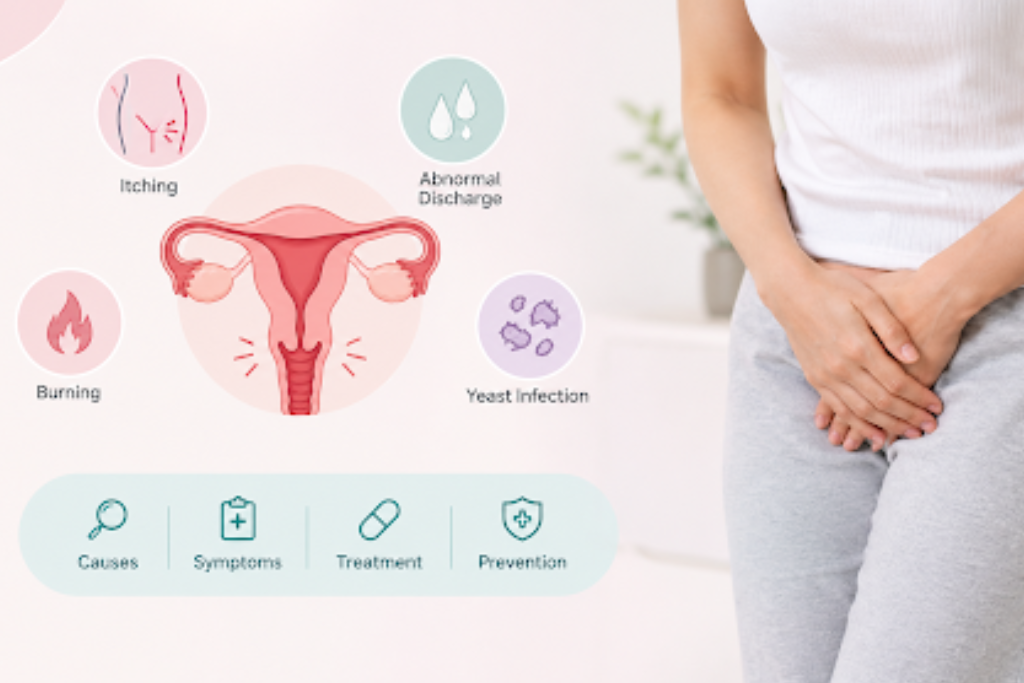
Vaginal health concerns can sometimes be difficult to discuss, especially when symptoms such as itching, unusual discharge or irritation leave you unsure about what is happening. Since these changes can have different causes, understanding them is important for finding the right treatment and knowing when to seek medical advice. In this article, we’ll discuss the common vaginal infection symptoms, their causes, diagnosis, treatment and prevention, so you know what to look out for and when to consult a gynaecologist.
Understanding Vaginal Infections
A vaginal infection develops when certain microorganisms, such as yeast or bacteria, grow excessively in the vagina. The vagina naturally contains different types of bacteria and other microorganisms. When their usual balance changes, certain infections can develop.
Common vaginal infections include vaginal yeast infections and bacterial vaginosis. Some sexually transmitted infections (STIs) also affect the vagina or surrounding genital area.
However, vaginal itching or irritation does not always indicate an infection. Hormonal changes, allergic reactions and skin conditions can cause similar symptoms.
What Causes Vaginal Infection?
The causes vary depending on the condition. Understanding the possible triggers helps a healthcare professional determine the appropriate treatment.
Vaginal Yeast Infection
A vaginal yeast infection develops when Candida, a type of fungus that naturally lives in the vagina, grows excessively. Antibiotic use, pregnancy, diabetes, and a weakened immune system increase the risk, although many infections occur without an identifiable trigger.
Common symptoms include itching, redness, soreness and thick, white discharge.
Bacterial Vaginosis
Bacterial vaginosis (BV) develops when the balance of bacteria in the vagina changes. It typically causes thin, greyish-white discharge and a fishy odour, although some people have no noticeable symptoms.
BV and yeast infections have different causes and require different treatments.
Sexually Transmitted Infections
Certain STIs affect the vagina or surrounding genital area and cause symptoms such as unusual discharge, irritation or sores.
- Trichomoniasis can cause unusual discharge, genital irritation and discomfort during urination.
- Chlamydia and gonorrhoea can cause abnormal vaginal discharge or a burning sensation during urination, although many infections cause no noticeable symptoms.
- Genital herpes can cause painful blisters or sores around the genital area.
Testing is important after possible exposure because symptoms alone cannot confirm or rule out an STI.
Other Causes of Vaginal Itching and Irritation
Not all vaginal or genital symptoms result from an infection. Other possible causes include:
- Allergies and irritation: Scented soaps, intimate washes, sanitary pads, detergents, lubricants and condoms can irritate sensitive skin.
- Hormonal changes: Reduced oestrogen during menopause can cause vaginal dryness and irritation.
- Skin conditions: Eczema, psoriasis and lichen sclerosus can affect the vulval skin, causing persistent itching or soreness.
A fungal infection in intimate areas, such as a vaginal yeast infection, is one possible cause of itching. However, similar symptoms also occur due to irritation, hormonal changes and skin conditions, so the cause should be established before treatment.
What are the Symptoms of a Vaginal Infection?
The vaginal infection symptoms vary depending on the underlying condition. Common signs include:
- Itching or irritation around the vagina or vulva.
- Changes in the colour, consistency, or amount of vaginal discharge.
- An unusual or unpleasant odour.
- Vaginal burning, particularly during urination.
- Redness, swelling or soreness around the genital area.
- Pain or discomfort during sexual intercourse.
- A vaginal rash, sores or blisters also occur with certain infections or skin conditions.
These symptoms do not confirm a specific infection. Different conditions produce overlapping symptoms, while some infections cause no noticeable changes. Persistent or recurring symptoms warrant medical assessment.
What Does Vaginal Discharge Colour and Texture Mean?
Vaginal discharge is a normal part of the body’s natural cleaning and protective process. Its amount and consistency change throughout the menstrual cycle. Clear or white discharge without a strong, unpleasant odour is generally normal.
Changes in discharge sometimes indicate an underlying condition.
| Discharge pattern | What it may indicate |
| Clear or white discharge without an unusual odour | Normal vaginal discharge, depending on the person’s usual pattern and other symptoms |
| White vaginal discharge that is thick or lumpy | A possible yeast infection, particularly alongside itching or irritation |
| Thin, greyish-white discharge | Bacterial vaginosis, particularly when accompanied by a fishy odour |
| Yellow or green discharge | Certain infections, including some STIs |
| Discharge with a strong or unusual odour | Conditions such as bacterial vaginosis or another underlying problem |
Discharge colour and texture alone do not establish a diagnosis. Persistent changes, unusual odour or accompanying discomfort warrant medical assessment.
Vaginal Itching vs Vaginal Infection: Are They the Same?
No. Vaginal itching is a symptom, whereas a vaginal infection is one possible cause.
The vaginal itching causes include yeast infections, other infections, irritation from personal care products, hormonal changes and skin conditions. Itching also affects the vulva, the external genital area surrounding the vaginal opening.
If you experience itching in the intimate area in women, particularly when it is severe, persistent or recurring, avoid assuming that a yeast infection is responsible. A proper assessment helps identify the cause and guide appropriate care.
How is Vaginal Infection Diagnosed?
Diagnosis begins with a discussion about your symptoms, medical history and relevant risk factors. Depending on the suspected condition, a healthcare professional recommends appropriate investigations.
- Physical examination: Checks for visible signs of inflammation, irritation or infection.
- Vaginal swab or discharge testing: Helps identify particular bacteria, fungi or other microorganisms.
- Vaginal pH testing: Helps distinguish between certain causes, although it does not diagnose every condition.
- Urine or STI testing: Identifies urinary infections or sexually transmitted infections when symptoms or possible exposure warrant investigation.
- Further investigations: Help evaluate symptoms that persist, recur or do not improve with initial treatment.
Not everyone requires every test. The investigations depend on the symptoms and the condition being considered.
How are Vaginal Infections and Itching Treated?
The appropriate vaginal infection treatment depends on the underlying cause. Similar symptoms arise from different conditions, so treatment should not be selected based on symptoms alone.
Treatment for Vaginal Infections
- Yeast infection: Antifungal medicines treat the overgrowth of Candida.
- Bacterial vaginosis: Prescribed antibiotics treat the condition when treatment is indicated.
- STIs: Treatment depends on the specific infection. Sexual partners also need testing or treatment for certain STIs.
Treatment for Non-Infectious Causes
When symptoms result from irritation, hormonal changes or a skin condition, treatment focuses on the underlying cause. This involves avoiding the triggering product or receiving condition-specific treatment from a healthcare professional.
The appropriate vaginal itching treatment therefore depends on the diagnosis. Avoid using leftover medicines or repeatedly treating similar symptoms without medical advice, as this delays appropriate care and risks treating the wrong condition.
Home Care for Vaginal Infections: What to Do and Avoid
Certain everyday measures help reduce irritation and discomfort. However, supportive care does not replace medical treatment when an infection requires medication.
| What you can do | What you should avoid |
| Wash the external genital area gently with water. | Vaginal douching or inserting cleansing products into the vagina. |
| Wear breathable underwear and change out of damp clothing. | Scented washes, sprays and products that trigger irritation. |
| Avoid scratching the affected area. | Scrubbing or repeatedly washing sensitive skin. |
| Follow your healthcare professional’s treatment instructions. | Using leftover medicines or unverified remedies to treat an infection. |
People searching for home remedies for vaginal itching should remember that no single home remedy suits every cause. Avoid inserting household ingredients, oils or other substances into the vagina, as these irritate sensitive tissue.
If symptoms persist or recur, seek medical advice rather than relying on home care alone.
How to Prevent Vaginal Infections
Not all vaginal infections are preventable, but certain practices help reduce the risk of irritation and some infections.
- Avoid vaginal douching and unnecessary scented products.
- Practise gentle external hygiene without excessive washing.
- Wear breathable underwear and change out of damp clothing.
- Use condoms to reduce the risk of STIs.
- Seek assessment for recurring symptoms rather than repeatedly self-treating.
- Discuss recurring infections or relevant risk factors with a healthcare professional.
These measures support intimate health but do not guarantee that an infection will not occur.
Vaginal Infections During Pregnancy
Hormonal changes during pregnancy affect the vaginal environment and the amount of discharge. However, new or persistent itching, burning, irritation, unusual discharge or an unpleasant odour should not automatically be attributed to normal pregnancy changes.
A yeast infection, bacterial vaginosis or an STI causes vaginal symptoms during pregnancy. The appropriate assessment and treatment depend on the underlying condition.
If you experience new or persistent symptoms, consult your obstetrician or gynaecologist before using medicines or home remedies. Prompt medical advice is particularly important if symptoms occur alongside bleeding, pelvic pain, fever or other concerning changes.
When Should You See a Gynaecologist?
Seek medical advice if you experience:
- Severe, persistent or recurring itching or irritation.
- Unusual discharge or a strong, unexplained odour.
- Burning during urination or pain during sexual intercourse.
- Sores, blisters, swelling or unexplained bleeding.
- Pelvic pain or fever alongside vaginal symptoms.
- Possible exposure to an STI.
- Symptoms that continue after treatment or return soon afterwards.
If you are looking for a Gynaecologist in Chandigarh, Healing Hospital offers access to gynaecological care for women experiencing vaginal and other reproductive health concerns. Our team can assess your symptoms, recommend appropriate tests, and guide you towards suitable treatment based on the underlying cause.
Can a Vaginal Infection Go Away on Its Own?
The outcome depends on the underlying condition. Some symptoms settle without specific treatment, but improvement does not necessarily mean that an infection has resolved. Certain infections, including some STIs, require appropriate treatment.
If you are unsure of the cause, or your symptoms persist or return, consult a healthcare professional rather than assuming the condition will resolve on its own.
Vaginal Infection Treatment at Healing Hospital, Chandigarh
At Healing Hospital, we understand that vaginal symptoms can be uncomfortable and sometimes difficult to discuss. Our gynaecology team provides confidential, patient-focused care for women experiencing vaginal itching, unusual vaginal discharge, irritation, burning or pain.
We assess your symptoms, medical history, and relevant risk factors to understand the possible cause. When needed, we recommend appropriate investigations to help guide treatment.
Our approach to gynaecological care includes:
- Privacy and dignity: A comfortable, respectful environment for discussing sensitive concerns.
- Personalised care: Treatment and follow-up based on your symptoms and individual needs.
- Advanced medical technology: Modern facilities to support diagnosis and treatment.
- Comprehensive care: Multiple gynaecological subspecialties available under one roof.
If you are looking for a Gynaecology Hospital in Chandigarh for persistent or recurring vaginal symptoms, our team can help identify the possible cause and discuss the appropriate next steps.
Frequently Asked Questions
Q. Can Vaginal Infections Occur Without Symptoms?
Yes. Some vaginal infections and STIs occur without noticeable symptoms. If you have concerns about possible exposure or a change in your vaginal health, a healthcare professional can advise whether testing is appropriate.
Q. Is a Strong Vaginal Odour Always a Sign of Infection?
No. An unusual or fishy odour occurs with conditions such as bacterial vaginosis, but odour alone does not confirm the cause. Seek medical advice if the change persists or occurs alongside other symptoms.
Q. When should I see a gynaecologist for a vaginal infection?
Consult a gynaecologist if you experience persistent itching, unusual discharge, a strong odour, pain or recurring symptoms. Seek prompt medical attention if you have fever or pelvic pain alongside these symptoms.
Q. Can Vaginal Infections Return After Treatment?
Yes. Some infections recur, and recurring symptoms also indicate that the original diagnosis needs to be reviewed. Consult a healthcare professional if symptoms return after treatment.
Q. Can I Have Sex While Being Treated for a Vaginal Infection?
The advice depends on the condition. Some STIs require avoiding sexual activity until treatment is complete and recommended precautions have been followed. Follow your healthcare professional’s advice, including guidance on partner testing or treatment where relevant.
Q. Where can I seek treatment for a vaginal infection in Chandigarh?
If you are looking for a gynaecology hospital in Chandigarh, Healing Hospital offers obstetrics and gynaecology services. Consult the hospital’s gynaecology team for an assessment of your symptoms and appropriate treatment based on the diagnosis.
Q. Can Vaginal Itching Be Caused by Something Other Than an Infection?
Yes. Irritation from personal care products, hormonal changes, and skin conditions all cause itching. If the itching is persistent, severe, or recurring, seek medical assessment to establish the cause.