PCOD vs PCOS: Symptoms, Causes, Treatment & Key Differences
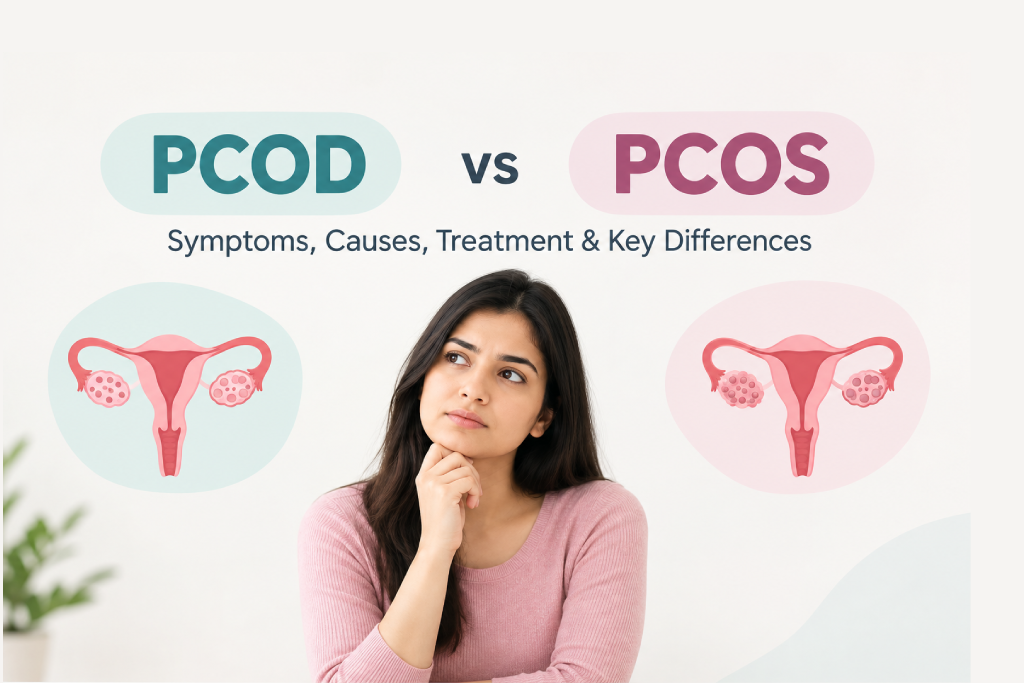
PCOD and PCOS are commonly discussed when women experience irregular periods, hormonal changes, acne, excess hair growth, or difficulty conceiving. Because the terms are often used interchangeably, many women search for the PCOD and PCOS difference and want to understand whether both conditions are the same.
PCOS, or polycystic ovary syndrome, is a common hormonal and metabolic condition that can affect menstrual cycles, ovulation, androgen levels, and fertility. According to the World Health Organization, PCOS affects an estimated 10–13% of women of reproductive age globally.
In India, the term PCOD is also widely used for similar reproductive and hormonal concerns. However, PCOS is the established clinical term used in medical guidance. Despite its name, PCOS does not necessarily mean that a woman has ovarian cysts, and an ultrasound alone is not enough to diagnose the condition.
Understanding PCOD symptoms, possible causes, diagnosis, and treatment can help women recognise when professional evaluation may be appropriate. If irregular periods, acne, unwanted hair growth or difficulty conceiving continue, consulting a gynaecologist can help identify the underlying cause.
What Are PCOD and PCOS?
PCOS is a hormonal and metabolic condition that can affect ovulation, menstrual cycles, and androgen levels. Common symptoms include irregular or absent periods, excess facial or body hair, acne, hair thinning, and difficulty conceiving. Symptoms can vary significantly between individuals.
PCOD is a term commonly used in India for similar reproductive and hormonal concerns. In everyday conversations, PCOD and PCOS are sometimes described as separate conditions. However, current medical guidance recognises PCOS as the established clinical diagnosis.
Instead of focusing only on whether the condition is called PCOD or PCOS, it is more useful to understand the symptoms, possible hormonal and metabolic factors, and the appropriate treatment based on an individual’s health needs.
What Is PCOD?
PCOD is commonly used to describe a pattern of reproductive and hormonal concerns that may involve irregular periods, changes in ovulation, acne, excess hair growth, and difficulty conceiving.
Since the term PCOD can be used differently in different settings, women experiencing these symptoms should undergo appropriate clinical evaluation rather than assuming that every irregular period or hormonal symptom is caused by PCOD.
Common PCOD Symptoms
Common pcod problem symptoms may include:
- Irregular, infrequent, or missed periods
- Difficulty with regular ovulation
- Acne or oily skin
- Excess facial or body hair
- Hair thinning or hair loss
- Changes in weight
- Difficulty conceiving
These symptoms can overlap with PCOS and several other hormonal conditions. Therefore, experiencing one or more of these symptoms does not automatically confirm PCOS or PCOD.
What Is PCOS?
Polycystic ovary syndrome is a common hormonal and metabolic condition that can affect ovulation, menstrual cycles, androgen levels, and long-term metabolic health. It can occur in women with different body types and does not always present with the same combination of symptoms.
Women may notice irregular periods, difficulty conceiving, acne, excess facial or body hair or hair thinning. Some women may primarily experience menstrual or fertility problems, while others may seek medical advice because of skin or hair-related symptoms.
Common PCOS Symptoms
Common PCOS symptoms may include:
- Irregular or absent periods
- Difficulty conceiving due to irregular ovulation
- Excess facial or body hair
- Acne or oily skin
- Hair thinning
- Weight-related or metabolic concerns
- Darkened, thickened patches of skin in some women
PCOS is also associated with a higher risk of insulin resistance, type 2 diabetes, high blood pressure, high cholesterol, and other metabolic concerns.
PCOD vs PCOS: Key Differences
One of the most common searches is pcod and pcos difference. The terminology can be confusing because PCOD is commonly used in India, while PCOS is the established clinical term in medical guidance.
| PCOD | PCOS |
| Commonly used term in India for similar hormonal and reproductive concerns | Established clinical term for Polycystic Ovary Syndrome |
| May be used to describe irregular periods, ovulation problems, and hormonal symptoms | Can involve reproductive, hormonal and metabolic changes |
| Terminology may vary between healthcare settings | Used in international medical guidelines |
| Management depends on the symptoms and underlying concerns | Treatment is tailored to symptoms, health risks and pregnancy goals |
| May be used broadly in everyday discussions | Requires clinical assessment and exclusion of other possible causes |
It is important to remember that PCOS does not require ovarian cysts for diagnosis. WHO states that diagnosis involves at least two of three features-signs of elevated androgens, irregular or absent menstrual periods, and polycystic ovaries on ultrasound-after other causes have been excluded.
Causes and Risk Factors of PCOD and PCOS
There is no single reason of PCOD or PCOS that applies to every woman. PCOS is thought to involve a combination of genetic, hormonal and metabolic factors. Family history and insulin resistance are among the factors associated with PCOS.
Reasons for PCOD
People searching for reasons for PCOD are often looking for an explanation for irregular periods, hormonal symptoms or difficulty with ovulation.
Since PCOD is not consistently defined as a separate clinical diagnosis, the underlying cause should be evaluated according to the individual’s symptoms. Hormonal conditions, metabolic factors, family history, and other health issues may need to be considered.
Causes and Risk Factors of PCOS
The exact cause of PCOS is not fully understood. However, several factors may be associated with its development or symptoms.
Insulin resistance: Some women with PCOS have insulin resistance, which can affect insulin levels and contribute to increased androgen activity.
Hormonal changes: Higher androgen levels can interfere with regular ovulation and contribute to symptoms such as acne and excess hair growth.
Family history: Having a family history of PCOS or type 2 diabetes can increase the likelihood of developing PCOS.
Metabolic factors: PCOS is associated with metabolic health concerns, including insulin resistance, type 2 diabetes and obesity. However, PCOS can also occur in women who are not overweight.
How Do PCOD and PCOS Affect Periods and Fertility?
PCOS can interfere with regular ovulation, which may result in irregular or infrequent periods. When ovulation does not occur regularly, conception can become more difficult. PCOS is one of the leading causes of ovulation-related infertility.
However, having PCOS does not mean that pregnancy is impossible. Depending on the individual situation, treatment may include lifestyle measures, medicines to support ovulation or assisted reproductive techniques.
If PCOS is affecting conception, consulting a fertility Specialist can help determine whether irregular ovulation is contributing to fertility difficulties. A fertility evaluation may also consider other factors involving the uterus, fallopian tubes, ovarian reserve and male partner’s reproductive health. Healing Hospital provides fertility evaluation and treatments including ovulation induction, IUI, IVF and ICSI.
How Are PCOD and PCOS Diagnosed?
There is no single test that diagnoses PCOS in every woman. A doctor generally considers symptoms, menstrual history, physical examination and appropriate investigations.
Depending on the individual’s symptoms, evaluation may include:
- Menstrual and medical history
- Physical examination
- Hormonal blood tests
- Assessment of androgen levels
- Ultrasound where appropriate
- Evaluation of metabolic health
According to WHO, PCOS is diagnosed when at least two of three specific features are present after other causes have been excluded: signs of elevated androgens, irregular or absent periods, and polycystic ovaries on ultrasound. This also means that having polycystic-appearing ovaries on an ultrasound alone does not establish a PCOS diagnosis.
If symptoms persist, a gynaecologist can assess whether PCOS or another hormonal or reproductive condition may be responsible.
Can PCOD or PCOS Be Cured?
Many women search for how to cure PCOD or a permanent PCOD cure. It is important to distinguish between managing symptoms and permanently eliminating the condition.
There is currently no permanent cure for PCOS, but symptoms can be effectively managed through lifestyle changes, medicines, and fertility treatments where required.
The goal of treatment is generally long-term management. Depending on the individual, treatment may focus on regulating periods, managing acne or excess hair, improving metabolic health, or supporting pregnancy.
Treatment Options for PCOD
The treatment of PCOD depends on the symptoms and underlying health concerns. A healthcare professional may recommend lifestyle changes, medication or fertility-focused treatment based on individual needs.
Treatment may focus on:
- Improving menstrual regularity
- Managing acne and excess hair growth
- Supporting metabolic health
- Improving ovulation when pregnancy is desired
- Addressing weight-related concerns where appropriate
- Monitoring longer-term health risks
There is no single treatment that is suitable for every woman. A personalised medical evaluation is important before starting hormonal or other medication.
For women seeking Pcos/Pcod Teatment, Healing Hospital’s Obstetrics & Gynaecology team provides assessment and management for PCOS/PCOD-related menstrual, hormonal, metabolic and fertility concerns.
Treatment Options for PCOS
PCOS treatment depends on symptoms, overall health and whether pregnancy is currently desired. Lifestyle measures, medicines and fertility treatments may all have a role.
For women who are not currently trying to conceive, hormonal treatment may help regulate menstrual cycles and manage symptoms such as acne or excess hair growth. Medicines may also be considered for metabolic or insulin-related concerns when appropriate.
For women trying to conceive, treatment may focus on supporting regular ovulation. Depending on the individual’s diagnosis, this may include ovulation-induction medicines, IUI or IVF.
Diet and Lifestyle Changes for PCOD and PCOS
Lifestyle management is an important part of PCOS care. Healthy eating and regular physical activity are recommended for women with PCOS, including those who do not need to lose weight.
A balanced approach can include regular physical activity, nutritious meals, adequate sleep and stress-management practices. Women who are overweight may benefit from weight management, but PCOS can also occur in women who are not overweight.
Rather than relying on restrictive diets or products claiming to permanently cure PCOS, it is better to follow sustainable lifestyle habits and medical advice suited to individual symptoms and health goals.
When Should You See a Gynaecologist?
You should consider consulting a gynaecologist if you experience persistent or unexplained symptoms such as:
- Irregular, very infrequent, or absent periods
- Persistent acne or excess facial/body hair
- Unexplained changes in weight
- Hair thinning or excessive hair loss
- Difficulty conceiving
- Symptoms that continue despite lifestyle changes
A medical evaluation can help determine whether PCOS, thyroid problems, or another hormonal or reproductive condition may be contributing to the symptoms.
PCOD and PCOS Care at Healing Hospital
Healing Hospital’s Department of Obstetrics & Gynaecology provides care for conditions including PCOS/PCOD, irregular menstrual cycles, hormonal imbalances and infertility. The hospital states that its PCOS care includes diagnosis, hormonal management, metabolic care, and fertility support when required.
Women experiencing fertility concerns can also receive support from the hospital’s reproductive medicine team. Fertility evaluation may include hormone testing, ultrasound, ovarian reserve assessment, tubal evaluation, and semen analysis, depending on the clinical situation.
For women searching for a Gynecology Hospital in Chandigarh, Healing Hospital’s Obstetrics & Gynaecology department provides evaluation and management of PCOS/PCOD, irregular periods, infertility, hormonal imbalances, and other women’s reproductive health concerns.
Conclusion
PCOD and PCOS are often used interchangeably, particularly in India, which can make it difficult to understand the difference between the two terms. PCOS is the established clinical term for a hormonal and metabolic condition that can affect periods, ovulation, fertility, skin, hair, and long-term metabolic health.
Recognising PCOD symptoms such as irregular periods, acne, excess hair growth, or difficulty conceiving can be a reason to seek professional evaluation. Since symptoms vary and can overlap with other conditions, diagnosis should be based on an appropriate medical assessment rather than a single symptom or ultrasound finding.
If you are experiencing symptoms associated with PCOD or PCOS, consult a qualified gynaecologist to understand the underlying cause and discuss suitable management options.
Book an Appointment at Healing Hospital
If you are looking for professional evaluation and personalised care for PCOD, PCOS, irregular periods or fertility concerns, you can consult the Obstetrics & Gynaecology team at Healing Hospital, Chandigarh.
Call: +91-9464343434 / 0172-5088883
Email: info@healinghospital.co.in
Address: Sector 34A, Chandigarh – 160022
You can also visit Healing Hospital’s official website to learn more about available services and book an appointment.
Frequently Asked Questions
1. What are the main PCOD symptoms in females?
Common PCOD symptoms can include irregular or missed periods, acne, excess facial or body hair, hair thinning, changes in weight and difficulty conceiving. These symptoms can overlap with PCOS and other hormonal conditions, so medical evaluation is important before reaching a diagnosis.
2. What is the difference between PCOD and PCOS?
PCOD is a term commonly used in India for similar reproductive and hormonal concerns, while PCOS is the established clinical term used in medical guidelines. PCOS can involve hormonal, reproductive and metabolic changes and does not require ovarian cysts for diagnosis.
3. Can PCOD be cured permanently?
There is no established permanent cure for PCOS, but symptoms can be effectively managed with lifestyle measures, medicines and fertility treatment when required. Treatment is usually tailored to the woman’s symptoms and reproductive goals.
4. Can women with PCOD or PCOS get pregnant?
Yes. PCOS can interfere with regular ovulation and make conception more difficult for some women, but it does not mean pregnancy is impossible. Depending on the individual situation, treatment may include lifestyle measures, ovulation-induction medicines or assisted reproductive techniques.
5. Does PCOD always cause weight gain?
No. PCOS can affect women at different body weights, and not everyone with PCOS experiences weight gain. Weight-related changes are only one possible feature of the condition.
6. Can thin women have PCOS?
Yes. Being at a healthy weight does not rule out PCOS. Women who are not overweight can still experience irregular periods, androgen-related symptoms, ovulation problems or other features associated with PCOS.
7. When should I consult a Pcos/Pcod Teatment at Healing Hospital for PCOS-related fertility concerns?
A fertility evaluation may be appropriate when PCOS is affecting ovulation or when pregnancy is not occurring despite regular attempts. Healing Hospital’s reproductive medicine team provides fertility evaluation and treatments such as ovulation induction, IUI, IVF and ICSI based on individual needs.
8. How does Healing Hospital provide PCOS/PCOD Treatment?
Healing Hospital states that its Obstetrics & Gynaecology team evaluates PCOS/PCOD through clinical assessment and relevant investigations, with treatment tailored to hormonal, metabolic, menstrual and fertility-related concerns. Fertility support can also be coordinated when required.
9. When should I see a gynaecologist for PCOD or PCOS at Healing Hospital?
You can consider consulting a gynaecologist if you have persistent irregular periods, acne, excess facial or body hair, hair thinning, unexplained hormonal symptoms or difficulty conceiving. Healing Hospital’s gynaecology team provides evaluation and management of PCOS/PCOD and other women’s reproductive health concerns.